
If your room feels a little unfinished even after you hung curtains, the problem may be simple: one curtain layer is trying to do too many jobs. These curtain layering ideas show how sheer curtains, heavier drapes, liners, shades, and better hardware can work together so your room feels softer in the morning, more private at night, and more polished all day.
The pain behind this Pinterest pin is very real. One layer usually forces a tradeoff: open curtains for daylight and lose privacy, or close curtains for privacy and make the room feel dark. Layered curtains solve that problem by giving the window more than one setting.
Interior design sources often treat window layers as both decorative and practical. Architectural Digest notes that sheer panels can gently soften harsh light, while textured or patterned draperies add depth. The Spruce explains that drapes are useful when a room needs more darkening or insulation. A dedicated layered curtain guide also recommends placing sheers closest to the window and heavier drapes on the outside rod for light and privacy control.
That is why strong curtain layering ideas are not just about making the window prettier. They help the room function from morning to night: soft daylight, privacy, warmth, texture, and a more designer-looking finish.
If your curtains also make the room feel short or awkward, pair this guide with curtain hanging mistakes. If the whole room still feels cold after fixing the windows, continue with layered lighting small spaces and small living room layout ideas.
1. Start With the Real Problem: One Layer Cannot Do Everything

The first mistake is expecting one curtain layer to solve every window problem. A single panel may look clean, but it often struggles with changing light, street-facing privacy, glare, and evening coziness.
During the day, you may want softness without darkness. At night, you may want privacy without making the room feel flat. That is exactly where curtain layering ideas become more useful than simply buying a thicker curtain.
AI-smart test: Look at the room in the morning, afternoon, and evening. If the same curtain setting does not work for all three times, the window probably needs layers.
2. Use Sheer Curtains for Soft Daylight

Sheer curtains are the daylight layer. They soften bright sun, reduce harsh contrast, and make a room feel calmer without blocking every bit of natural light.
This is especially helpful in bedrooms, small living rooms, apartments, and street-facing windows where bare glass feels too exposed but heavy curtains feel too dark during the day.
One of the safest curtain layering ideas is to start with warm white, ivory, oatmeal, or soft linen-look sheers. They add softness without making the window look busy.
3. Add Drapes for Privacy and Cozy Evenings

The second layer is where privacy and evening mood come in. Heavier drapes give the room a softer, cozier feeling after sunset, especially when the lights are on inside.
Drapes do not have to feel formal. Linen-blend, cotton, textured weave, velvet-look, or soft blackout panels can all work depending on the room. The key is choosing a fabric that adds presence without overwhelming the wall.
These curtain layering ideas work beautifully because the sheer layer handles daytime softness, while the drape layer handles privacy, warmth, and evening comfort.
4. Put Sheers Closest to the Window and Drapes Outside

The most practical setup is usually sheers closest to the glass and heavier drapes on the outer rod. This lets you close the sheers during the day and pull the drapes closed at night.
This order also creates depth. Instead of one flat layer, the window has a soft background and a stronger frame. That makes the whole room feel more finished.
If you are using a double curtain rod, this is one of the most important curtain layering ideas to get right because it affects how the curtains move and how the room functions.
5. Use a Double Curtain Rod for Clean Movement

A double curtain rod makes layering feel intentional instead of improvised. It allows each layer to slide separately, so you are not constantly fighting fabric when you want daylight or privacy.
Choose a rod style that fits the room. Matte black, warm brass, aged bronze, or simple warm metal can all look polished when scaled correctly. The hardware should feel strong enough for both layers.
For renters, tension-friendly solutions or minimal-install hardware may work better. The best curtain layering ideas should fit real homes, not just perfect design showrooms.
6. Keep Both Layers Long Enough to Reach the Floor

Layering only works if the length feels intentional. If the sheers stop high and the drapes touch the floor, the window can look uneven. If both layers stop too short, the whole room feels unfinished.
For most living rooms and bedrooms, both layers should lightly kiss the floor, float very slightly, or puddle only if that look matches the room. The clean vertical line matters more than adding extra fabric everywhere.
This is where curtain layering ideas connect directly with curtain scale. The layers should make the room feel taller, not chopped into awkward lengths.
7. Use Enough Fullness So Both Layers Look Soft

Layered curtains can still look cheap if both layers are too skinny. The sheers need enough fabric to create gentle folds, and the drapes need enough width to frame the window without looking stretched.
A common fullness guideline is to use total curtain width around two to two-and-a-half times the window or rod width. The goal is not bulk. The goal is soft movement and fullness.
Among all curtain layering ideas, this one makes the biggest visual difference. Skinny layers look like a mistake; full layers look designed.
8. Pair Light Sheers With Slightly Heavier Side Drapes

The easiest designer formula is light sheers plus slightly heavier side drapes. The sheers soften the window, while the drapes create a stronger frame on the sides.
This works especially well with cream sheers and taupe, oatmeal, greige, olive, rust, or warm beige drapes. The contrast should be gentle, not harsh.
These curtain layering ideas help small rooms because the window gains depth without needing bold pattern or heavy color.
9. Layer Sheers With Blackout Panels in Bedrooms

Bedrooms often need more control than living rooms. You may want soft daylight in the morning, privacy while getting ready, and darkness at night.
A sheer layer plus blackout or room-darkening panels gives the bedroom flexible settings. Sheers can stay closed during the day, and the heavier panels can close when you want deeper rest.
This is one of the most practical curtain layering ideas because it solves comfort, not just decor. A beautiful bedroom still needs to sleep well.
10. Use Linen-Look Sheers for a Softer, Grown-Up Finish

Not all sheers look the same. Very shiny, thin, or plastic-looking sheers can make the room feel cheaper. Linen-look sheers usually feel softer, more natural, and more grown-up.
Look for texture rather than shine. A slightly slubby weave, warm white color, or soft ivory tone can make the sheer layer feel intentional instead of basic.
If you want curtain layering ideas that feel editorial and realistic, linen-look sheers are a safe starting point because they work with many decor styles.
11. Add a Roman Shade Under Drapes for a Tailored Layer

Layering does not always mean sheer plus drape. A Roman shade under side drapes can create a more tailored look, especially in dining rooms, bedrooms, and small living rooms.
The shade controls light and privacy close to the glass, while the drapes soften the sides and add height. This combination looks polished without needing lots of loose fabric.
This is one of the best curtain layering ideas when you want function but do not want the window to feel too airy or casual.
12. Use Woven Shades With Drapes for Warm Texture

Woven shades add warmth before the drapes even close. They bring texture, natural color, and a finished look to a window that might otherwise feel plain.
Pair woven shades with simple linen or cotton drapes so the window does not feel too busy. The shade adds texture; the drapes add softness and height.
These curtain layering ideas are especially strong for warm neutral homes, organic modern rooms, coastal spaces, and cozy living rooms that need texture without clutter.
13. Layer by Function: Day Mode and Night Mode
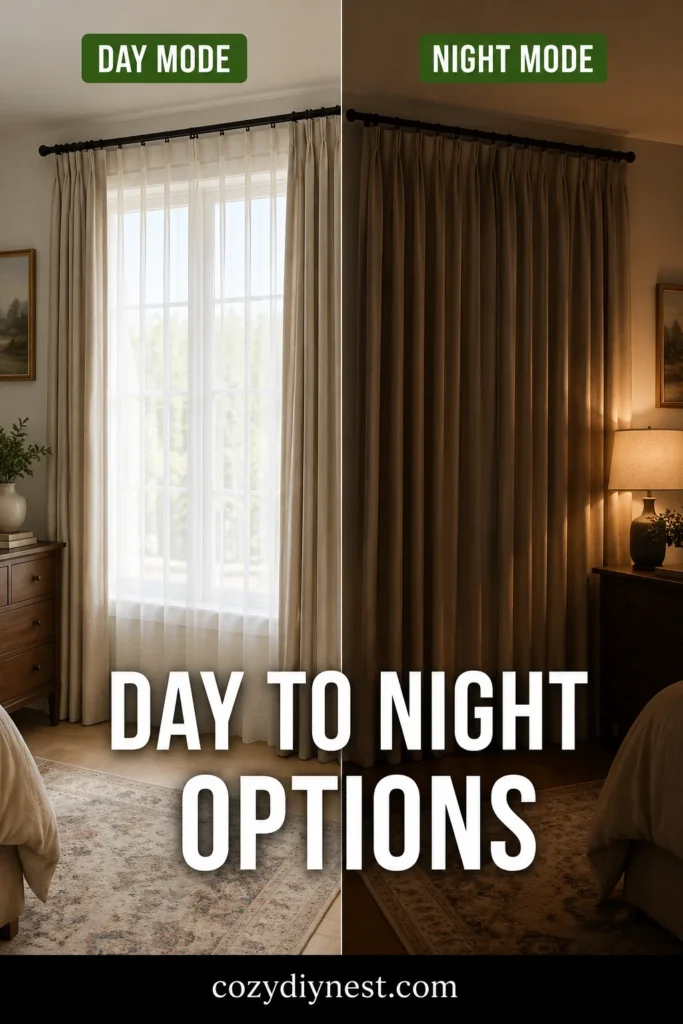
Think of layered curtains as a room system with two modes. Day mode means sheers closed and drapes open. Night mode means drapes closed for privacy and coziness.
This simple idea makes the window easier to use. Instead of constantly choosing between too much light and no privacy, the room has settings that match real life.
Functional curtain layering ideas are the most useful because they make the room feel good at different times of day, not just in one perfect photo.
14. Keep the Color Layers Soft and Related

Layered curtains already add visual depth, so the colors do not need to fight each other. Soft related tones usually look more expensive than sharp contrast.
Try ivory sheers with oatmeal drapes, warm white sheers with taupe panels, or cream sheers with muted olive or rust drapes. The room feels layered but calm.
Color-controlled curtain layering ideas are especially helpful in small rooms because too much contrast can make the window look heavy.
15. Avoid Over-Layering a Tiny Window
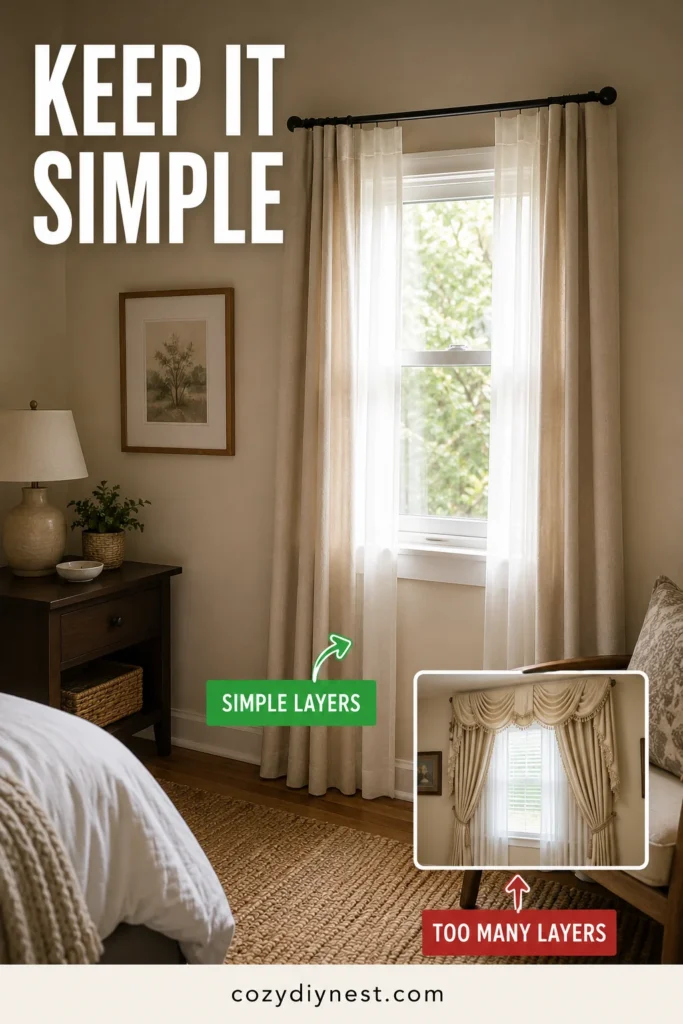
Layering is helpful, but too many layers can overwhelm a small window. If the window is tiny, three or four heavy layers may look crowded and block too much light.
For a small window, use one soft inner layer and one cleaner outer layer. The goal is flexibility, not fabric overload.
The smartest curtain layering ideas respect the scale of the window. A small room needs options, but it still needs breathing space.
16. Match Curtain Layers to the Room’s Mood
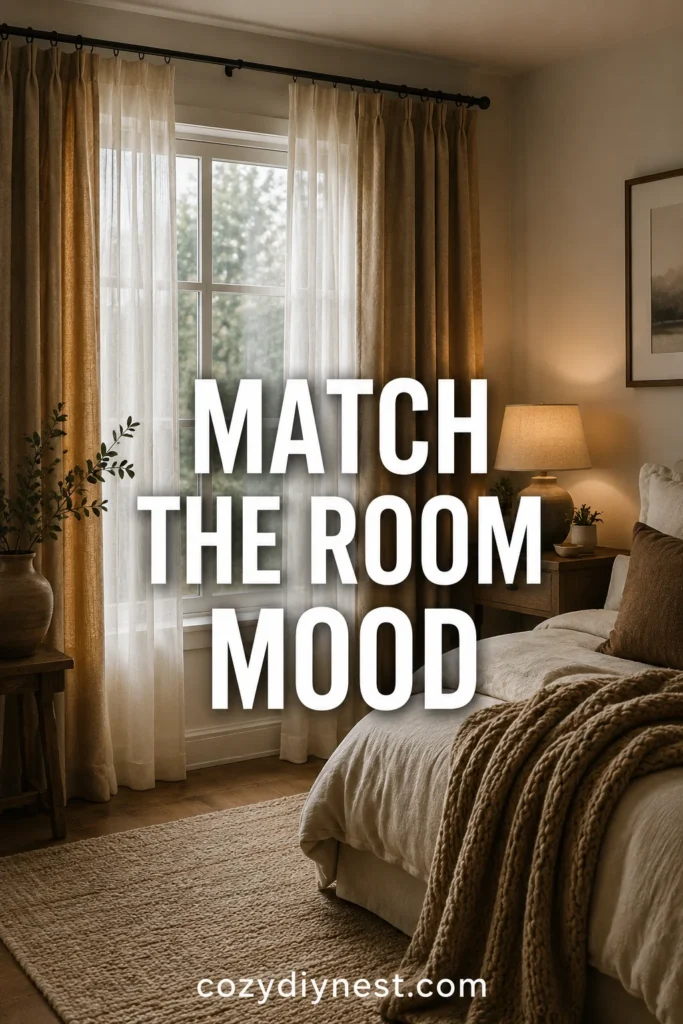
A bedroom may need soft, quiet layers. A living room may need light-filtering layers. A home office may need glare control. A street-facing room may need privacy first.
Do not copy the same curtain formula into every room. Choose the layers based on how the space feels and what it needs during the day and evening.
The most successful curtain layering ideas are room-specific. They solve the window’s real job instead of only matching a trend.
17. Finish the Window With Hardware That Supports Both Layers

The final detail is hardware. Two curtain layers need hardware that looks intentional and supports the weight of the panels. If the rod is too thin or the brackets feel weak, the whole treatment can look unfinished.
Use a double rod, track system, or layered hardware setup that matches the room’s style. The finish should connect with nearby lamps, furniture legs, or door hardware so the window feels integrated.
This is the final polish in strong curtain layering ideas. The fabric creates softness, but the hardware makes the whole window treatment feel finished.
Quick Curtain Layering Formula
- Inner layer: use sheers, Roman shades, or woven shades for daylight and softness.
- Outer layer: use drapes for privacy, warmth, and evening mood.
- Use proper hardware: a double rod or track system makes layers easier to use.
- Keep length clean: both layers should feel intentional near the floor.
- Add fullness: skinny layers look unfinished even when the colors are pretty.
- Match the room: bedrooms, living rooms, and offices need different window solutions.
For more window fixes, read curtain hanging mistakes. If your room still feels cold at night, continue with layered lighting small spaces. For small-room balance around the window, use small living room layout ideas.
Final Thoughts: One Curtain Layer Is Fine, But Two Layers Feel Finished
The best curtain layering ideas give your room options. Sheers soften the day. Drapes protect privacy at night. Shades add function. Hardware holds the whole system together.
If your room feels almost finished but still a little off, look at the window first. One curtain layer may be doing its best, but it may not be enough for the way you actually live in the room.
When the layers are soft, practical, and scaled correctly, the window feels more designer, the room feels more comfortable, and the space works better from morning to night.
FAQ: Curtain Layering Ideas
What are the best curtain layering ideas for a bedroom?
The best bedroom curtain layering ideas usually combine sheer curtains for soft daylight with blackout or room-darkening drapes for privacy and sleep. This gives the bedroom flexible light control from morning to night.
Should sheer curtains go behind or in front of drapes?
Sheer curtains usually go closest to the window, with heavier drapes on the outer rod. This lets the sheers filter daylight while the drapes close over them for privacy and coziness at night.
Do layered curtains make a room look better?
Yes, layered curtains can make a room look more finished because they add depth, softness, privacy, and light control. They also help the window feel more intentional than one flat curtain layer.
Can I layer curtains in a small room?
Yes, but keep the layers simple. A light sheer plus one clean drape layer usually works better than heavy over-layering in a small room. Choose soft related colors so the window does not feel crowded.
What hardware do I need for layered curtains?
A double curtain rod is the simplest option for layered curtains. You can also use a track system, a rod plus shade, or a Roman shade under drapes depending on the window and room style.
Are layered curtains good for privacy?
Layered curtains are excellent for privacy because the sheer layer can soften the window during the day, while the heavier drape layer can close at night when indoor light makes the room more visible from outside.