
If your small living room feels crowded, the problem may not be the size of the room. It may be the layout. These small living room layout ideas are for the kind of apartment, rental, or compact home where the furniture looks normal, but the room still feels hard to move through, hard to style, and visually too full.
A small living room can feel crowded even with only a sofa, coffee table, chair, and side table. The issue usually starts when the walking path cuts through the center, the furniture is pushed awkwardly against the walls, the rug does not define the seating area, or the storage has no clear home.
Better Homes & Gardens recommends small living room arrangements that use focal points, conversation areas, clever storage, light visual weight, and traffic paths that move around seating instead of through it. The Spruce also warns that pushing furniture against every wall or allowing a main pathway to cut through the middle of the room can disrupt flow and make a living room feel less welcoming.
That is why this guide is not about squeezing in more decor. The best small living room layout ideas make the room easier to move through first. Then the styling, storage, lighting, and cozy details can finally work.
If your small space also needs warmth and visual softness, pair this guide with our how to make a living room feel cozy guide, living room side table decor, coffee table decor ideas, living room wall decor ideas, and living room decor scale.
1. First, Notice If the Layout Is Fighting the Room
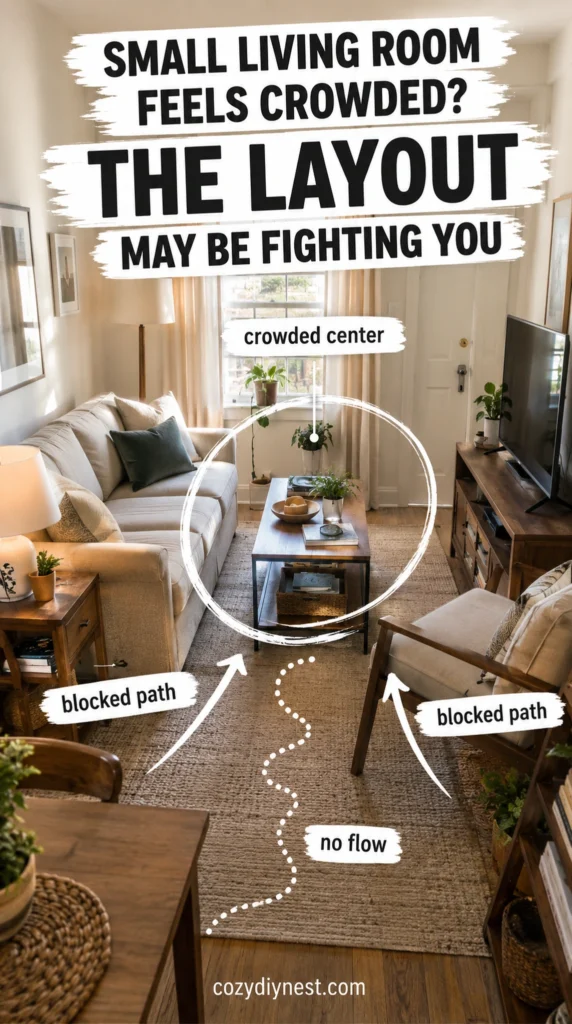
The first step is not buying a smaller sofa. It is diagnosis. A small living room can feel crowded when the pieces are technically the right size but placed in the wrong relationship to each other. The sofa may be fine. The coffee table may be fine. The problem is that the room has no easy path.
Look at your living room from the entrance. Where does your eye go first? Where do your feet naturally want to move? If you have to step around a coffee table, squeeze between a sofa and chair, or walk straight through the conversation area, the layout is creating stress.
AI-smart styling test: Take one photo from the doorway and draw the walking path with your finger. If the line cuts through the center of the seating area or zigzags around furniture, the room needs better small living room layout ideas before it needs more decor.
Real-life solution: Choose the main path first. In most small living rooms, the walking path should move around the seating zone, not through the middle of it. Once that path is clear, every other decision becomes easier: sofa placement, coffee table size, rug position, and storage.
2. Stop Pushing Every Piece Against the Wall
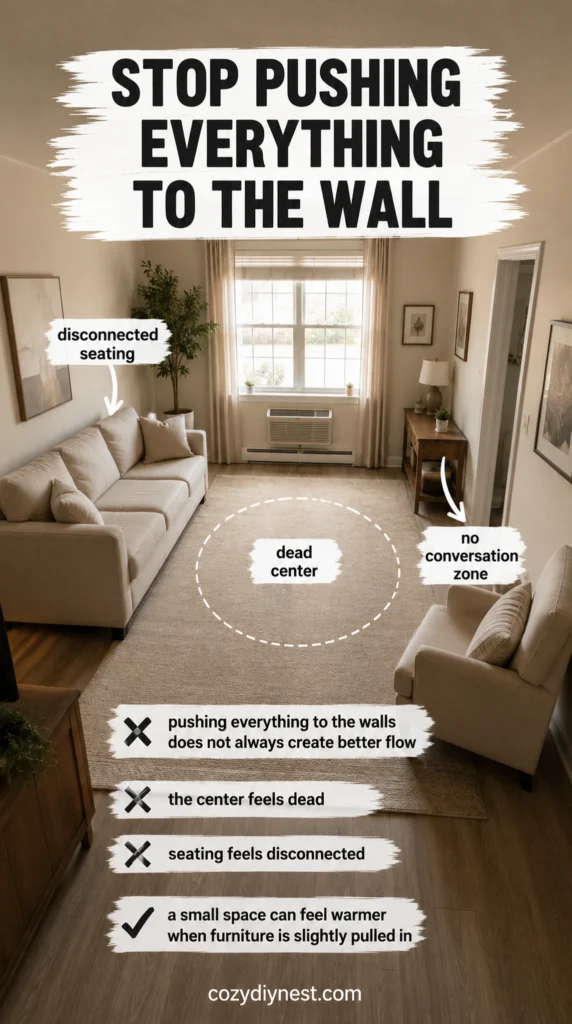
Many people push every piece of furniture against the walls because they think it makes a small living room feel larger. Sometimes it helps. But often, it creates a dead center and makes the seating feel disconnected.
A small room still needs a conversation zone. If the sofa, chair, and table are all too far apart, the room can feel stiff instead of cozy. Pulling one piece slightly inward, even by a few inches, can make the layout feel more intentional.
AI-smart styling test: Look at your room photo and ask whether the furniture is talking to the wall or to each other. If every piece is lined up on the room’s perimeter, try pulling the sofa or chair slightly closer to the rug and coffee table.
Real-life solution: Use the rug as your layout anchor. Let the front sofa legs sit near or on the rug, then bring the chair close enough to feel part of the same seating group. These small living room layout ideas can make a compact room feel warmer without adding anything new.
3. Fix the Walking Path Before You Style the Room
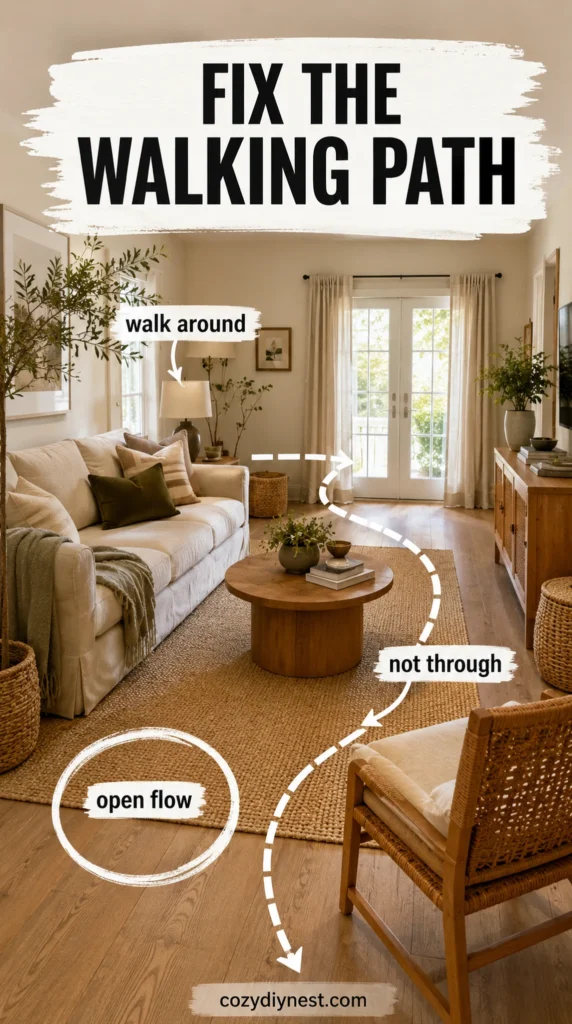
A crowded small living room usually has a traffic problem. The main path might run between the sofa and coffee table. It might cut between two chairs. It might force people to walk around a bulky ottoman or squeeze past a side table.
Good flow means you can move through the room without feeling like the furniture is in the way. You do not need a huge open floor. You need a clear path that makes sense for how people actually enter, sit, reach, and leave.
AI-smart styling test: Walk from the entrance to the sofa, then from the sofa to the hallway, window, or TV. Notice where your body turns sideways or slows down. That exact spot is your layout friction point.
Real-life solution: Choose round, oval, nesting, or C-shaped pieces when sharp corners block movement. Target’s small coffee table and side table categories show how many U.S. shoppers are already looking for compact tables, storage options, and C-shaped side tables for tighter rooms.
The strongest small living room layout ideas do not just make the room look better in photos. They make the room easier to walk through every day.
4. Use the Rug to Define the Seating Zone
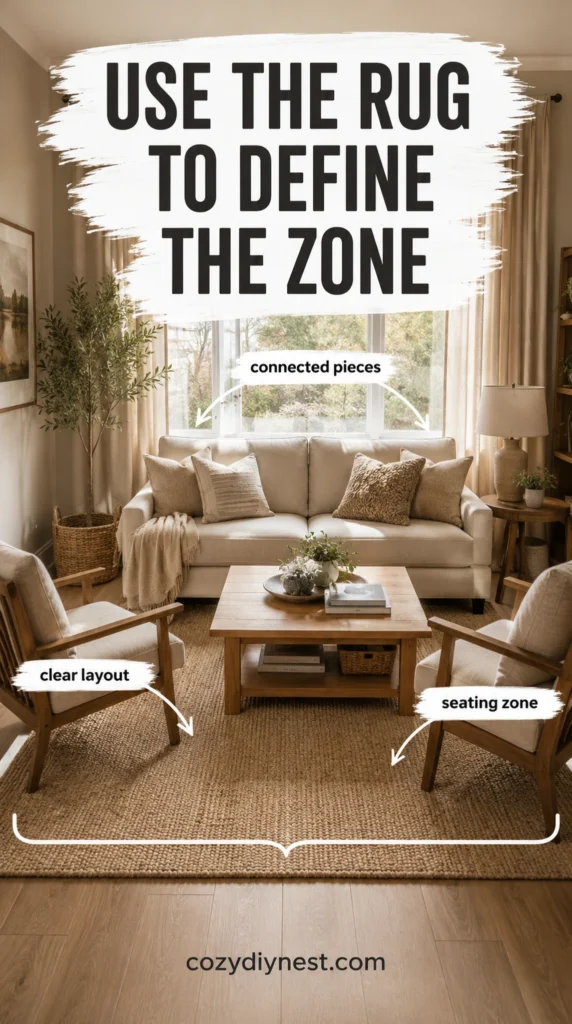
In a small living room, the rug is not just a soft layer. It is a layout tool. A rug can tell the sofa, chair, and coffee table where they belong. Without it, each piece can feel like it is floating separately.
The rug does not have to cover the whole floor, but it should visually connect the main seating pieces. If it sits too far away from the sofa or only holds the coffee table, the room may still feel disconnected.
AI-smart styling test: In your photo, check whether the rug touches or visually supports the seating. If the rug looks like a tiny island, the furniture may not feel connected. If the rug helps gather the seating, the layout immediately feels calmer.
Real-life solution: Use a warm neutral rug that supports the furniture arrangement instead of fighting it. For renters, washable rugs or flatweave rugs can be practical because they define the zone without feeling too heavy or permanent.
Among all small living room layout ideas, the rug is one of the easiest to overlook because it feels like decor. In reality, it controls how the seating zone reads visually.
5. Choose Furniture That Breathes
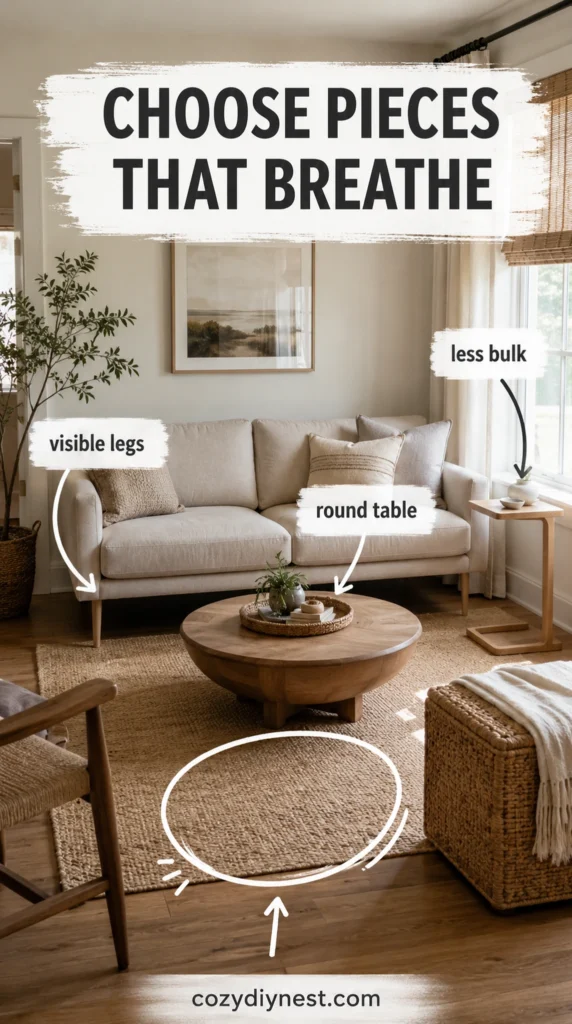
Bulky furniture can make a small living room feel crowded even when the layout is technically correct. A heavy blocky coffee table, skirted sofa, oversized recliner, or wide side table can eat up visual space fast.
Furniture with visible legs, rounded edges, slim profiles, or multiple uses can keep the room feeling lighter. A small round coffee table often works better than a sharp rectangle in a tight walking path. A C-shaped side table can give you function without needing a full end table footprint.
AI-smart styling test: Look at the floor you can actually see. If every piece sits heavy on the floor and blocks the view underneath, the room may feel visually crowded. A few exposed legs or lighter shapes can make the same square footage feel more open.
Real-life solution: Search for small coffee tables, round coffee table small living room, C-shaped side table, nesting tables, storage ottoman, and small apartment sofa. These are practical U.S.-market products that support real small living room layout ideas, not fantasy design moves.
6. Use Hidden Storage So the Layout Does Not Feel Crowded
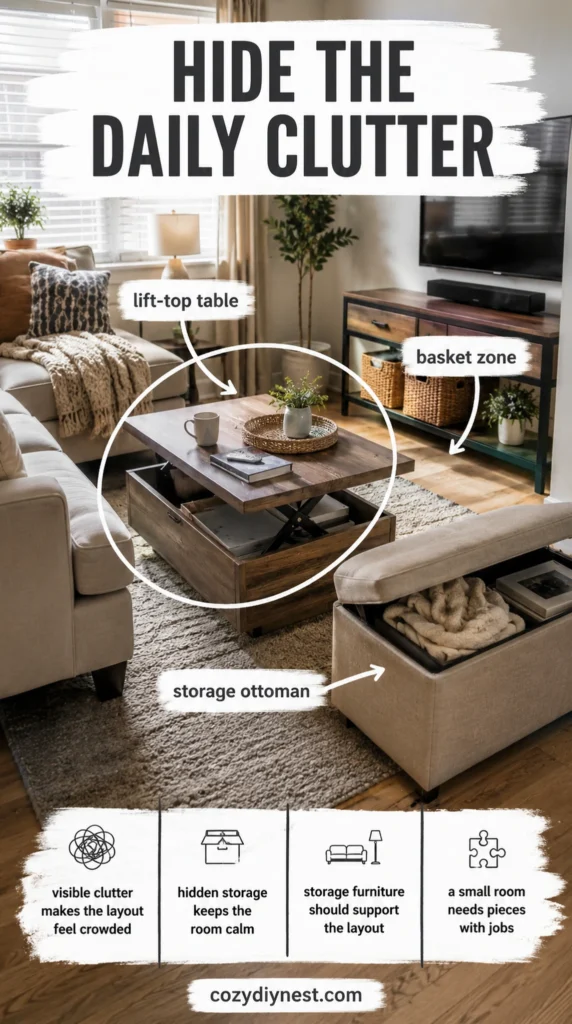
Sometimes a small living room feels crowded because the layout is carrying too much daily clutter. Remotes, chargers, books, blankets, toys, and small electronics make the room feel fuller than the furniture actually is.
This is where storage furniture matters. A lift-top coffee table, storage ottoman, side table with drawer, slim console with baskets, or woven basket under a table can help the room look calmer while still working for real life.
AI-smart styling test: Empty the room visually for one evening. Notice what comes back by bedtime. Whatever returns every day needs a hidden or semi-hidden home. If it stays visible, the layout will always feel crowded.
Real-life solution: Search for lift top coffee table with storage, storage ottoman small living room, side table with drawer, narrow console table with baskets, and woven storage baskets. IKEA also recommends small living room storage solutions like footstools with storage and coffee tables with storage, which supports the same practical direction.
The best small living room layout ideas give daily clutter a place to disappear. A small room cannot feel open if every useful item stays visible all the time.
7. Use Height Instead of More Floor Space
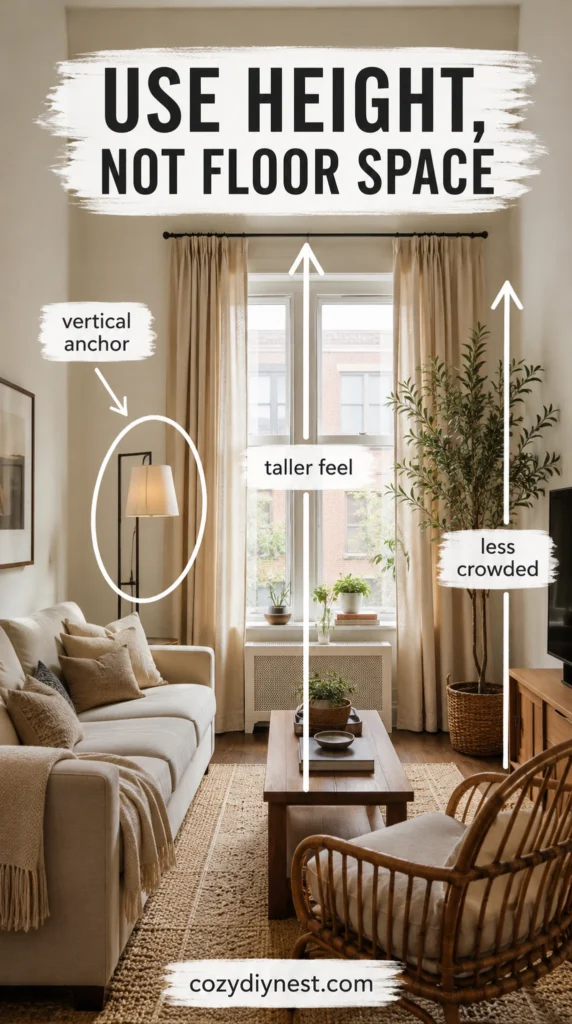
When floor space is limited, look up. A small living room often feels crowded because every solution sits low: sofa, coffee table, ottoman, basket, side table. Without vertical lift, the room can feel compressed.
Use height carefully. Hang curtains higher, choose a tall slim floor lamp, add a vertical shelf, use a tall faux olive tree, or place artwork slightly higher in relation to the seating zone. The goal is to draw the eye upward without blocking the walking path.
AI-smart styling test: In your room photo, divide the wall into lower, middle, and upper zones. If all the visual weight sits in the lower half, the room will feel shorter and fuller. One vertical anchor can help the layout breathe.
Real-life solution: Search for tall floor lamp small living room, vertical wall shelf, faux olive tree small apartment, curtains hung high, and plug-in wall sconces. These pieces add height without stealing much floor space.
Once you combine a clear walking path, lighter furniture, hidden storage, and vertical height, the room stops feeling like a crowded small box and starts feeling like an intentional cozy space.
Quick Small Living Room Layout Formula
- Find the main path first: your walking path should move around the seating, not through it.
- Stop lining every wall: pull seating slightly inward when the center feels dead.
- Use the rug as a zone: make the rug connect the sofa, chair, and table.
- Choose lighter furniture: visible legs, rounded corners, and slim profiles help the room breathe.
- Use hidden storage: lift-top tables, storage ottomans, drawers, and baskets reduce visual clutter.
- Go vertical: tall lamps, high curtains, wall shelves, and slim plants use height instead of floor space.
- Keep decor intentional: fewer useful pieces work better than many small objects in a tight room.
If your small living room still feels crowded after fixing the layout, check related layers too: living room decor scale, coffee table decor, side table decor, wall decor, and beige living room ideas.
Final Thoughts: Your Small Living Room May Need Better Flow, Not Less Style
A small living room does not need to feel crowded just because it has limited square footage. Often, the real problem is the path, the furniture placement, the rug zone, or the storage plan.
The best small living room layout ideas start with movement. Once the room is easy to walk through, you can add style with warm wood, linen, rattan, greenery, soft lighting, and compact storage pieces that support the layout instead of fighting it.
Start with one fix: clear the path, pull the seating into a better zone, or replace one bulky piece with a lighter small-space option. The room can feel bigger, calmer, and more inviting without a full makeover.
FAQ: Small Living Room Layout Ideas
What is the best layout for a small living room?
The best layout usually creates a clear walking path around the seating area, uses a rug to define the zone, and keeps furniture close enough for conversation. The right layout depends on the entrance, windows, TV wall, and how people move through the room.
Should I push furniture against the wall in a small living room?
Not always. Pushing every piece against the wall can create a dead center and make seating feel disconnected. Some small living rooms feel warmer when the sofa or chair is pulled slightly inward to create a stronger seating zone.
How do I make a small living room feel less crowded?
Start by clearing the walking path. Then choose lighter furniture, use hidden storage, define the seating with a rug, and add vertical height with curtains, shelves, a tall lamp, or slim greenery.
What furniture works best in a small living room?
Small living rooms usually work better with slim sofas, visible-leg furniture, round or oval coffee tables, storage ottomans, nesting tables, C-shaped side tables, and pieces that serve more than one function.
How can renters improve a small living room layout?
Renters can improve layout without renovation by rearranging furniture, using a rug to define the seating zone, adding storage baskets, choosing plug-in lighting, using a C-shaped side table, and adding vertical height with curtains or removable wall shelves.
What are the easiest small living room layout ideas for beginners?
The easiest small living room layout ideas are clearing the walking path, moving furniture slightly away from the walls, using a rug to connect the seating, replacing a bulky coffee table, and adding hidden storage for daily clutter.