
If your beige living room looks pretty but still feels flat, cold, or unfinished, the problem may not be the sofa or the rug. It may be the color story. These beige living room ideas are for the kind of room that has soft neutrals everywhere, but still feels too quiet because nothing warm repeats around the space.
A beige living room can be calm, elegant, and timeless, but it can also become visually lifeless when every pillow, curtain, rug, wall, and decor piece sits in the same pale family. The room may look clean, but it does not feel warm, layered, or pulled together.
Homes & Gardens notes that 2026 interiors are continuing toward layered warmth, earthy tones, natural textures, and warmer hues like chocolate, rust, and olive. Better Homes & Gardens also points to nature-inspired palettes that combine greens, blues, warm earth tones, and balanced color cues from the outdoors. That is exactly why the best beige living room ideas do not abandon beige; they give beige something warmer to work with.
This article is not about making your living room dark, heavy, or winter-styled. These beige living room ideas are summer-friendly and evergreen: light linen, cotton, rattan, warm wood, muted rust, olive green, camel, clay, warm brown, greenery, and airy daylight. The goal is a warm, finished, inviting living room that still feels breathable.
If your room also feels cold because of other missing layers, pair this guide with our how to make a living room feel cozy guide, best rug color for living room article, throw pillow ideas for living room, warm living room ideas with wood fixes, and living room wall decor ideas.
1. First, Notice If the Beige Color Story Is Too Quiet
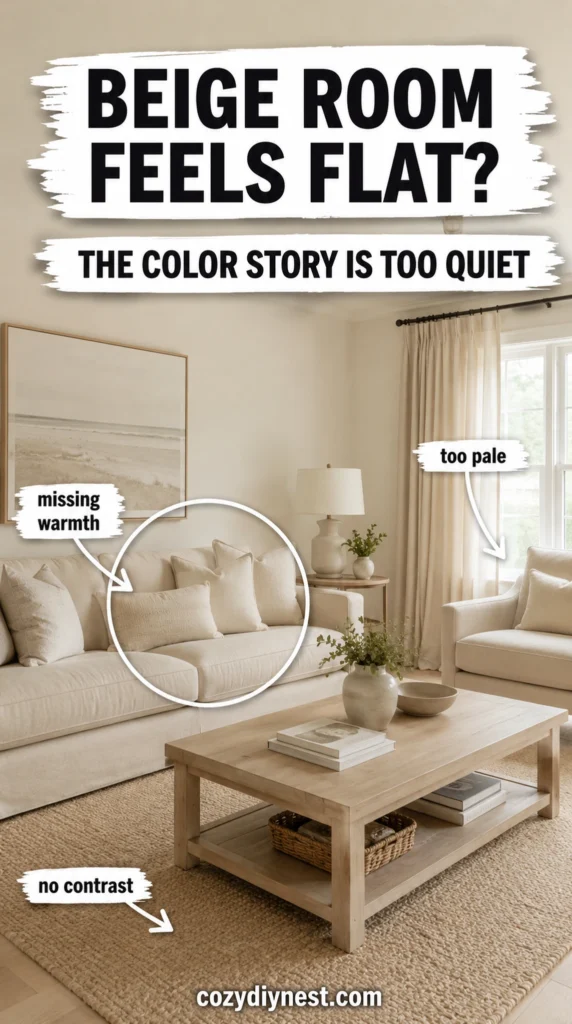
The first step is not buying more decor. It is diagnosis. A beige living room often feels flat because every layer is too close in color: beige sofa, beige pillows, cream wall, pale rug, pale curtains, and pale art. Nothing is wrong, but nothing is leading the eye either.
This is why many neutral living rooms look beautiful in small details but feel cold in a full-room photo. The color story has no movement. The eye sees one soft neutral field instead of a warm, layered room.
AI-smart styling tip: Take one straight-on phone photo of your living room and blur your eyes slightly. If the sofa, rug, curtains, pillows, and wall decor all blend into one pale block, the room needs stronger beige living room ideas based on color contrast and repetition, not just more beige decor.
Real-life solution: Choose one warm direction before you shop: rust and clay, olive and camel, warm brown and cream, or soft mustard and oak. The strongest beige living room ideas begin with one clear color story so the room feels intentional instead of randomly decorated.
2. Add One Warm Accent Color Before Adding More Decor
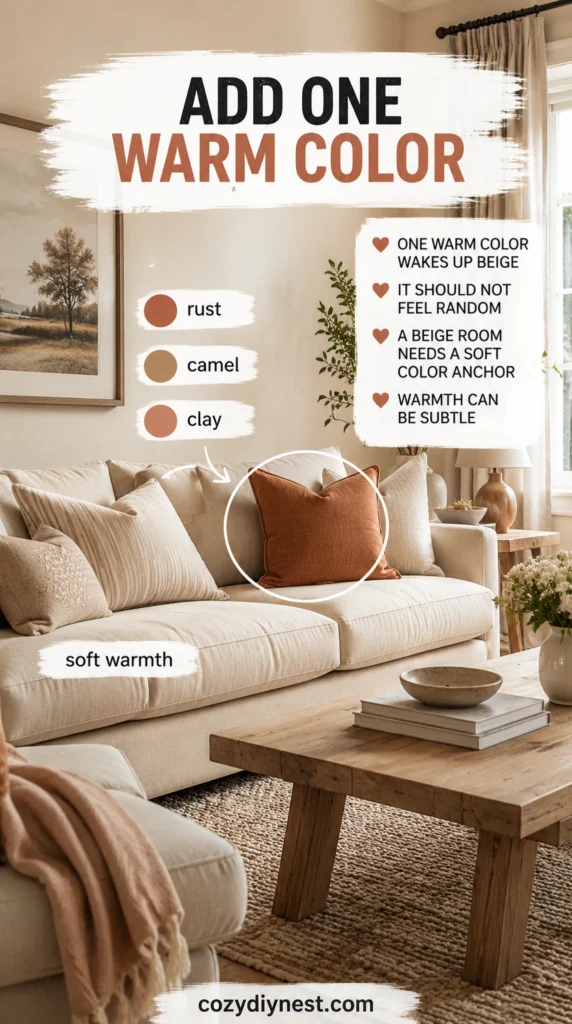
If your beige living room feels flat, one warm accent color can change the emotional temperature of the room fast. You do not need a loud color palette. You need one soft warm color that makes the beige feel alive.
Some of the best choices are muted rust, terracotta, clay, camel, warm olive, soft mustard, tobacco brown, or warm taupe. These colors work because they still feel natural with beige, but they add enough depth to stop the room from looking washed out.
Better Homes & Gardens notes that warm yellow can range from refreshing citrus tones to grounded mustard hues, which makes it flexible enough to use in subtle or bold ways. For a beige living room, the softer side of yellow, mustard, camel, and warm ochre can add warmth without making the room feel too bright.
AI-smart styling tip: Start with one warm pillow, one vase, or one throw edge and take another photo. If the room suddenly has a warmer focal point, you found the missing color direction. If it looks random, the color needs to repeat somewhere else.
Real-life solution: Search for rust throw pillows, camel throw blanket, terracotta vase, olive green pillow covers, muted clay decor, or mustard lumbar pillow. Target shows a large rust decor shopping category with pillows, blankets, curtains, and throws, which makes this a very realistic online shopping fix.
Among all beige living room ideas, adding one warm accent is one of the easiest because it does not require painting, replacing the sofa, or changing the whole room.
3. Repeat the Warm Color Three Times So It Looks Intentional
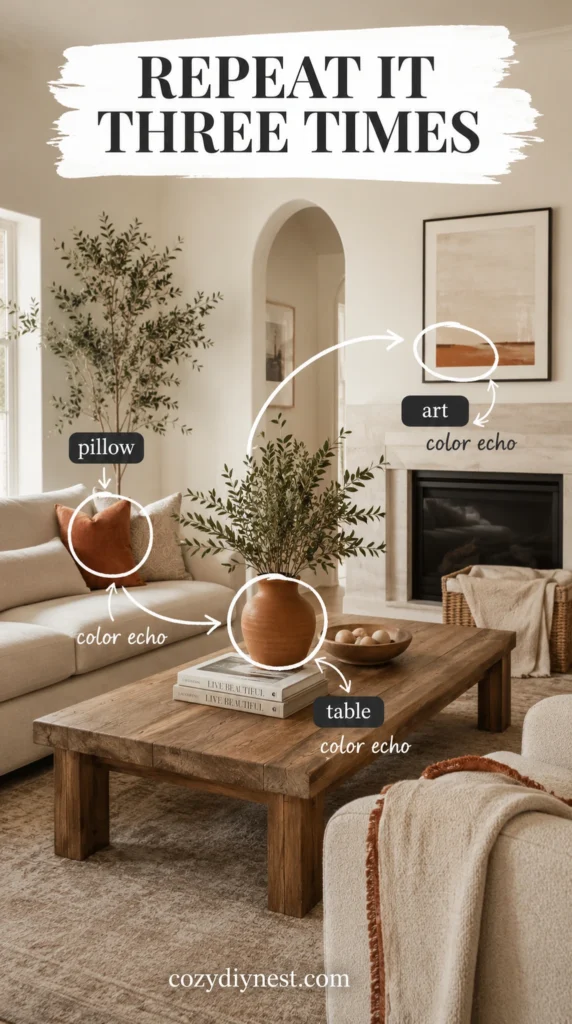
One warm accent can wake up a beige room, but one lonely accent can also look random. The trick is repetition. When the same warm color appears in three small places, the room starts to feel designed instead of decorated by accident.
Try repeating rust in a pillow, a coffee table book, and a tiny art detail. Repeat olive in stems, a pillow stripe, and a patterned rug detail. Repeat camel in a throw, a leather tray, and a warm wood frame. The color does not need to match exactly; it just needs to feel related.
AI-smart styling tip: Use the “three color echo” test. In your room photo, circle every place your warm accent appears. If you can only circle one, the room will still feel unfinished. Strong beige living room ideas usually repeat the accent color at least three times.
Real-life solution: Build a small color capsule: one pillow, one small vase, one art detail, one book cover, or one tray. This keeps the beige room calm while giving the eye a reason to move around the space.
This is where beige living room ideas become more powerful than simple shopping. The goal is not to buy more things; it is to make the color travel.
4. Use Olive Green or Greenery to Make Beige Feel Fresher
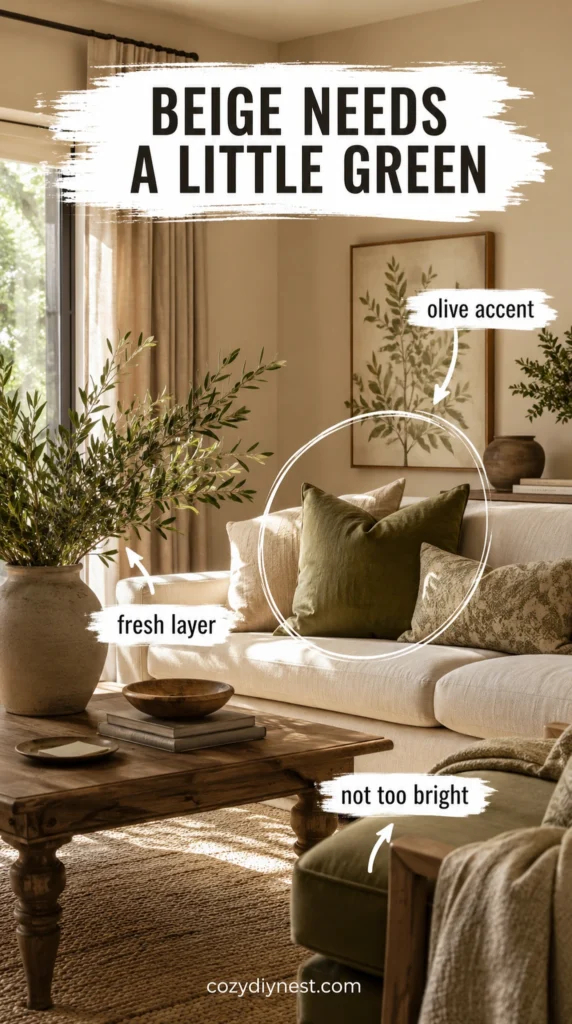
Olive green is one of the safest ways to warm up beige without making the room feel seasonal. It adds life, depth, and a natural layer that works beautifully with cream, taupe, camel, warm wood, and muted rust.
This is especially useful in spring and summer. Instead of making the room darker, olive green and greenery make beige feel fresher and more connected to nature. A few darker rich green details can also stop a pale beige room from feeling washed out.
AI-smart styling tip: If your beige living room feels too pale, add one green element and photograph the room again. If the room feels more alive but still calm, green is the right direction. If it feels disconnected, repeat green once in art, stems, or a small textile.
Real-life solution: Search for olive green pillow covers, faux olive stems, botanical wall art, muted green vase, olive lumbar pillow, or green patterned pillow. These beige living room ideas work well because green adds color while still feeling natural and easy to live with.
5. Bring in Pattern So Beige Does Not Feel Like One Flat Surface
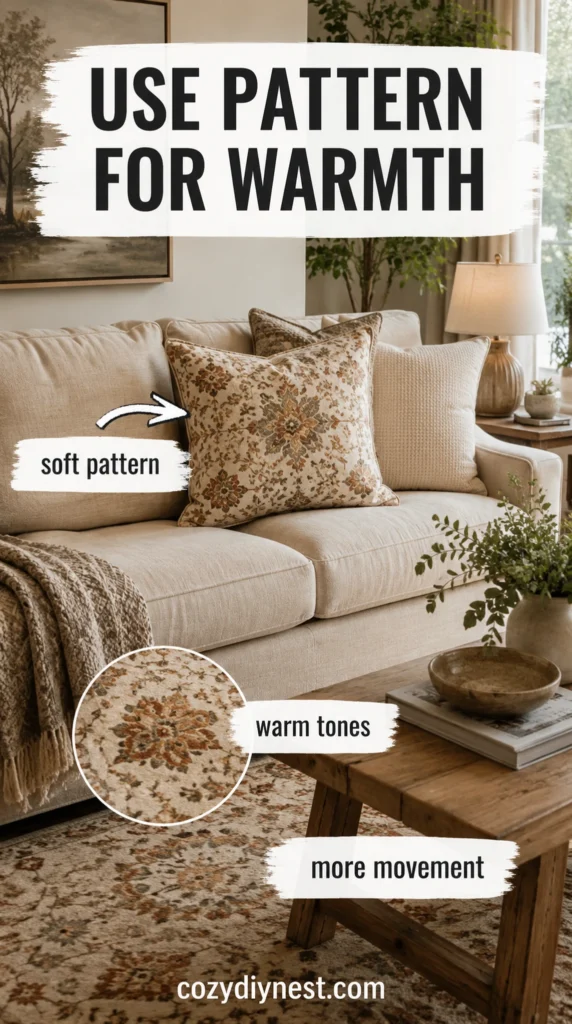
A beige room can feel flat when every piece is solid. Solid sofa, solid pillows, solid curtains, solid rug, solid wall. Even if the colors are pretty, the room can feel too quiet because there is no movement.
A subtle pattern can carry warm color without making the room loud. Try a striped lumbar pillow, vintage-inspired rug detail, block-print pillow, small floral print, or soft patterned art. The pattern should include beige plus one or two warm tones so it connects instead of competing.
AI-smart styling tip: Before buying a patterned piece, check whether it includes at least one color already in the room and one color you want to introduce. That makes the pattern act like a bridge instead of a random statement.
Real-life solution: Search for patterned throw pillows, striped lumbar pillow, vintage floral pillow cover, rust patterned pillow, olive block print pillow, or warm neutral patterned rug. Target lists decorative pillows for couches and living rooms, including patterned, woven, lumbar, and different pillow sizes, which makes pattern an easy low-cost update.
The best beige living room ideas use pattern carefully. One patterned piece can add more warmth than five plain beige pieces.
6. Add Soft Contrast So the Room Looks Deeper, Not Darker
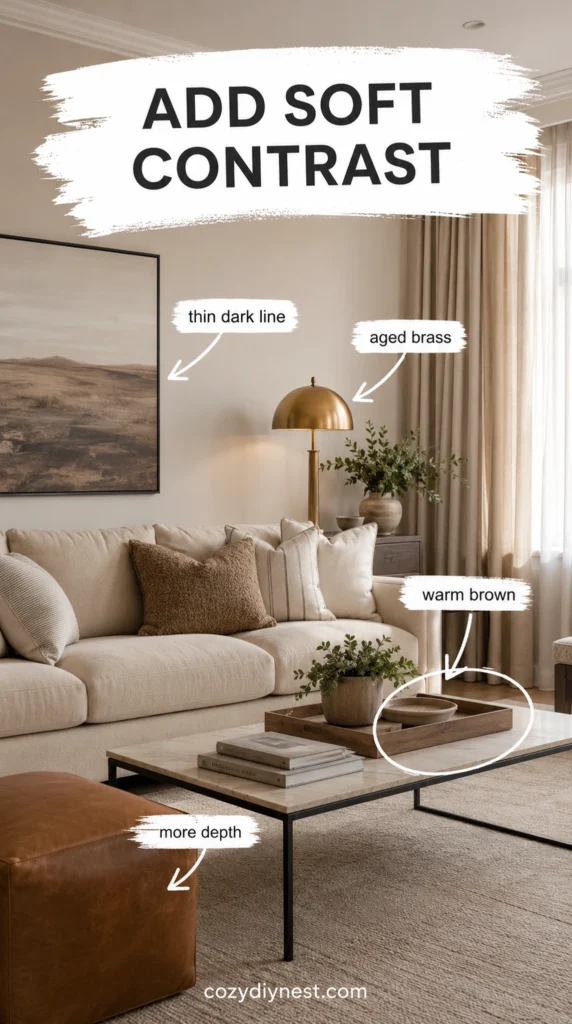
Beige does not need harsh contrast, but it does need some contrast. A room with no deeper line, no warm brown, no aged brass, no darker frame, and no wood depth can feel too pale and unfinished.
Use contrast softly. A warm brown tray, aged brass lamp, thin dark picture frame, camel leather ottoman, walnut side table, or deeper woven basket can add definition without making the room feel heavy.
AI-smart styling tip: Turn your room photo into black and white. If everything becomes the same gray value, the room lacks depth. Add one or two small contrast pieces and check again. Better beige living room ideas create depth without losing softness.
Real-life solution: Search for aged brass table lamp, warm brown tray, walnut picture frame, camel leather ottoman, dark wood side table, or woven storage basket. These pieces create quiet contrast while staying in a warm neutral family.
7. Build a Beige Color Capsule Instead of Buying Random Accents
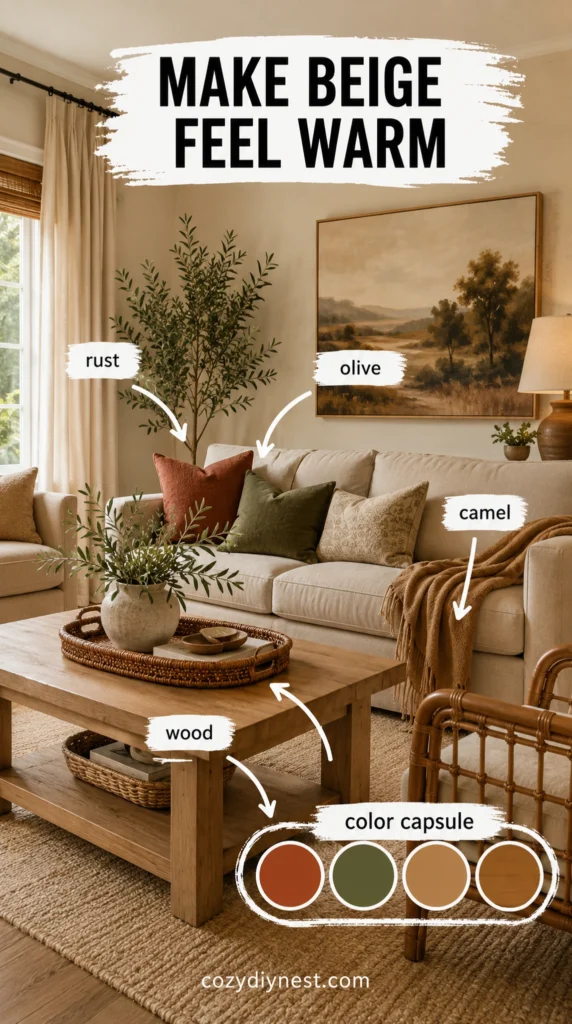
The biggest mistake is buying one rust pillow, one blue vase, one black frame, one green throw, and one gold object with no plan. The room may have more color, but it can still feel random. A beige living room works best with a small color capsule.
A strong capsule might be beige, cream, warm wood, rust, and olive. Another might be beige, camel, warm brown, soft mustard, and greenery. Another might be beige, taupe, clay, oak, and muted green. The exact colors can change, but the idea stays the same: limit the palette and repeat it.
AI-smart styling tip: Choose four colors and do not buy anything outside them for this room. Then take a photo after every change. If the room starts to feel calmer and warmer, your capsule is working.
Real-life solution: Start with one textile, one tabletop object, one wall detail, and one natural material. For example: rust pillow, olive stems, warm landscape art, and wood tray. These beige living room ideas make the room feel finished because every color has a reason to be there.
Once the color repeats around the room, beige stops feeling flat. It becomes the soft background that lets warm accents, natural texture, and quiet contrast do their job.
Quick Beige Living Room Color Formula
- Start with diagnosis: check whether everything in the room is the same pale neutral.
- Choose one warm accent: rust, clay, camel, olive, soft mustard, or warm brown.
- Repeat it three times: use a pillow, vase, book, art detail, or throw edge.
- Add greenery: olive stems, botanical art, or muted green pillows bring life to beige.
- Use pattern: let a patterned pillow or rug carry color softly.
- Add contrast: warm brown, brass, walnut, or a dark frame can give depth.
- Build a capsule: keep the color story small, repeated, and intentional.
If your beige living room still feels flat after adding color, check the other warmth layers too: layered lighting, rug color, empty corners, coffee table decor, side table decor, and wall decor.
Final Thoughts: Beige Is Not the Problem—A Quiet Color Story Is
Beige is not boring by itself. The problem starts when the whole living room stays in one pale note with no warmth, contrast, pattern, or color repetition. That is when beige starts to feel flat.
The best beige living room ideas do not fight the neutral base. They support it with warm accents, natural greens, subtle pattern, soft contrast, and a small color capsule that repeats around the room.
Start with one warm color and repeat it with intention. Once the color story starts moving, your beige living room can feel calm, warm, finished, and inviting without becoming dark or heavy.
FAQ: Beige Living Room Ideas
How do I make a beige living room feel less flat?
Use one warm accent color, repeat it three times, add subtle pattern, bring in greenery, and include a little soft contrast through warm wood, brass, camel, or warm brown. These beige living room ideas help the room feel layered instead of pale and flat.
What colors go best with a beige living room?
Rust, muted terracotta, clay, camel, olive green, warm brown, soft mustard, cream, taupe, and warm wood tones work beautifully with beige. These colors add warmth without making the room feel loud.
Why does my beige living room feel cold?
Your beige living room may feel cold because the colors are too similar, the room has no contrast, or the warm accent color does not repeat. Beige needs texture, depth, and a small color story to feel cozy.
Can beige living room ideas still work in summer?
Yes. Summer-friendly beige living room ideas use light linen, cotton, warm wood, rattan, olive greenery, clay accents, camel tones, and airy daylight. The room can feel warm and inviting without looking winter-heavy.
What is the easiest way to add color to a beige living room?
Start with one warm pillow or vase, then repeat that color in two smaller places. This is the easiest way to make the color look intentional instead of random.
Should a beige living room have contrast?
Yes, but the contrast should feel soft. Try warm brown, aged brass, walnut, camel, muted olive, or a thin dark frame. The goal is depth, not harshness.