
Layered lighting living room design is often the real answer when a space looks good during the day but still feels cold at night. In many American homes, the sofa is fine, the rug is fine, and the layout is fine, but the room still feels emotionally flat after sunset because one ceiling light is doing all the work. That kind of lighting can make a living room visible, but it rarely makes it feel soft, flattering, or cozy.
If you are trying to fix a room that feels colder at night than it should, a better layered lighting living room setup is usually more powerful than buying random decor. A table lamp, a floor lamp, a warm bulb, a cordless glow source, and one intentionally lit evening zone can change the room much faster than adding more accessories that do not solve the actual problem.
Current design guidance supports this clearly. House Beautiful recommends layered living room lighting instead of relying on one central fixture, while Better Homes & Gardens also emphasizes mixing different light types for a warmer and more functional room. If you also want more softness beyond lighting, pair this article with how to make a living room feel cozy and layered window treatments.
1. Stop Letting One Big Light Do Everything
The fastest reason a room still feels cold at night is that the whole space depends on one ceiling light. That creates visibility, but not atmosphere. Instead of giving the room depth and warmth, it washes everything evenly and leaves the space feeling flat.
This is the foundation of a stronger layered lighting living room setup. A room usually feels warmer when it has at least three kinds of evening light working together: one table lamp, one floor lamp, and one smaller accent glow source. That combination makes the room feel more human, more settled, and much less harsh after dark.
If your living room looks nice but still feels cold at night, this is where I would intervene first. The problem is often not the furniture. It is that the room has brightness without warmth.
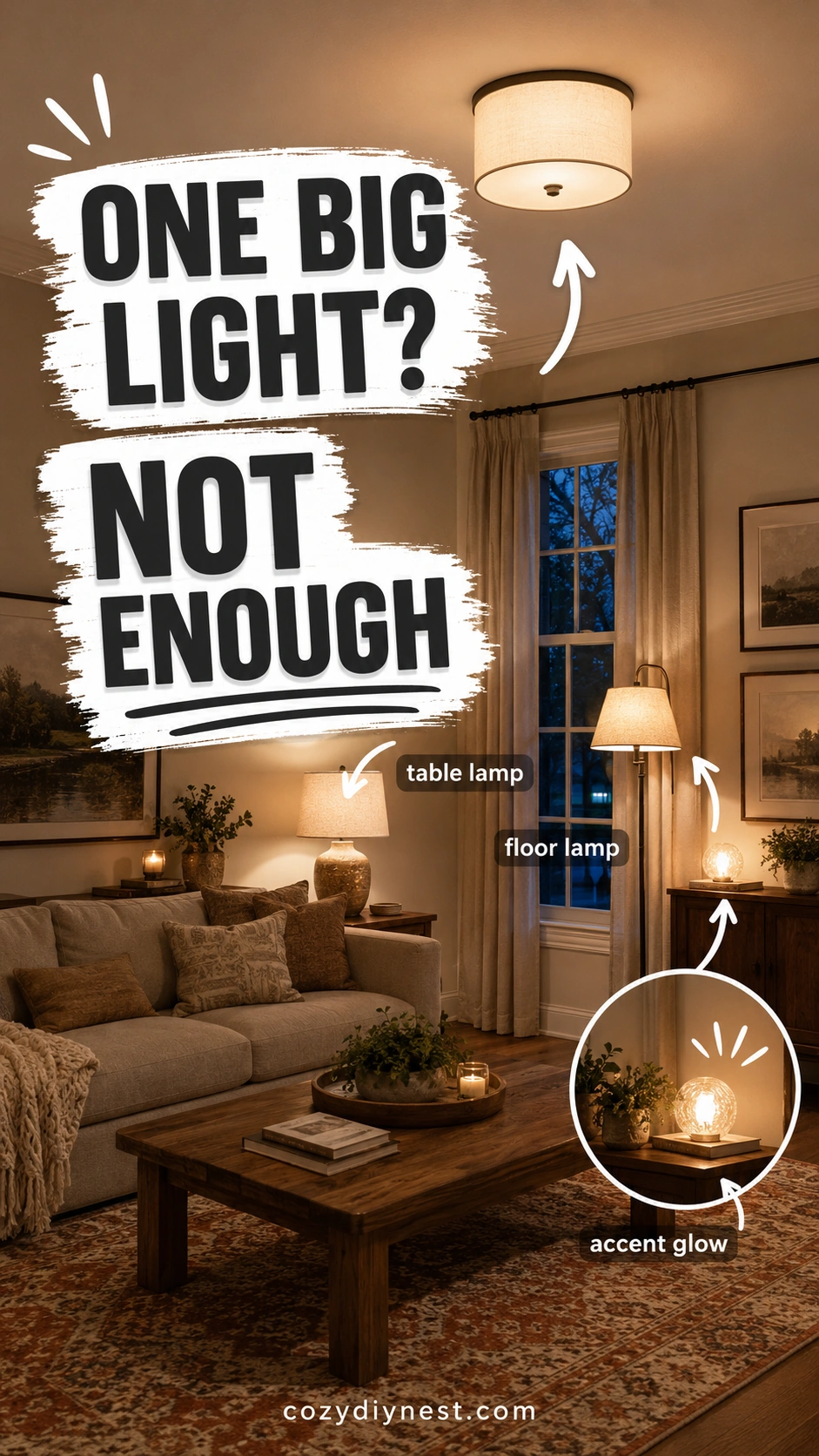
Once the room has more than one light source, it usually starts feeling cozier almost immediately.
2. Add a Table Lamp Beside the Sofa So the Main Seating Area Stops Feeling Exposed
A sofa zone often feels colder than it should when it has no local light source. The ceiling light may brighten the room, but it does not create the kind of soft pool of light that makes the seating area feel calm and welcoming.
This is one of the easiest layered lighting living room fixes because it improves the emotional center of the room right away. A warm table lamp beside the sofa makes the main seating zone feel more intimate and less exposed at night. That one move can make the room feel more finished without changing the furniture at all.
If the room feels cold where people actually sit, this is usually the smartest first light to add.
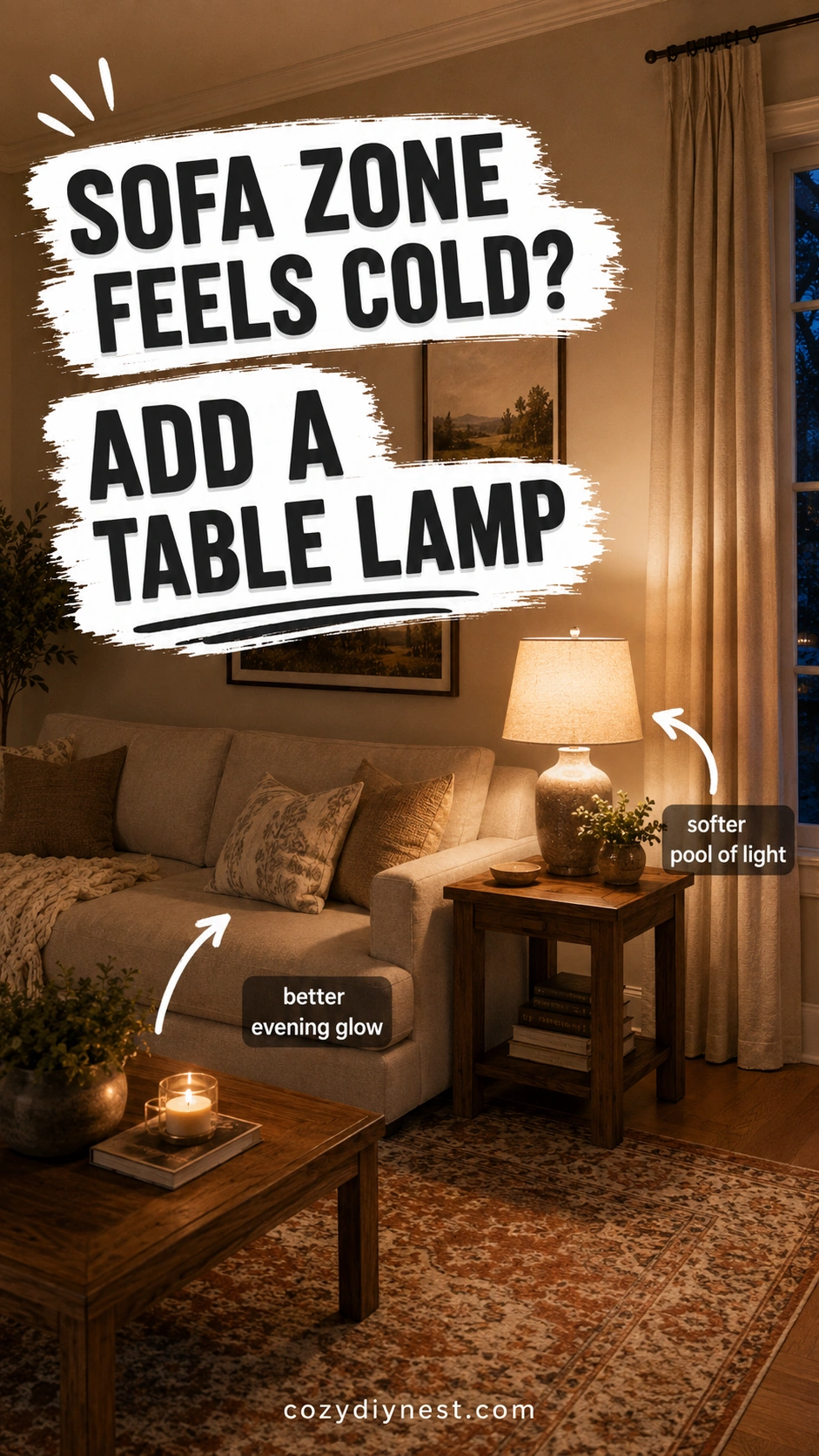
This also works especially well if you are trying to make a living room feel cozy without buying more furniture.
3. Put a Fabric-Shade Floor Lamp in the Darkest Corner
One dark corner can quietly make the whole room feel colder than it really is. Even when the center of the room is lit, an unlit corner reads as empty, unfinished, and a little lifeless at night.
This is why a fabric-shade floor lamp is such a practical fix. It adds height, softens a dead zone, and throws a warmer, gentler light than a harsher exposed-bulb fixture. In a good layered lighting living room plan, the floor lamp often does the work of making one forgotten corner feel intentional again.
If one side of the room disappears after sunset, the room will keep feeling colder than your decor deserves.
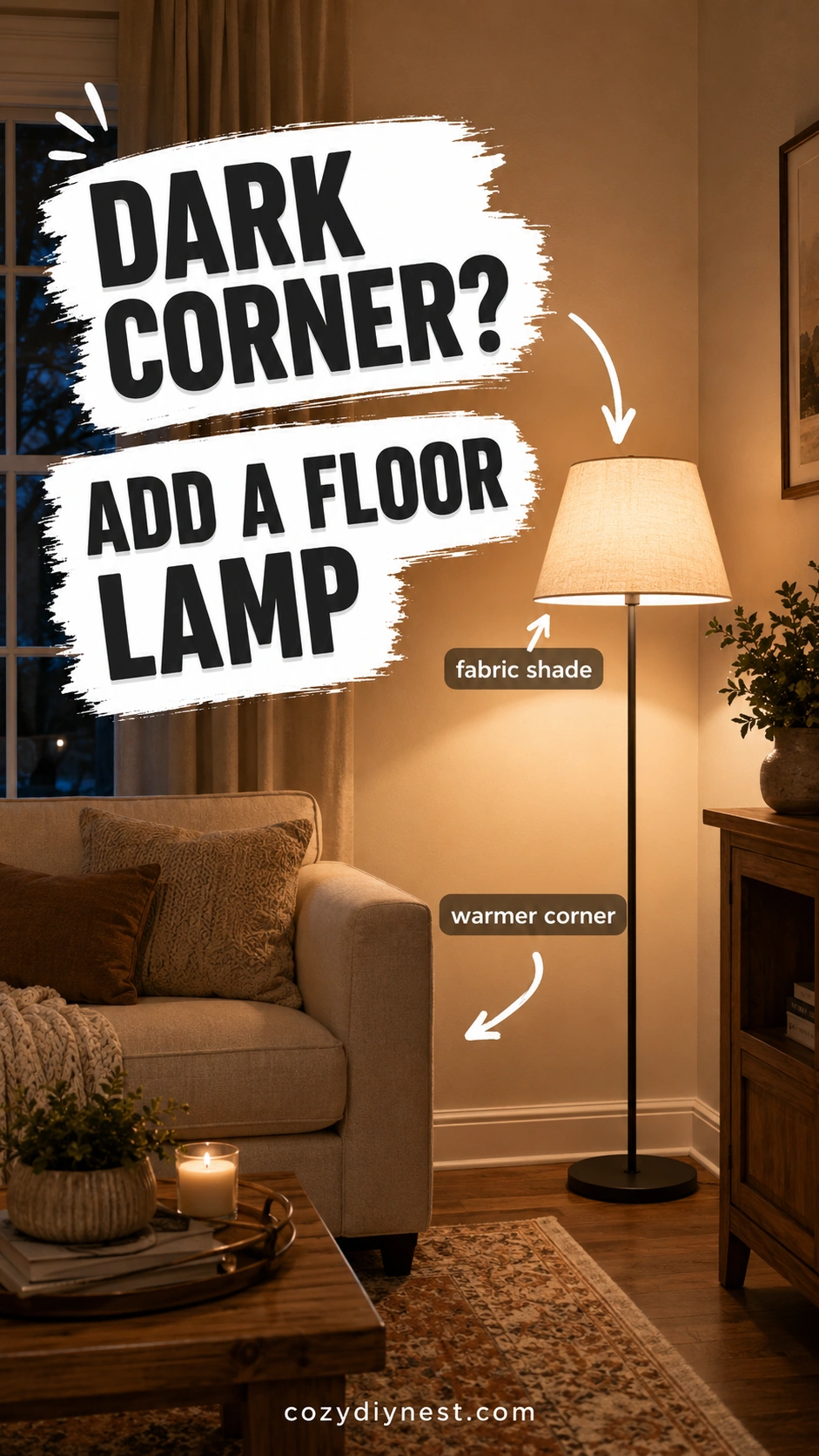
This is also one of the highest-payoff upgrades for rentals and smaller living rooms because it changes the mood without requiring built-ins or rewiring.
4. Swap Cool Bulbs for 2700K Warm Bulbs Before You Buy More Decor
Sometimes the problem is not the lamp at all. It is the bulb. Cool-toned bulbs can make beige walls look duller, wood look flatter, and the entire room feel harsher than it should at night.
This is where a layered lighting living room strategy becomes more intelligent than random decorating. Before buying more pillows, art, or accessories, fix the light color first. Real Simple notes that warmer bulbs in the 2700K to 3000K range create a much cozier feeling than cooler blue-toned light, and The Spruce also explains that warm lighting creates a softer, more relaxed mood indoors.
If your lamps are there but the room still feels cold, the bulb temperature may be undoing all the work.
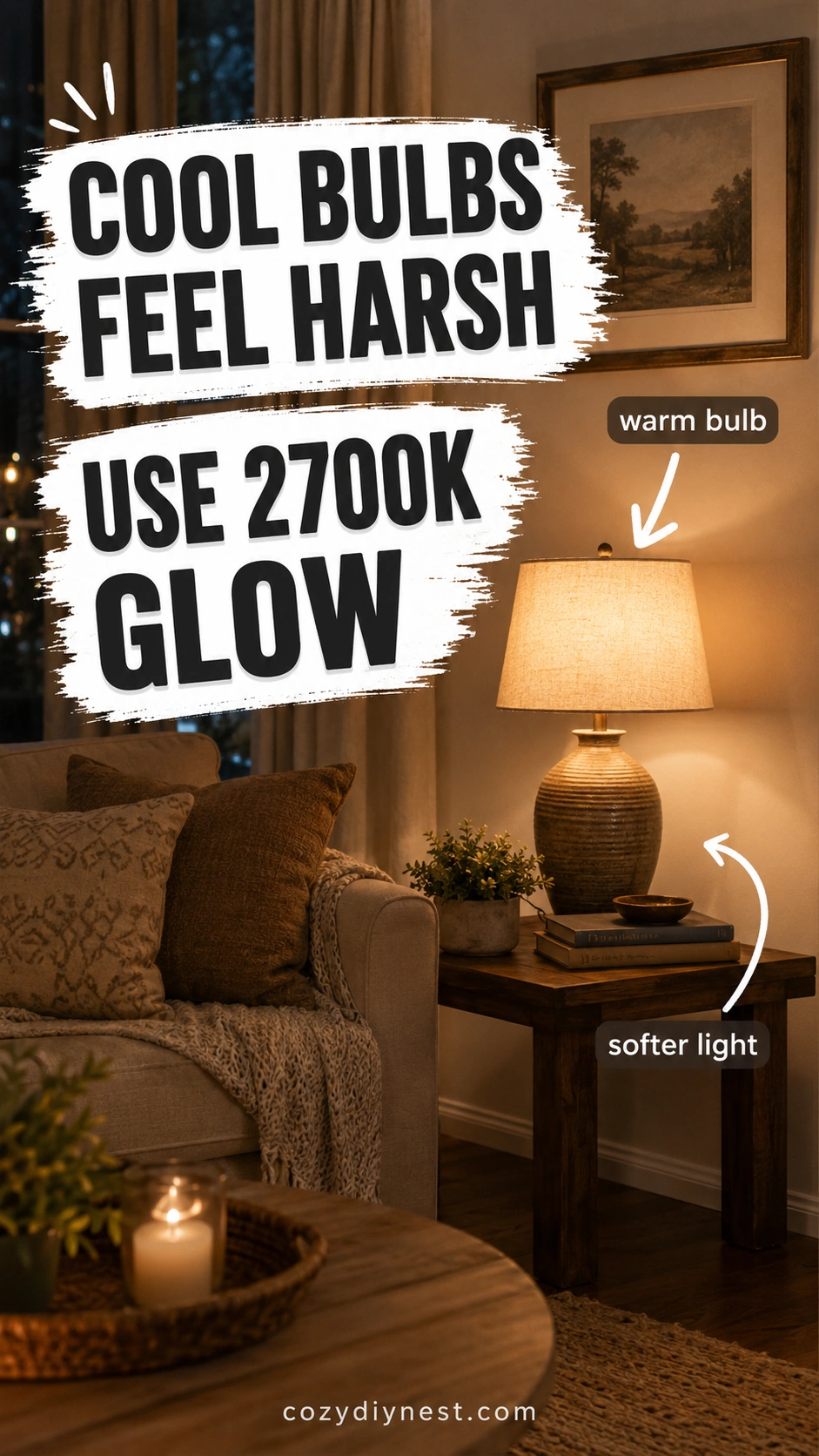
This is one of the cheapest fixes in the whole article, and often one of the most important.
5. Use a Cordless Lamp Where the Room Needs Warmth but the Outlet Placement Is Bad
A lot of living rooms have awkward outlet placement, which is one reason consoles, shelves, and sideboards often stay dark. People know the area needs warmth, but they do not want cords running across the room or rearranging the entire layout to reach one plug.
This is why cordless lamps are such a strong real-world fix. A rechargeable lamp on a console, shelf, or sideboard adds warmth in places that would otherwise stay visually dead. In a smarter layered lighting living room setup, that small source of glow is often what makes the room feel complete rather than merely bright enough.
If your room needs one more layer of warmth but the outlet placement is terrible, this is usually the easiest answer.
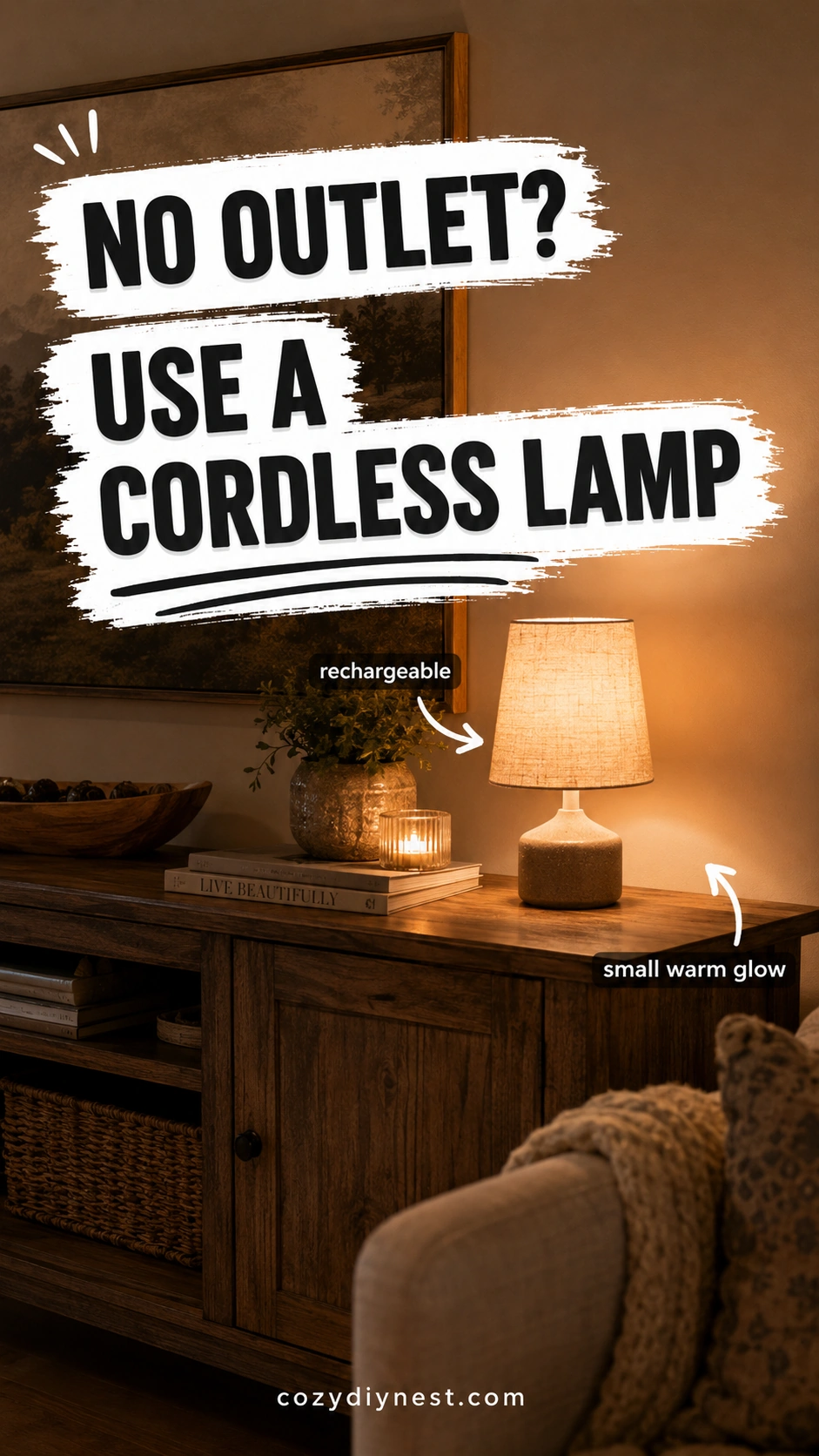
This kind of small lamp also works well for shelves, bookcases, and sideboards that feel too flat after dark.
6. Light the Room at Three Heights So It Stops Feeling Flat
A room can still feel cold when all the light happens at one level. That creates a flat, one-note effect instead of the layered depth that people naturally associate with cozy interiors.
One of the strongest layered lighting living room formulas is simple: one low glow, one mid-height lamp, and one taller lamp. Better Homes & Gardens says relying too much on one overhead light can flatten a room and recommends mixing different light sources for more depth and warmth.
If your room is technically lit but still feels emotionally flat, the issue may be that the light is all happening at the same visual height.
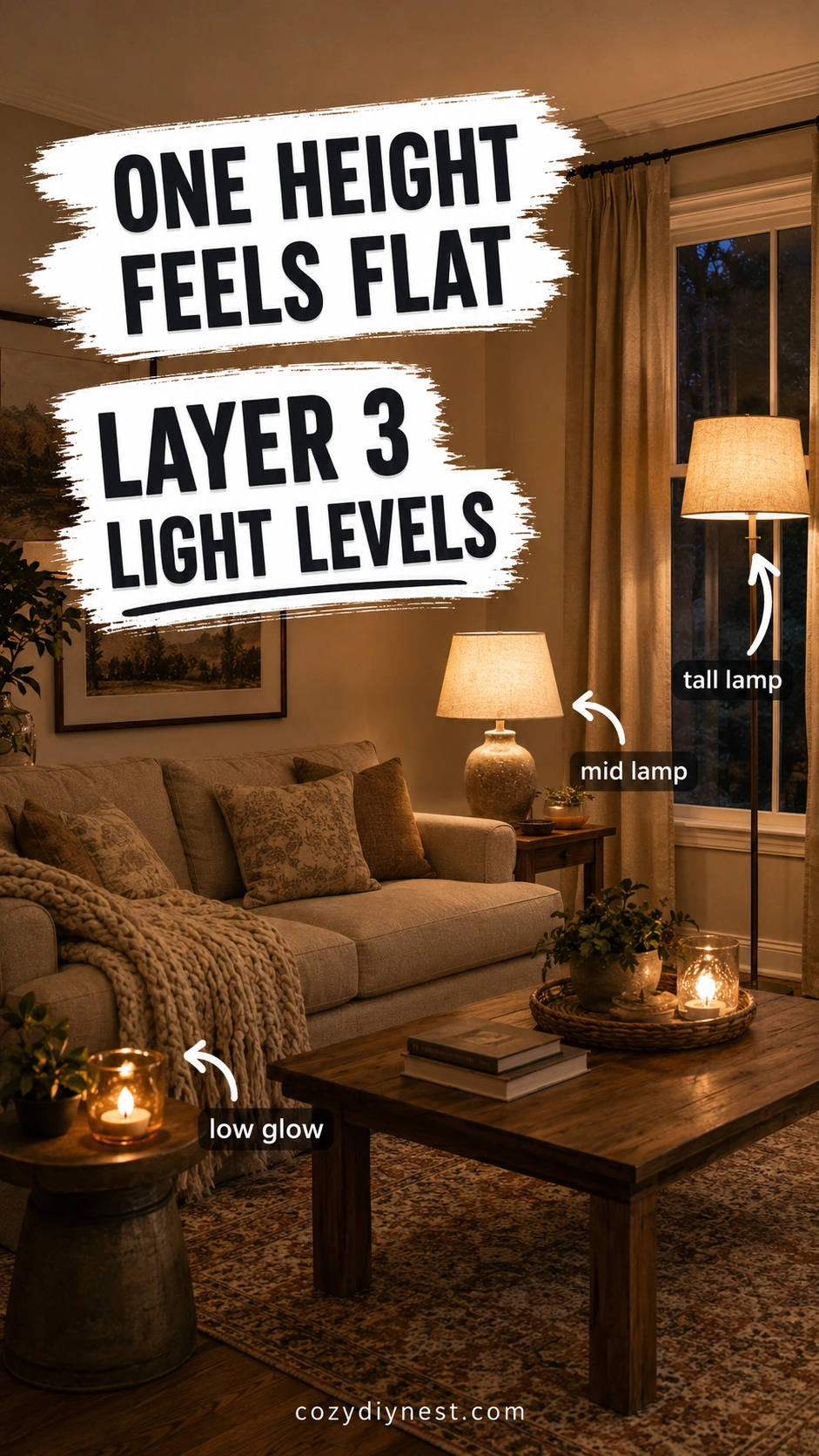
This is where the room usually starts feeling more layered, deeper, and much more evening-friendly.
7. Build One Cozy Evening Zone Instead of Trying to Perfect the Whole Room at Once
A cozy room at night usually has one place that feels especially good to land: a sofa corner, a reading chair, or one side-table glow spot. Without that, the room can stay visually generic even with better lamps.
This is one of the most practical layered lighting living room recommendations because it is both strategic and realistic. Do not try to perfect the whole room in one move. Light one evening zone well. A side table, a warm lamp, a folded throw, and a small accent glow can make the room feel much cozier even before every corner is finished.
If your room still feels cold after dark, build one undeniably warm place first. The rest of the room usually starts to follow.
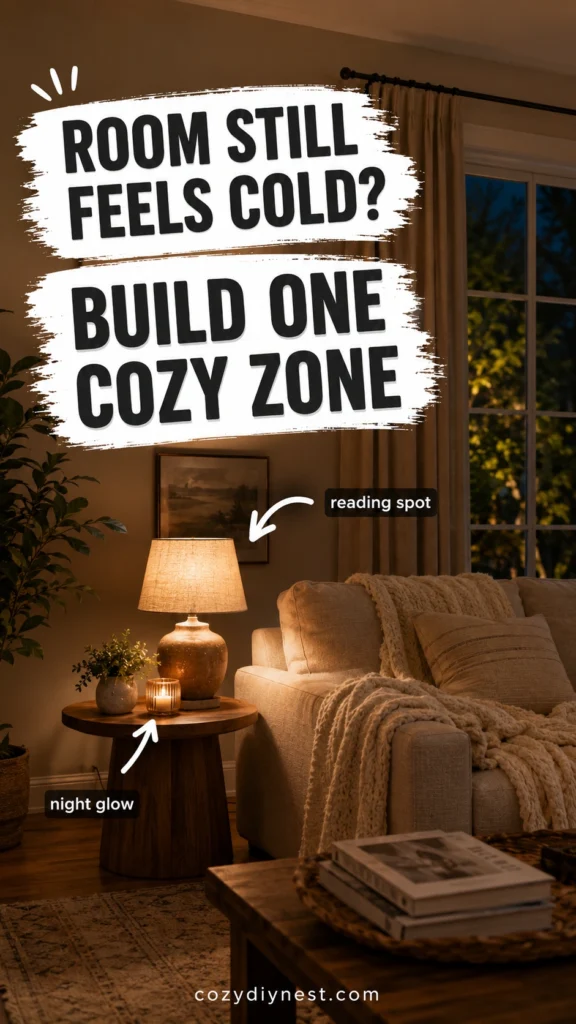
This is also one of the smartest upgrades for apartments, rentals, and rooms where you want high visual payoff without redoing everything.
Quick Recap
- Stop relying on one big ceiling light.
- Add a table lamp beside the sofa.
- Light the darkest corner with a fabric-shade floor lamp.
- Switch to 2700K warm bulbs.
- Use a cordless lamp where outlets are awkward.
- Layer light at three heights.
- Build one cozy evening zone.
Final Thoughts
If your living room still feels cold at night, the issue is probably not your sofa or your paint color. In many homes, the real problem is that one ceiling light is doing too much and creating a room that feels visible but not warm.
That is why layered lighting living room fixes are so effective. Better light placement, warmer bulbs, smaller glow sources, and one intentional evening zone can make the space feel cozier much faster than buying more decor.
If you want a practical upgrade path that matches how real American homes are actually being styled right now, lighting is one of the smartest places to start.
FAQ
What is layered lighting in a living room?
Layered lighting living room design means using more than one type of light source, such as a table lamp, floor lamp, accent glow, and warm bulbs, so the room feels deeper and more comfortable.
Why does my living room feel cold at night?
Many living rooms feel cold at night because they rely too heavily on one ceiling light, use bulbs that are too cool, or do not have enough local glow near the seating area.
What bulb color makes a living room feel cozier?
For many living rooms, 2700K warm bulbs feel softer and more inviting than cooler white bulbs, especially in table lamps and floor lamps.
Are cordless lamps actually useful in a living room?
Yes. Cordless lamps are especially useful when outlet placement is awkward and you need a small warm glow on a console, shelf, or side table without visible cords.