
If your living room feels short, heavy, or visually flat, the ceiling may not be the real problem. One of the most common curtain hanging mistakes is placing the curtain rod too close to the window frame, which visually cuts the wall down and makes the whole room feel lower.
This is why a simple curtain change can look so dramatic in a before-and-after photo. In the wrong version, the curtains sit low, narrow, and close to the window. In the right version, the rod is higher, wider, and the panels fall all the way down. Suddenly, the same window makes the room feel taller, airier, and more expensive.
Design sources often repeat the same core principles: hang curtains higher, extend the rod wider, use enough fabric fullness, and let the panels meet the floor intentionally. The Spruce recommends placing rods above the window frame and extending them beyond the sides of the window. Real Simple notes that panels usually need about two to two-and-a-half times the window width for fullness. Architectural Digest also emphasizes that curtains often look best when they gently meet the floor.
These 9 curtain hanging mistakes will help you diagnose why your window treatment feels off and how to fix it with better rod height, width, fullness, length, fabric weight, and hardware scale. If your room also feels crowded beyond the window, pair these curtain fixes with small living room layout ideas and small living room furniture ideas so the whole space feels more balanced.
The good news is that most curtain hanging mistakes are fixable without replacing every piece of decor. Sometimes the room only needs taller rod placement, wider panels, better fabric fullness, and a cleaner floor-length finish.
1. Hanging the Curtain Rod Too Low
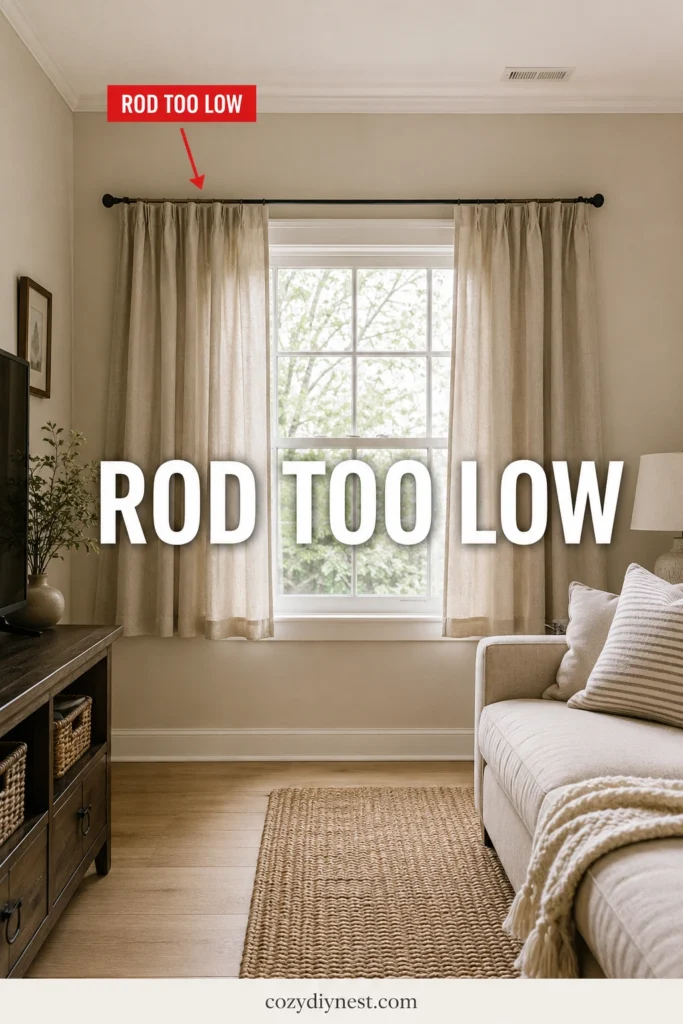
The biggest mistake in the pin is also one of the most common curtain hanging mistakes: the rod is too low. When the rod sits only a few inches above the window frame, the eye reads the window as shorter and the ceiling as lower.
A higher rod creates a longer vertical line. That vertical line is what makes the room feel taller, even if the ceiling height has not changed at all. This is why designers often hang curtains closer to the ceiling or at least higher than the top of the window frame.
The fix is not about making the curtains look dramatic. It is about helping the wall read as taller. When the fabric starts higher and falls down in one clean line, the whole window wall feels more intentional and less chopped up.
AI-smart test: Take a straight photo of your window. Draw one line where the rod is now, then draw another line higher above the window. If the higher line makes the room feel more open, your rod is probably too low.
2. Choosing Curtains That Are Too Skinny
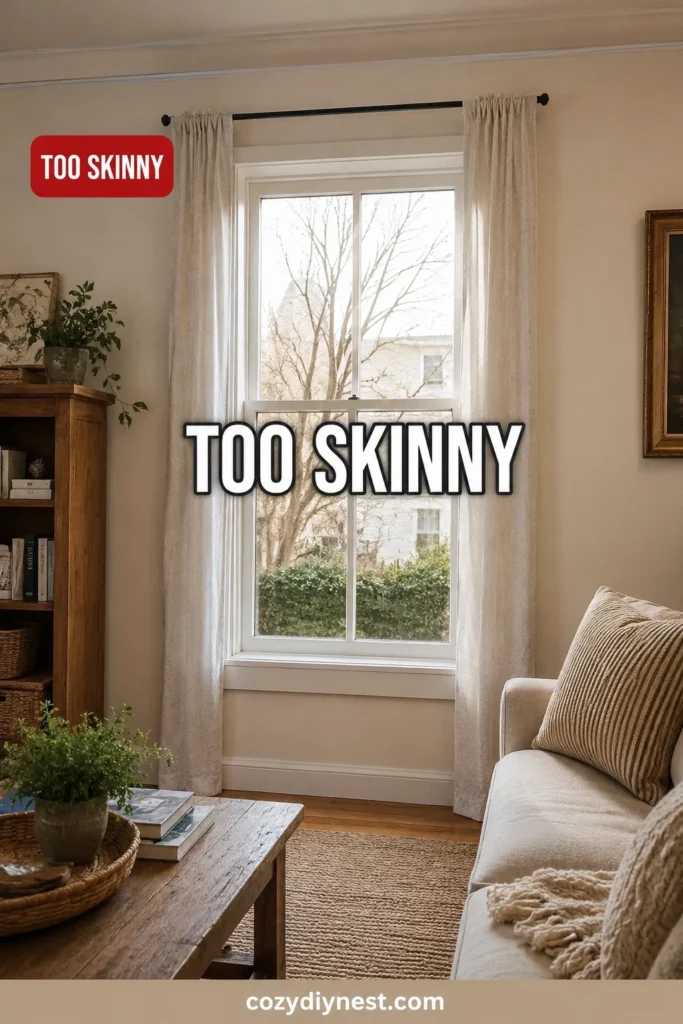
Another visual problem in many rooms is skinny curtain panels. The curtains technically cover the window, but they do not have enough fabric to create soft folds. The result feels flat, stretched, and unfinished.
For a fuller look, the total curtain width usually needs to be around two to two-and-a-half times the width of the window or curtain rod. This extra fabric creates the soft gathered look that makes curtains feel designer instead of skimpy.
This is one of the most expensive-looking fixes because it does not always require luxury fabric. Sometimes the room only needs more fullness, not a completely different curtain style.
Among all curtain hanging mistakes, skinny panels are especially common because many people buy one panel per side and assume that is enough. But if the curtains look like flat strips instead of soft folds, the window will still feel underdressed.
3. Using a Rod That Is Too Narrow
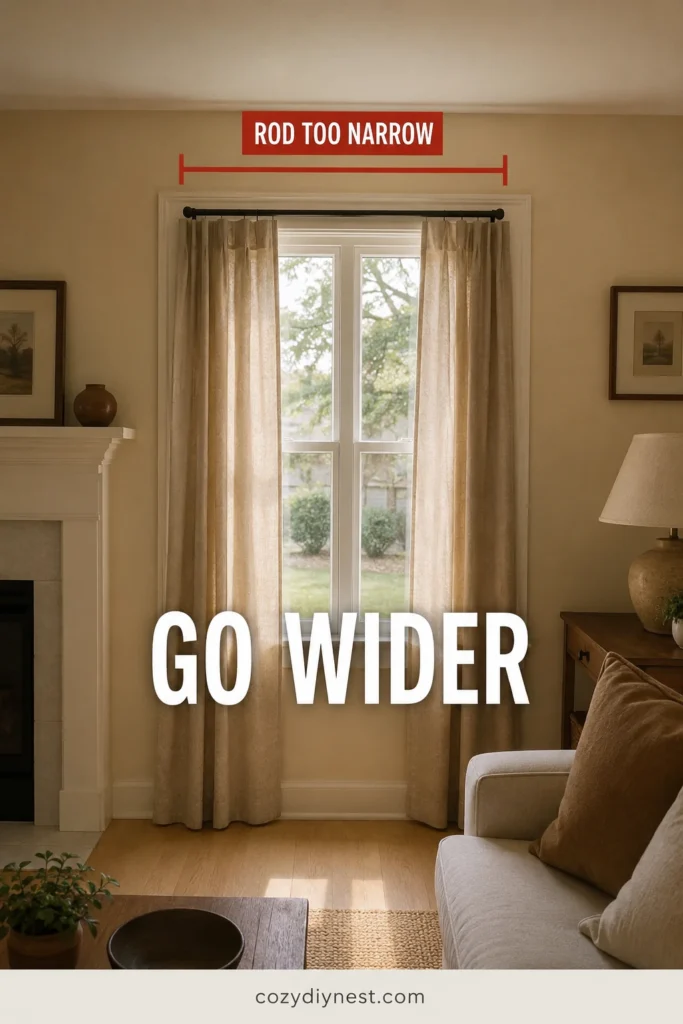
A narrow rod makes the window look boxed in. When the rod ends too close to the window frame, the curtains cover part of the glass even when they are open. That steals natural light and makes the window look smaller.
Extend the rod wider than the window so the panels can rest partly on the wall. This makes the window look wider, lets in more light, and gives the curtains room to frame the window instead of covering it.
This also helps the room feel brighter during the day. More visible glass means more natural light, and more natural light can make a small living room feel less heavy. If your main issue is furniture crowding the view, combine this fix with small living room layout ideas so the window wall has enough breathing room.
Real-life solution: Before buying a rod, measure the window and add extra width on both sides. The goal is not only to cover the window. The goal is to make the window feel larger.
4. Stopping the Curtains Too High Above the Floor
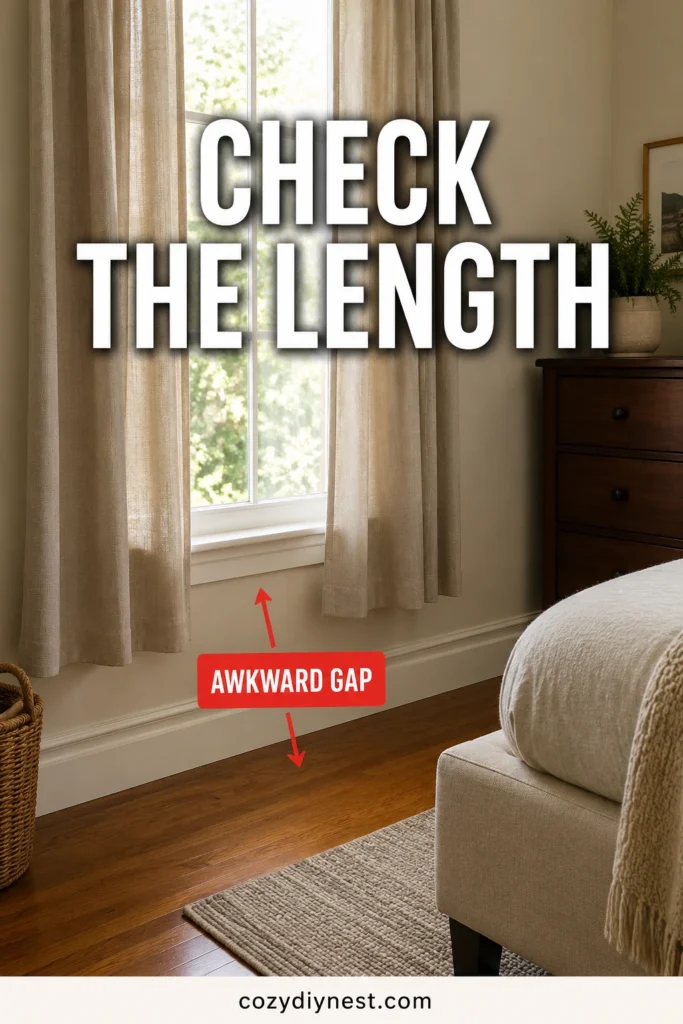
Curtains that stop several inches above the floor create an awkward gap. That gap breaks the vertical line and makes the room feel unfinished, especially in living rooms and bedrooms where floor-length curtains usually look more intentional.
The cleanest everyday look is usually a soft floor kiss, a slight float, or a very intentional puddle if the room style supports it. The problem is the accidental “almost long enough” look.
This is one of the most visible curtain hanging mistakes because the eye immediately notices where the fabric stops. If the curtains stop too high, the entire wall feels shorter.
If your curtains are already installed and look too short, check whether the rod can be lowered slightly or whether longer panels are needed. In many rooms, the cleaner fix is to buy longer panels and hang the rod higher rather than trying to make short curtains work.
5. Letting the Curtains Puddle Too Much in a Small Room

A little puddle can look romantic in the right room, but too much fabric on the floor can make a small room feel heavy. It can also collect dust and look messy faster in a real home with kids, pets, or daily traffic.
For most practical American living rooms and bedrooms, a clean floor-kiss or slight float is easier to maintain. It still looks polished, but it does not create a pile of fabric at the base of the window.
The key is intention. If the puddle looks accidental, it reads as a mistake. If the room is casual and small, cleaner curtain length usually builds more trust and looks more realistic.
This is one of the curtain hanging mistakes that depends on lifestyle. A formal room can handle more fabric on the floor, but a small everyday living room usually looks better with a cleaner, easier-to-maintain hem.
6. Picking Fabric That Is Too Thin for the Room
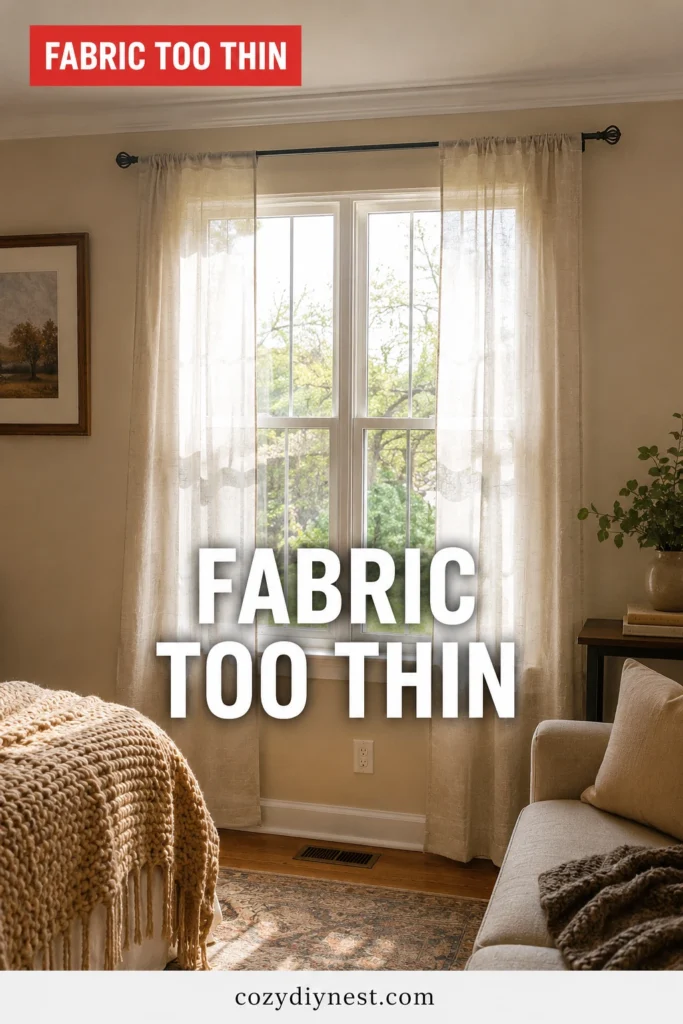
Thin curtains can work beautifully as sheers, but they may look weak when they are the only window treatment in a room that needs softness, privacy, or warmth. If the fabric has no weight, the panels can hang flat and make the whole window feel underdressed.
Look for fabric that matches the room’s job. Linen blends, cotton blends, textured weaves, lined panels, or layered sheers can make the curtains feel fuller without looking stiff or formal.
This is one of those curtain hanging mistakes that people miss because the rod height may be correct. Sometimes the curtain is hung well, but the fabric is too light for the visual weight of the room.
Think about the other materials in the room. A large sofa, thick rug, wood coffee table, or bold wall color may need curtains with more presence. If the room already feels cold or unfinished, fabric texture can help soften the whole space.
7. Ignoring Privacy, Glare, and Light Control
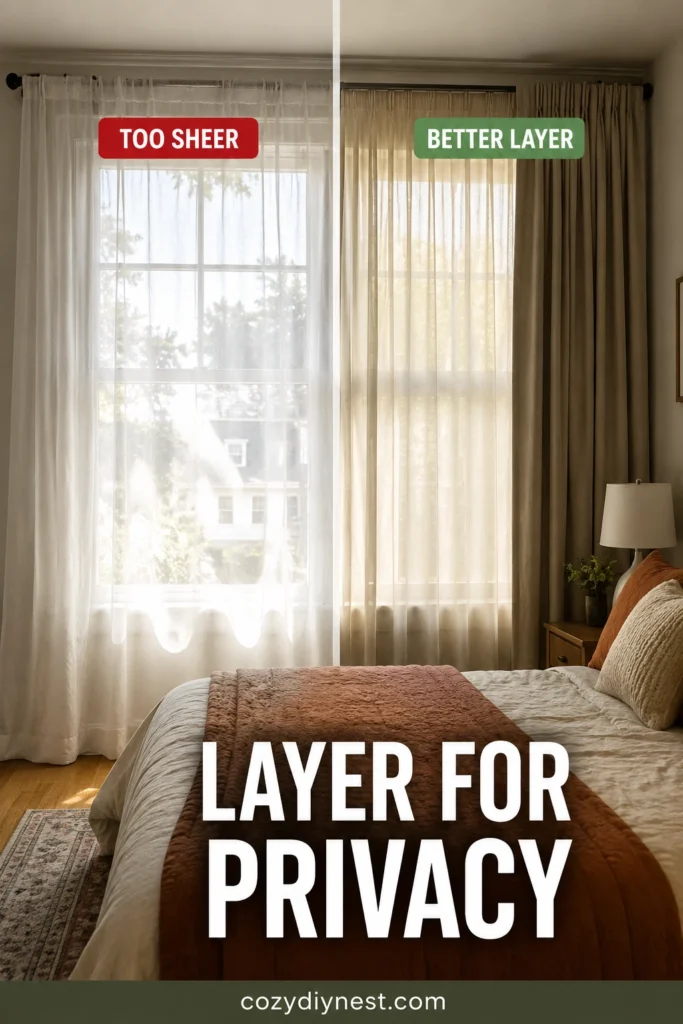
Curtains are not only decoration. They control light, privacy, glare, heat, and mood. A curtain can look pretty in a photo and still fail the room if it does not solve the real window problem.
Bedrooms may need blackout or room-darkening lining. Living rooms may need light-filtering panels. Street-facing windows may need sheers layered behind heavier curtains. The right solution depends on how the room is actually used.
This is one of the most practical curtain hanging mistakes because it affects daily comfort. If the room has glare every afternoon or feels exposed at night, the curtain style is not doing its job yet.
AI-smart room test: Ask what the window needs most: privacy, softness, warmth, glare control, or style. If the curtain does not solve that main need, the room may still feel wrong even after the panels are replaced.
8. Using Hardware That Looks Too Small or Weak
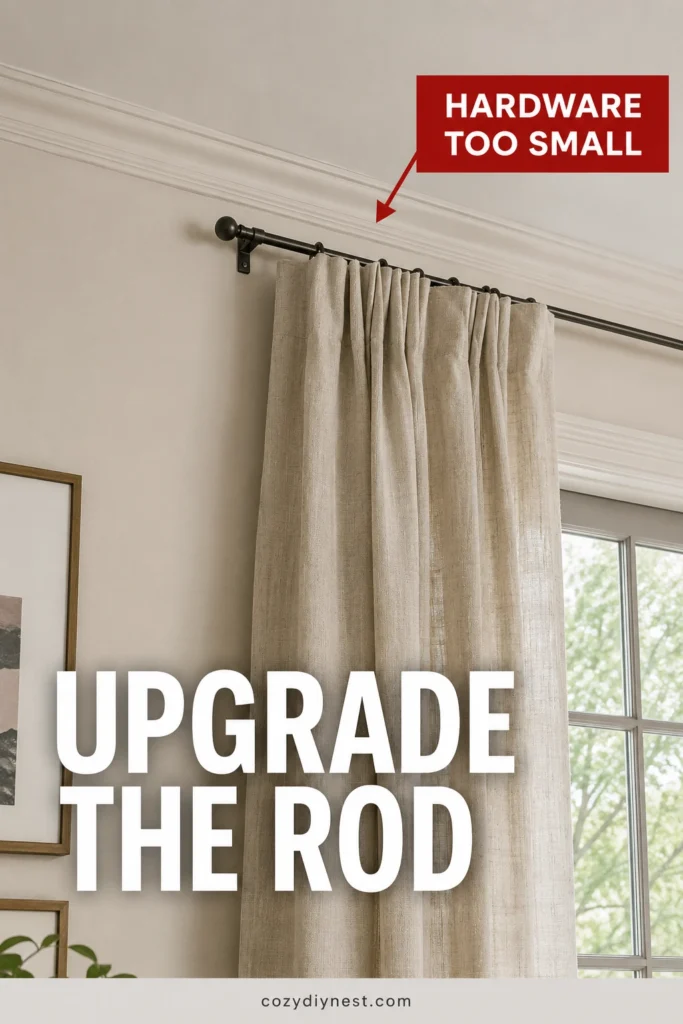
Small hardware can make the entire curtain treatment feel like an afterthought. A thin rod, weak brackets, or tiny finials may visually shrink the window treatment, especially when the fabric is full or the window is wide.
Choose hardware that matches the scale of the window and the weight of the fabric. A larger window, heavier panel, or wide wall usually needs a stronger rod and more intentional brackets.
This is where budget curtains can begin to look expensive. If the rod height, rod width, fabric fullness, curtain length, and hardware all feel intentional, the room looks more finished even without custom drapery.
Hardware is one of the easiest curtain hanging mistakes to overlook because it seems like a small detail. But when the rod is too thin or the brackets look weak, the whole window treatment loses confidence.
9. Treating Curtains Like a Small Detail Instead of a Room-Scaling Tool

The final mistake is thinking curtains are just a finishing detail. Curtains can change how the entire room feels. They can make the ceiling feel higher, the window feel wider, the sofa wall feel softer, and the room feel more complete.
Before choosing panels, look at the full wall: ceiling height, window width, furniture placement, rug color, sofa size, and how much daylight the room needs. The curtain treatment should support the room’s scale, not fight it.
The best fix for most curtain hanging mistakes is not always buying expensive curtains. It is hanging them higher, extending them wider, choosing enough fullness, and letting the fabric meet the floor in a clean, intentional way.
If the living room still feels visually off after fixing the curtains, look at scale across the rest of the room too. Your sofa, rug, coffee table, and walking path all affect whether the room feels open or cramped. For more small-room balance, continue with small living room storage ideas and small living room furniture ideas.
Quick Curtain Fix Formula
- Hang higher: move the rod above the window frame to make the room feel taller.
- Go wider: extend the rod past the window so panels stack on the wall.
- Add fullness: choose enough fabric so curtains do not look flat or skinny.
- Check the floor: curtains should usually kiss or lightly float above the floor.
- Match function: choose sheers, lined panels, or blackout curtains based on the room’s real need.
- Upgrade hardware: use rods and brackets that match the window size and fabric weight.
Use this formula whenever you are checking for curtain hanging mistakes: height, width, fullness, length, fabric, and hardware. If one of these is scaled too small, the whole room can feel shorter or less finished.
Final Thoughts: It May Not Be the Ceiling — It May Be the Curtains
If your room feels short, do not blame the ceiling first. Look at your curtain height, width, fullness, length, and hardware. Most curtain hanging mistakes happen because the curtain treatment is scaled too small for the wall.
Raise the rod. Widen the rod. Choose fuller panels. Let the curtains meet the floor. These simple changes can make the same room feel taller, softer, and more intentional without replacing the sofa, rug, or wall color.
The best part is that fixing curtain hanging mistakes often gives a room a designer-level improvement without a full remodel. The window wall simply starts working with the room instead of making it feel shorter.
FAQ: Curtain Hanging Mistakes
What curtain hanging mistake makes a room feel short?
The biggest mistake is hanging the curtain rod too low. A low rod visually shortens the wall and makes the ceiling feel lower. Hanging curtains higher helps draw the eye upward.
How high should I hang curtains to make a room look taller?
In many rooms, curtains look better when the rod is placed several inches above the window frame or closer to the ceiling. The goal is to create a longer vertical line from rod to floor.
How wide should curtains be?
A common guideline is to use total curtain width around two to two-and-a-half times the window or rod width. This creates enough fullness so the panels do not look skinny or flat.
Should curtains touch the floor?
For most living rooms and bedrooms, curtains should lightly touch the floor, slightly float, or intentionally puddle depending on the style. Curtains that stop several inches above the floor often look unfinished.
Why do my curtains look cheap?
Curtains can look cheap if the rod is too low, the panels are too narrow, the fabric is too thin, the hardware is weak, or the curtains stop at an awkward length. Scale and placement matter as much as fabric price.
How do I know if I made curtain hanging mistakes?
You may have made curtain hanging mistakes if the room feels shorter, the window looks smaller, the panels look skinny, the rod feels too close to the window, or the curtain hem stops awkwardly above the floor.