
If you’ve been searching for ground-level deck ideas because your backyard seating area still feels unfinished, you’re not imagining it. A lot of outdoor spaces have nice furniture, pretty planting, and even a cozy corner, but the setup still looks temporary because there is no real base under it. That is exactly why low platforms matter. The best ground-level deck ideas do more than lift furniture off the grass. They make a seating area feel built, anchored, and much more intentionally designed.
Recent outdoor design coverage points in the same direction. Better Homes & Gardens shows that low decks work especially well when they blend into planting and connect naturally to the rest of the yard, while House Beautiful emphasizes that small outdoor spaces feel stronger when seating is truly anchored rather than scattered. The Spruce also notes that even a compact deck can make a backyard more functional, more beautiful, and easier to use as a real living space.
If your backyard still needs broader structure first, start with these home garden ideas. And if the garden feels random more than unfinished, these small garden path ideas can help improve the flow before you create a stronger seating base.
These ground-level deck ideas focus on one main pain point: when the seating area is nice, but still does not feel like a real destination because nothing anchors it to the yard.
1. Build a Simple Low Platform So the Seating Stops Feeling Like It’s Floating
One of the most practical ground-level deck ideas is also one of the simplest: a clean low platform under the seating zone. This works especially well when the furniture looks nice enough but still feels dropped into the yard rather than integrated with it.
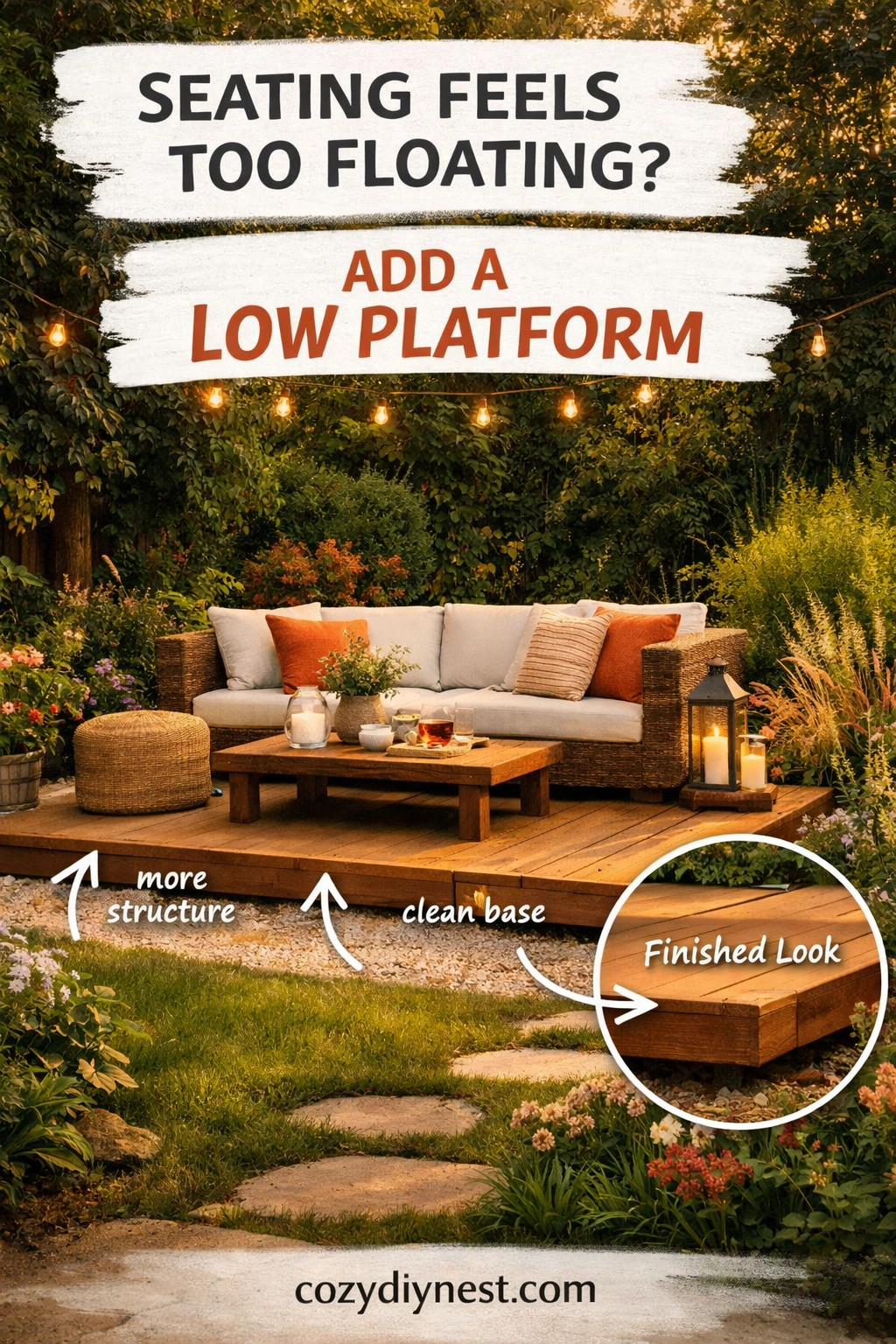
A low platform immediately creates a visual base. That alone makes the seating area feel more deliberate and more worth styling. The furniture now belongs to a destination instead of just sitting on open grass or soil.
This is especially helpful if your backyard corner feels like it has all the right pieces but still reads like a temporary setup.
If the pain is “this still doesn’t feel finished,” this is the cleanest place to start.
2. Soften the Deck Edge With Planting So It Feels Warmer and Less Builder-Basic
A low deck can solve the structure problem, but it can still look too hard or too plain if the outer edge is left bare. One of the most effective ground-level deck ideas is softening that transition with planting so the deck blends into the garden more naturally.
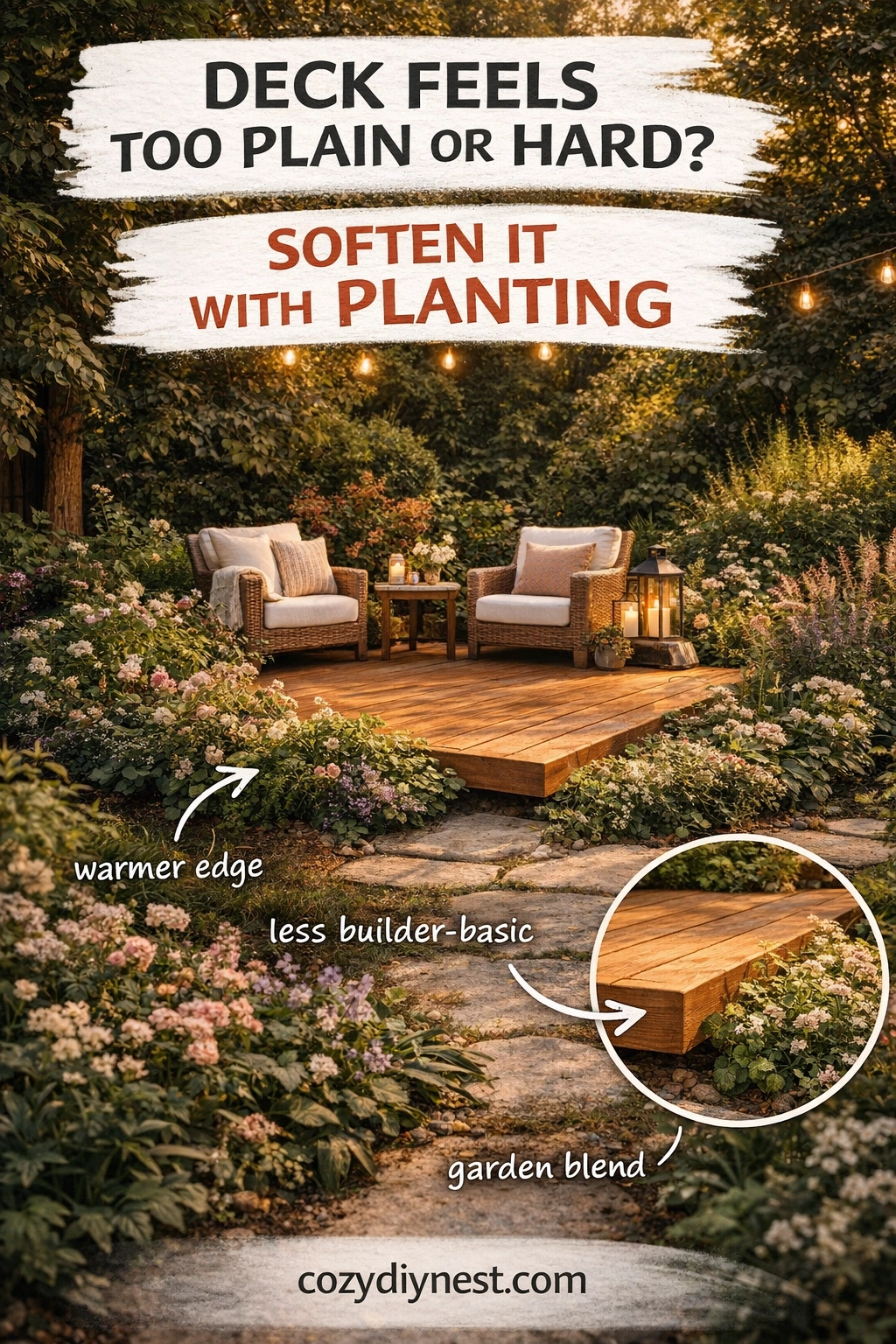
Planting around the outer edge helps the platform feel less like construction and more like part of the landscape. It also adds warmth, softness, and a slightly more expensive-looking finish.
This matters especially in small yards where the deck is highly visible from all angles. If the edge feels too abrupt, the whole scene can still feel unfinished.
If the deck currently solves the function but not the mood, this is often the missing layer.
3. Use a Floating Deck Layout When a Small Yard Needs a Clear Destination
Sometimes the backyard doesn’t need a large patio. It needs a clear place to go. That is why one of the strongest ground-level deck ideas for a compact yard is a floating-style deck that creates a destination with a modest footprint.
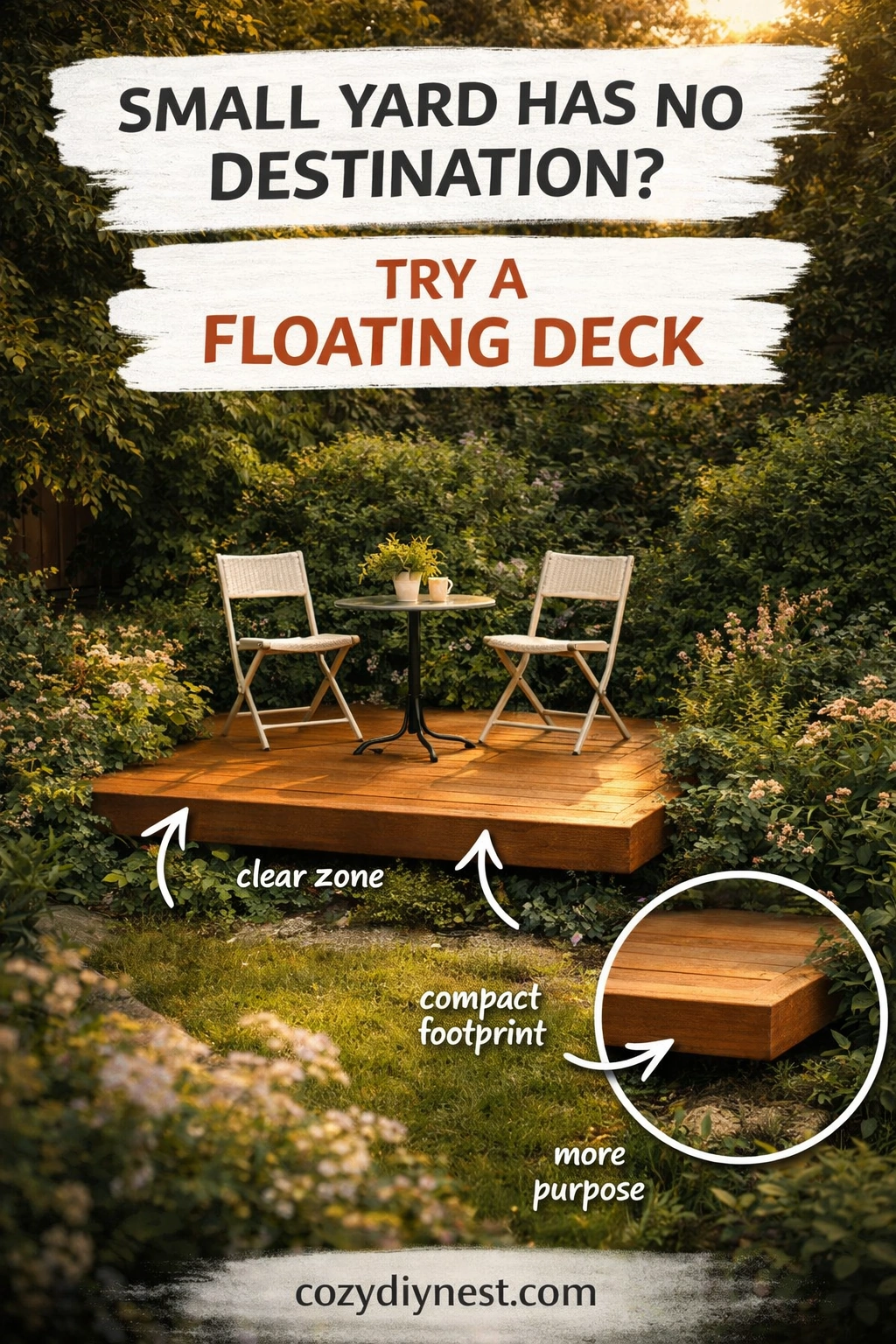
A floating deck works well because it visually defines the seating zone without trying to hardscape the whole yard. The platform says, “this is the place to sit,” which helps a small space feel more organized and more usable.
This is especially helpful if your backyard feels too open, too vague, or not structured enough to support a real hangout spot.
If one part of the yard needs to feel more intentional fast, this is one of the smartest formats to use.
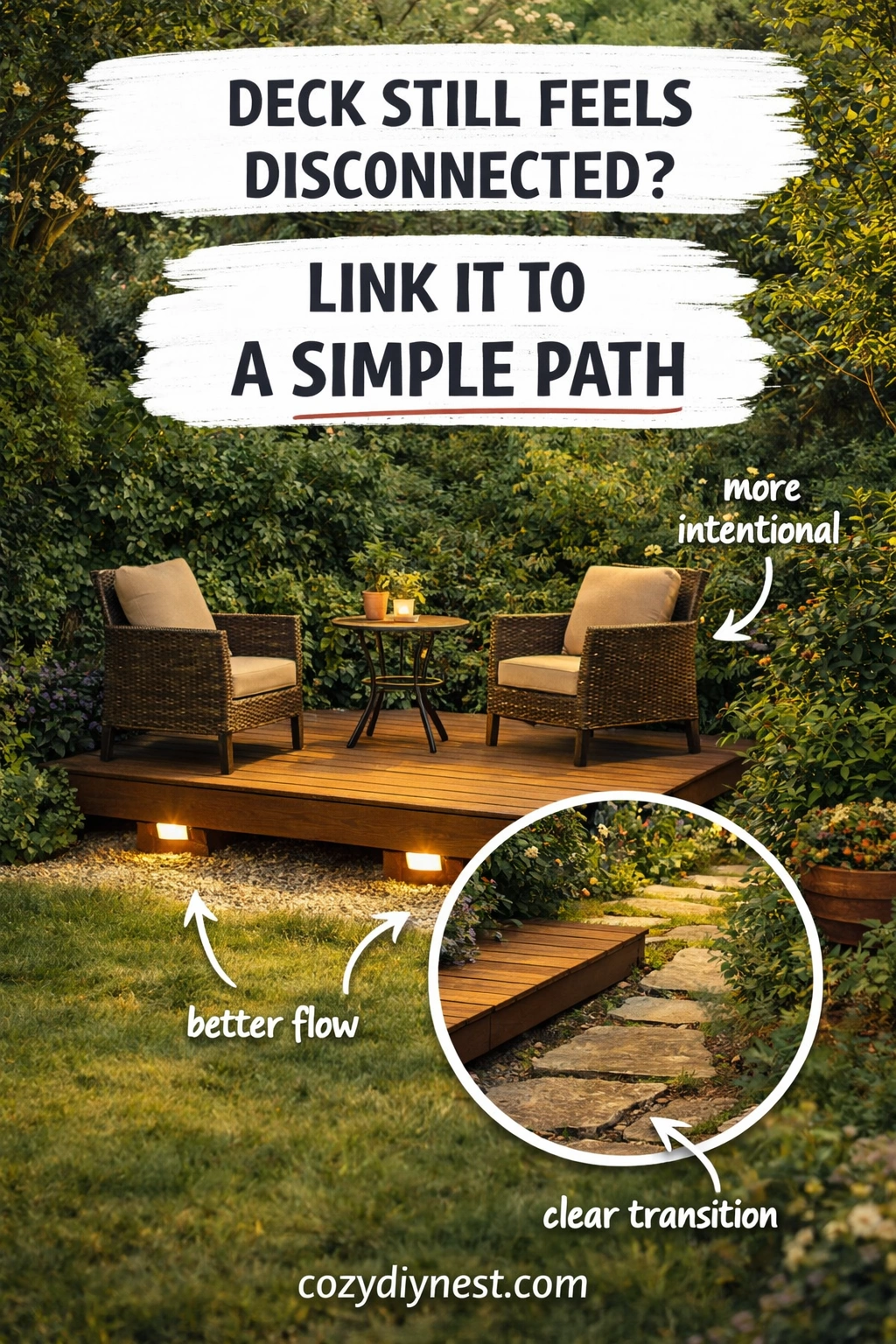
4. Connect the Deck to a Path So the Backyard Feels More Cohesive
One reason a low deck can still feel disconnected is that it exists as a platform with no relationship to the rest of the garden. One of the most useful ground-level deck ideas is linking the platform to a path so the route through the yard feels natural.
When a path leads to the deck, the seating area feels earned. It becomes part of the garden flow instead of a separate island sitting in the middle of the yard.
This works especially well in yards that already have planting and focal points but still do not feel stitched together into one clear outdoor experience.
If the deck feels detached from the garden, the route leading to it is often what needs attention.
5. Add One Built-In Bench Edge So the Deck Feels More Custom
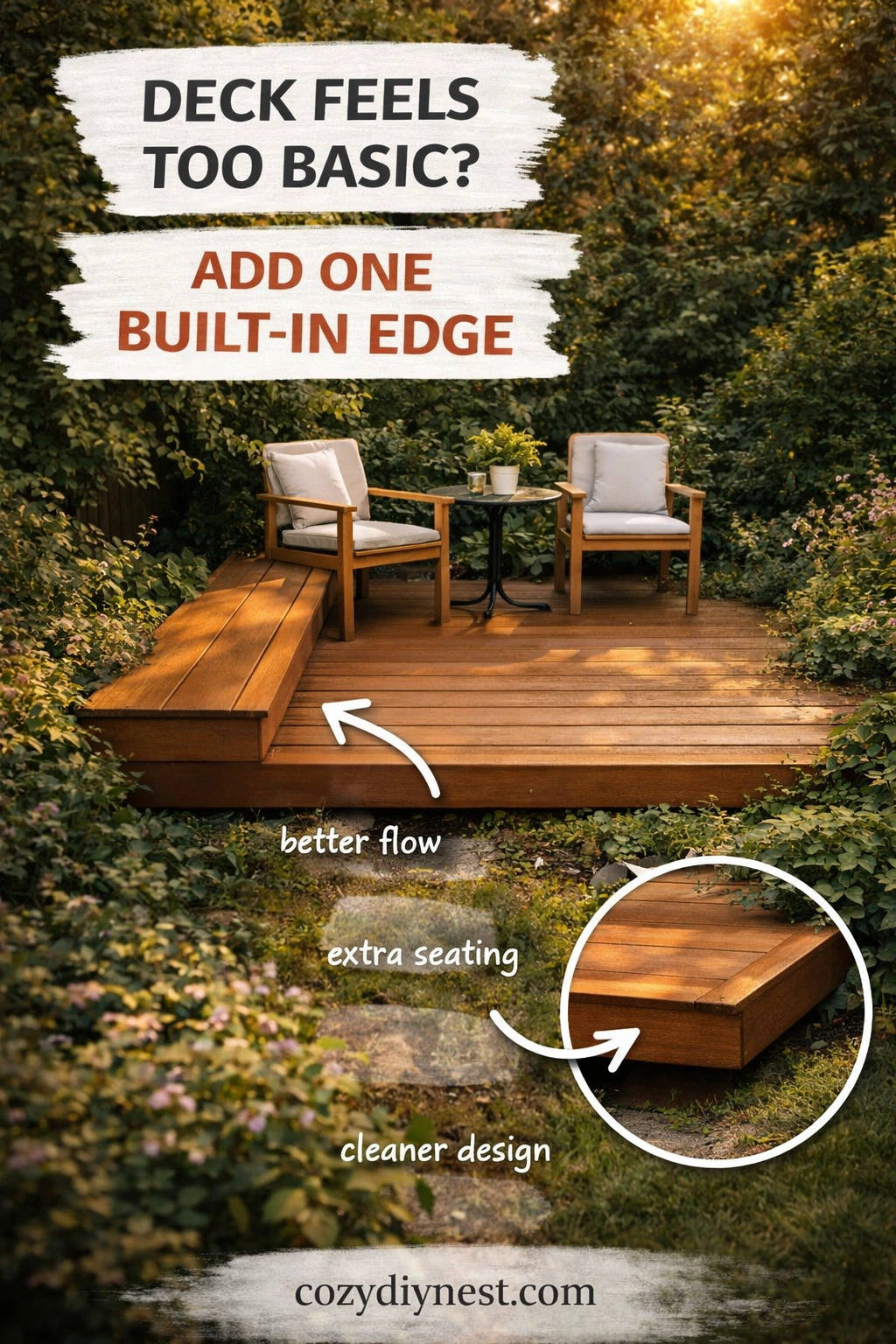
Some low decks solve the seating problem but still look a little too basic. One of the smartest ground-level deck ideas for making a simple platform feel more expensive is adding one built-in bench edge or integrated seating detail.
A built-in edge gives the platform more design presence while also improving function. It can create extra seating, frame the zone more clearly, and make the whole setup feel more considered.
This is especially effective if the platform itself feels too plain even after you’ve styled it with outdoor furniture.
If the goal is a backyard that feels more custom and less off-the-shelf, this is one of the strongest upgrades in the article.
6. Mix Decking With Gravel or Stone So the Whole Area Feels Richer
A low deck can sometimes look visually flat if it is the only material in the seating zone. One of the more design-forward ground-level deck ideas is mixing decking with gravel, stone, or pavers to give the area more texture and depth.
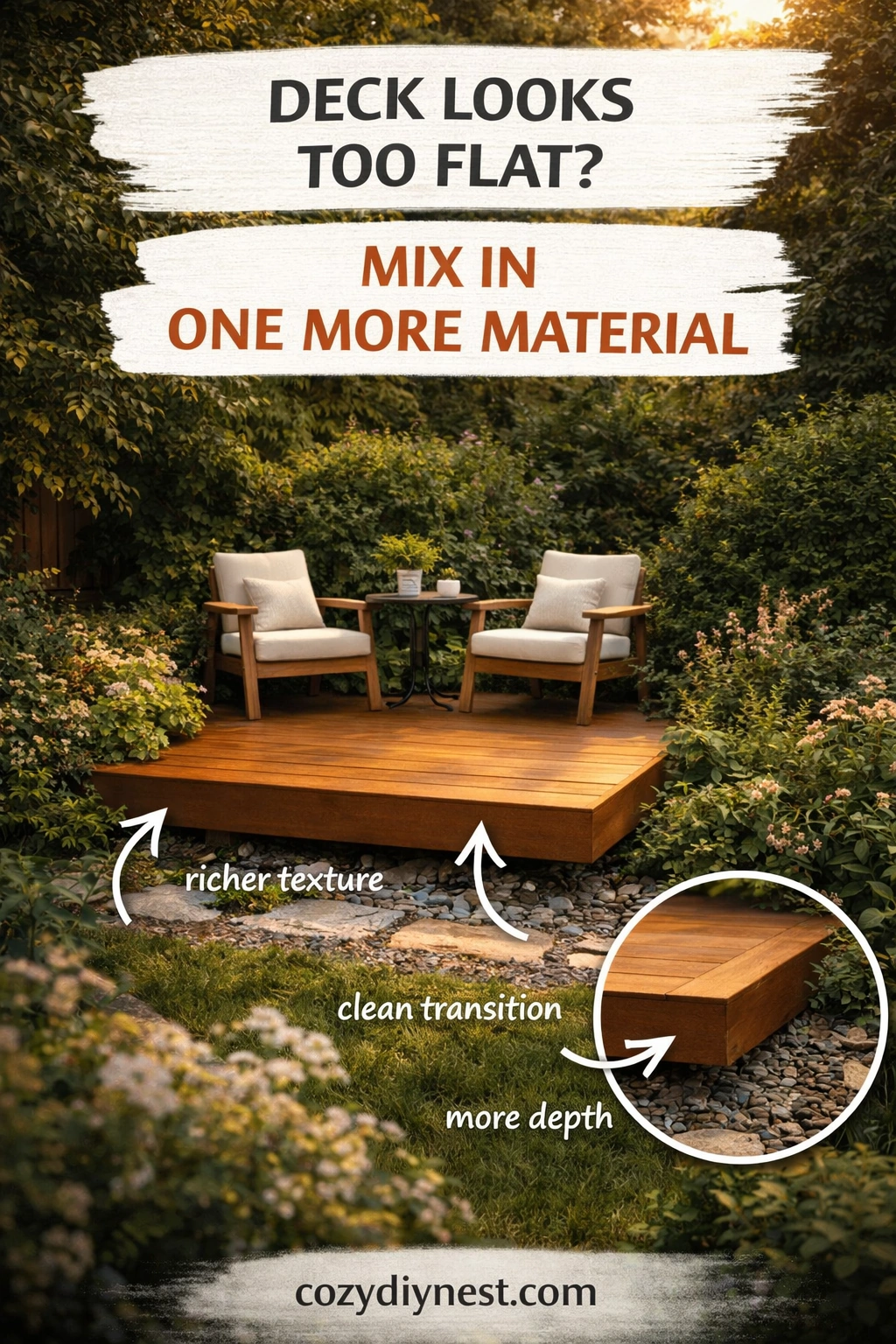
Better Homes & Gardens highlighted how mixed materials can help a ground-level deck blend more naturally into its surroundings. That matters because varied texture makes the zone feel less flat and more intentional without forcing the whole yard into one material story.
This is especially useful if the deck looks serviceable but still not visually rich enough to feel like a finished outdoor room.
If the pain is not function but flatness, material contrast is often the best next move.
7. Frame the Platform Like an Outdoor Room So the Yard Has a True Hangout Spot
The strongest ground-level deck ideas do not stop at the platform itself. They treat the low deck as the base of a true outdoor room. That means surrounding it with planting, layout, lighting, or one clear destination feeling so the whole area reads as a place, not just a surface.
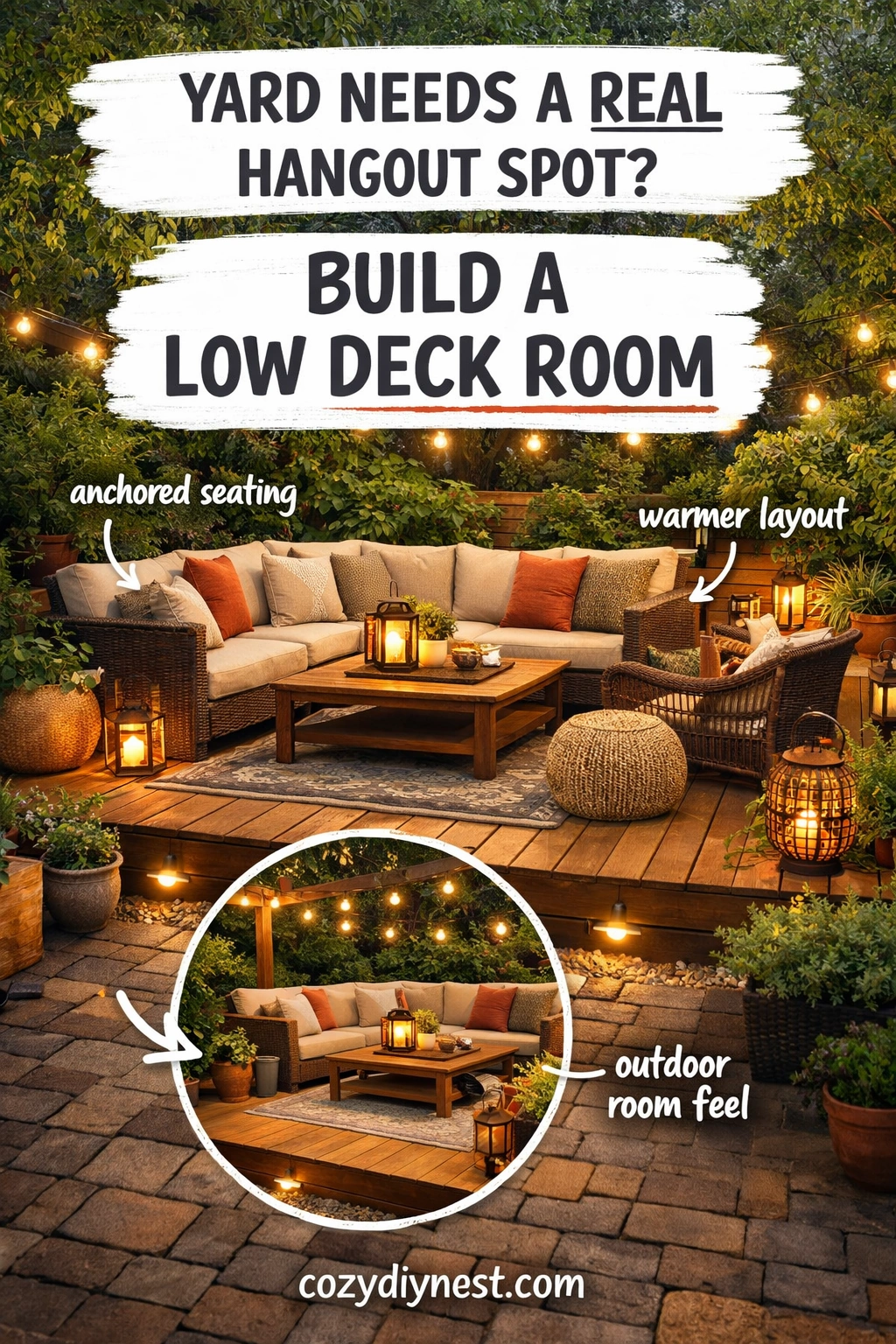
This is especially effective in small yards where you don’t need multiple destinations. You just need one spot that feels inviting enough to anchor the whole outdoor lifestyle of the space.
If your backyard still doesn’t feel like it has a true hangout zone, framing the low deck like an outdoor room is what makes the difference.
That is what makes ground-level decks so useful: they don’t only support chairs. They support the feeling that the backyard is genuinely ready to be used.
Quick Ground-Level Deck Checklist
- Build a simple platform if the seating feels like it’s floating.
- Soften deck edges with planting for a warmer finish.
- Use a floating deck layout when the yard needs a destination.
- Connect the platform to a path so the backyard feels cohesive.
- Add one built-in bench edge for a more custom feel.
- Mix materials if the deck looks too visually flat.
- Frame the platform like an outdoor room for a stronger hangout zone.
Once you start thinking about ground-level deck ideas this way, the goal becomes much clearer. You are not just building a low platform. You are giving the backyard a stronger foundation for real use.
The best ground-level deck ideas make a seating area feel more finished without making a small yard feel overbuilt. That is what makes them so powerful in cozy outdoor spaces.
To keep building this garden cluster, explore more inspiration in Home Garden Ideas and the broader foundation article on home garden ideas.
FAQ
What is a ground-level deck?
A ground-level deck is a low deck platform built close to the ground, usually without the height of a traditional raised deck. It is often used to anchor seating or create a more intentional outdoor living zone.
Are ground-level decks good for small backyards?
Yes. Ground-level decks can work very well in small backyards because they define a seating area without making the space feel too tall or overbuilt. They are especially useful when furniture currently feels disconnected from the yard.
How do I make a low deck look more expensive?
To make a low deck look more expensive, soften the edges with planting, add one built-in detail, and consider mixing materials like gravel or stone around the platform. These moves make the space feel more custom and more integrated into the garden.
Do I need a path to a ground-level deck?
Not always, but a path often helps a low deck feel more connected to the rest of the backyard. It gives the seating area a clearer relationship to the garden and makes the whole layout feel more intentional.