
If you’ve been looking for small garden path ideas because your backyard feels random, disconnected, or just not quite designed, you’re not imagining it. A lot of outdoor spaces have nice pieces in them—planting, a chair, maybe a focal point—but they still feel unfinished because nothing connects those elements into one clear flow. That is exactly why paths matter. The best small garden path ideas do more than help you walk through the yard. They give the garden structure, rhythm, and a stronger sense of purpose.
A path can quietly change how the whole backyard reads. It can guide the eye, soften the transition between zones, and make a small garden feel more intentional without a huge project. Better Homes & Gardens points out that paths made from stone, gravel, brick, or pebbles add both charm and function, while House Beautiful notes that even small gardens feel stronger when they follow a clearer procession through the space. The Spruce also shows that DIY path materials like pea gravel, mulch, bricks, and concrete step stones can create that structure on a reasonable budget.
If your yard still needs a broader foundation first, start with these home garden ideas. And if the garden feels flat rather than random, your focal point may need help too, especially with these bird bath ideas or backyard fountain ideas.
These small garden path ideas focus on one main problem: when the backyard has pretty pieces, but no flow that makes the whole space feel finished.
1. Use Stepping Stones Across Open Lawn So the Yard Stops Feeling Random
One of the simplest small garden path ideas is also one of the most effective: a stepping-stone route across open lawn or bare ground. This works especially well when a backyard feels too open and too unstructured, with no visual guidance about where the eye or the feet should go.
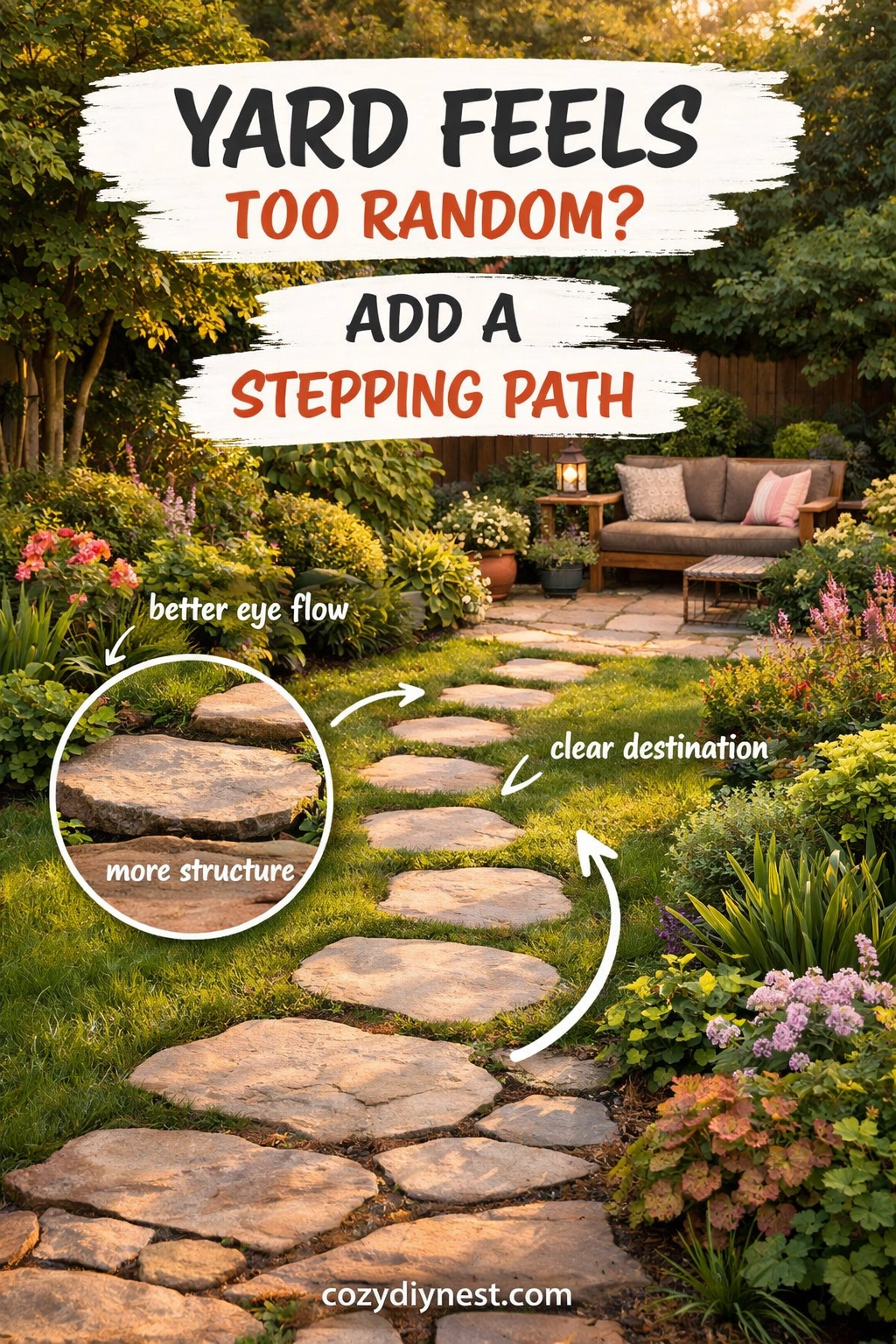
A few well-placed stepping stones can instantly make the garden feel more intentional. They give the yard a route, which gives it a story. The backyard no longer feels like one open patch of grass with furniture dropped somewhere in the middle.
This is especially useful if your yard already has a nice destination like a chair, planter, or focal feature but still feels disconnected on the way there.
If the space currently looks random rather than designed, this kind of path is often the easiest fix.
2. Add a Gravel Path to a Seating Nook So the Garden Feels More Connected
Sometimes the issue is not the garden overall. It is that the seating area feels disconnected from everything around it. In that case, one of the smartest small garden path ideas is a simple gravel path that links the garden to the seating nook more naturally.
Gravel works especially well because it feels softer and more casual than many harder surfaces, but it still gives the route a real presence. It also helps the seating area feel earned, as if you arrive there on purpose instead of simply noticing it off to one side.
This is a strong move when the garden already has a chair, bench, or bistro set but the whole thing still reads as separate pieces rather than one cohesive outdoor space.
If your backyard feels pleasant but not fully connected, gravel is one of the easiest ways to bridge that gap.
3. Let Planting Soften the Path Edges So the Walkway Feels More Garden-Led
Some paths technically work, but they still feel too harsh or too separate from the rest of the garden. That often happens when the walkway edge is too abrupt. One of the most beautiful small garden path ideas is using border planting to soften the route and make it feel more woven into the landscape.
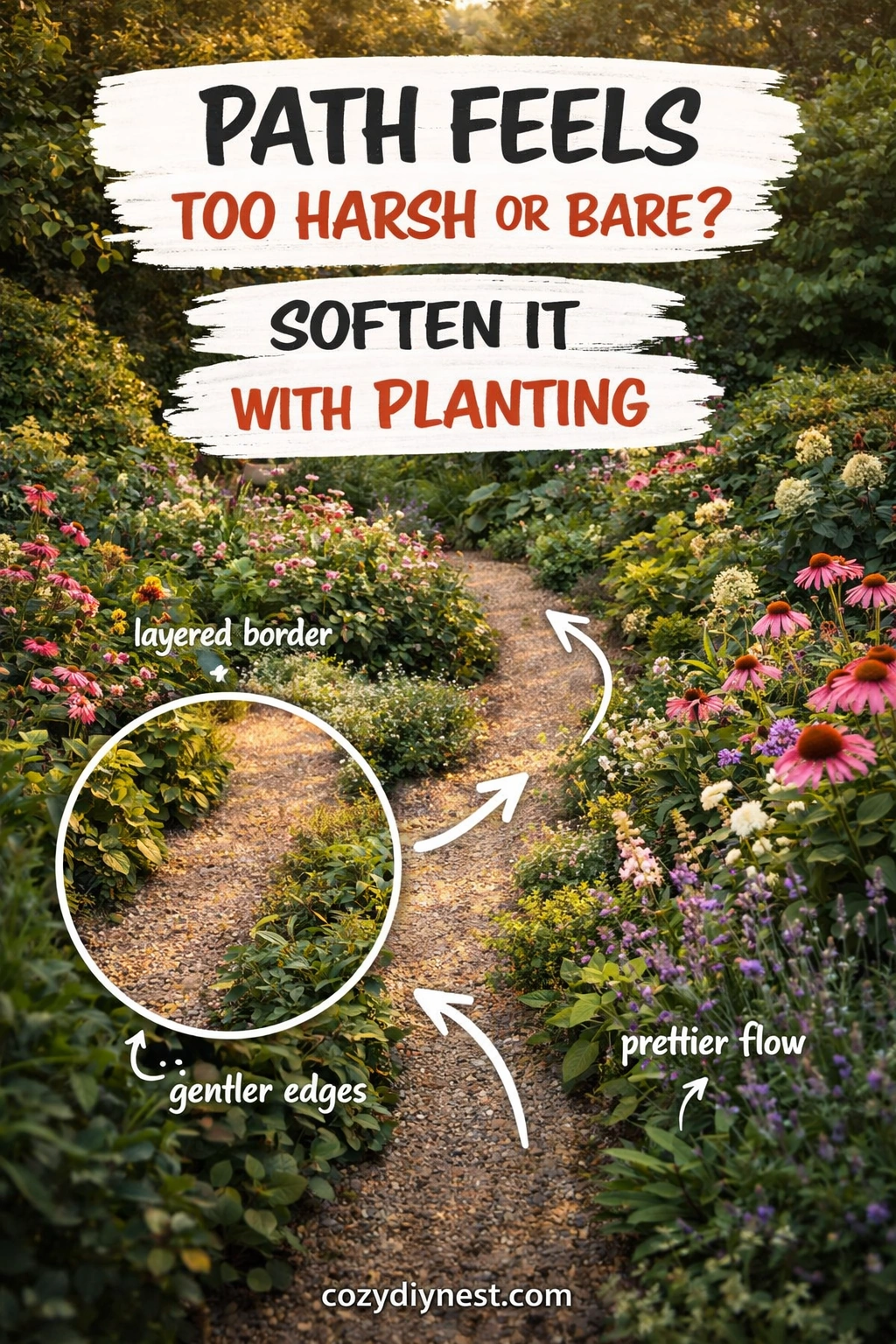
When low or mid-height planting brushes the path edge softly, the whole backyard feels warmer and more layered. The path becomes less like a hard line through the garden and more like a gentle route inside it.
This is especially useful if your current path looks practical but not very beautiful. You may not need to replace the walkway at all. You may only need to change what happens around it.
If the goal is a softer, more romantic yard, this is one of the most effective path upgrades in the article.
4. Turn an Awkward Side Yard Into a Useful Connector Instead of Ignoring It
One of the most overlooked backyard problems is the awkward side yard. It often feels too narrow to style and too visible to ignore, so it ends up reading as wasted space. One of the most practical small garden path ideas is turning that side strip into a real connector.
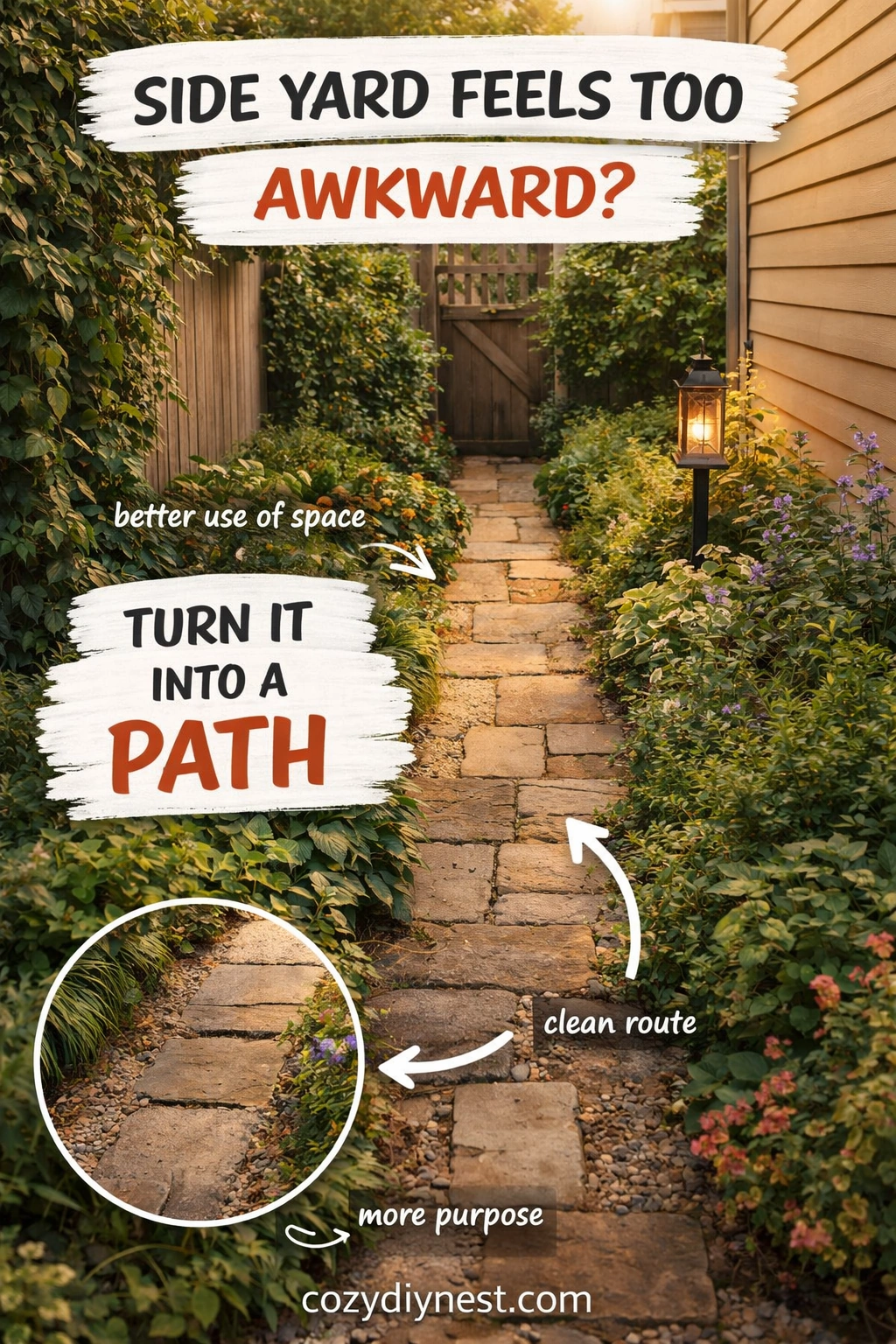
A simple gravel, paver, or stepping path down the side yard makes the space feel useful rather than accidental. It can also make the main backyard feel more complete because now the route into and through the yard has been thought through.
This is especially powerful in compact homes where every outdoor strip matters. A path does not just organize the side yard. It improves the way the entire property reads.
If that side area currently feels like an afterthought, this is one of the cleanest ways to fix it.
5. End the Path at a Real Destination So the Backyard Feels More Intentional
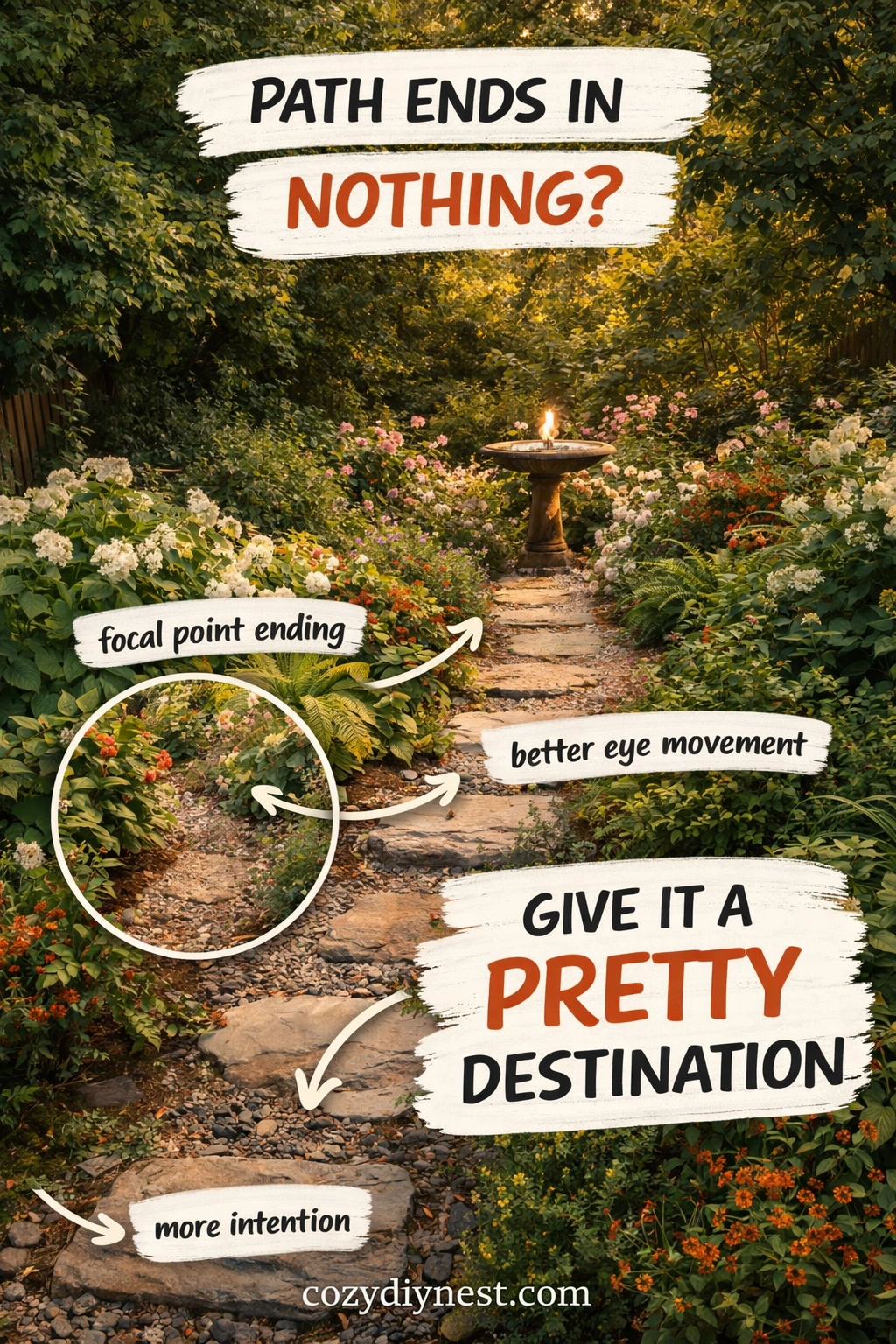
A path works best when it has somewhere satisfying to lead. If the route ends in nothing, the garden often still feels unresolved. That is why one of the strongest small garden path ideas is ending the walkway at a clear focal point like a bird bath, fountain, planter grouping, or small seat.
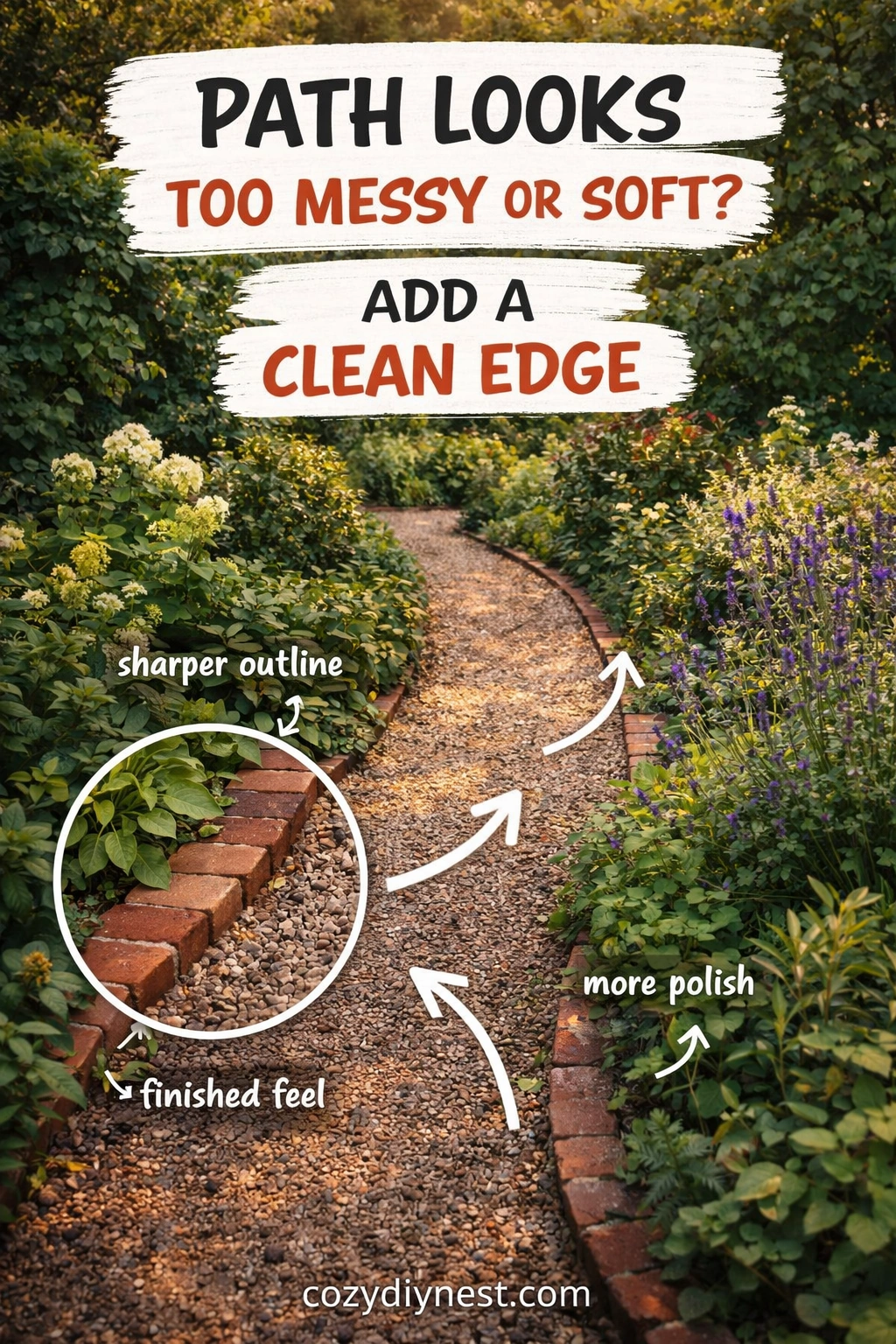
The destination gives the eye a reward for following the route. It also makes the whole backyard feel more designed because each piece now has a relationship to the next one.
This is especially useful if your path exists already but still does not seem to help the yard very much. The issue may not be the path itself. It may be that the route does not land anywhere meaningful.
If the backyard still feels unfinished after adding a walkway, this is often the missing step.
6. Add Clean Edging So the Path Looks Finished Instead of Temporary
Some paths solve the flow problem but still look a little messy or too soft around the sides. One of the easiest small garden path ideas for making a walkway feel more polished is adding clear edging. It creates a stronger outline, which makes the route feel much more intentional.
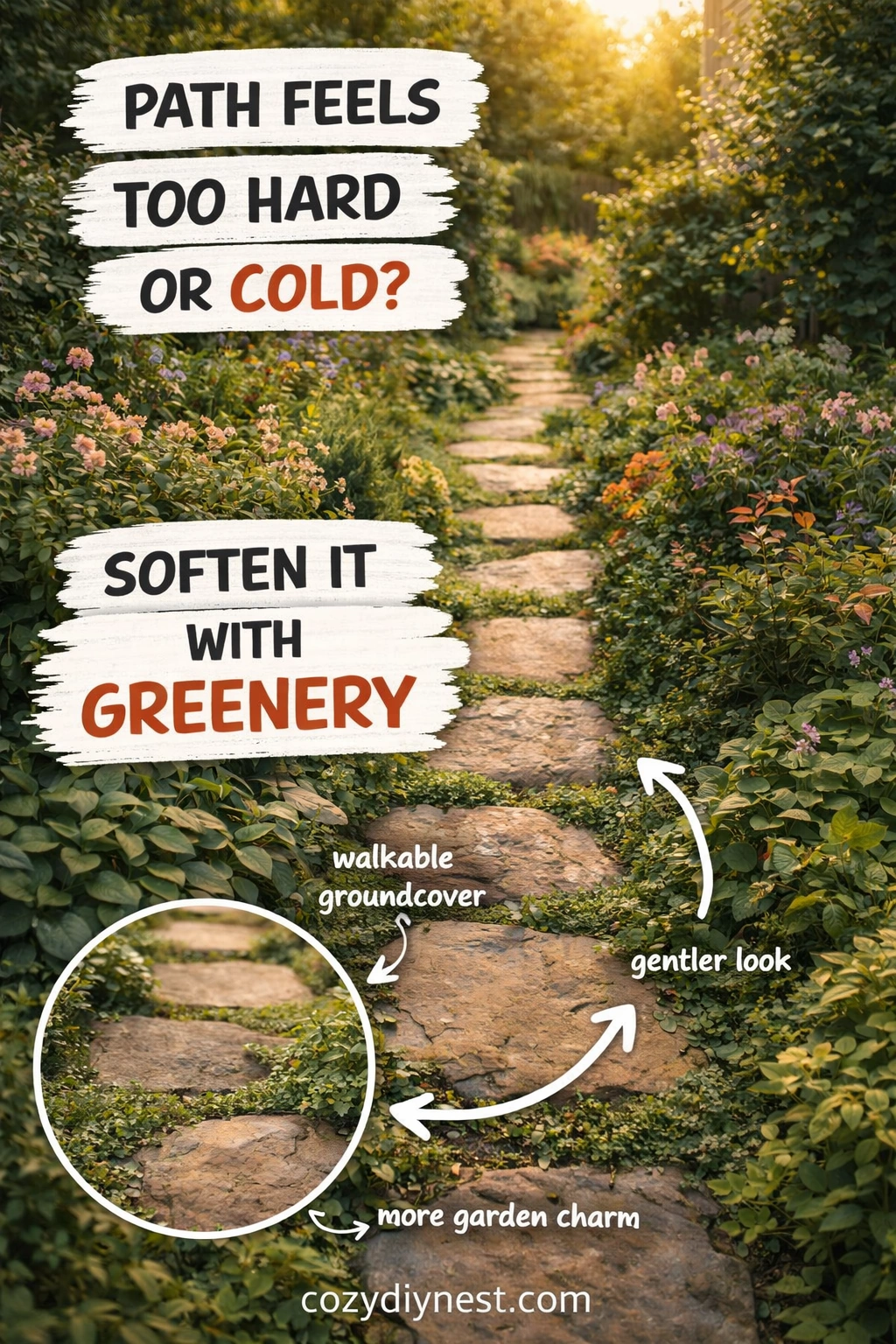
Brick, metal, stone, or even simple border material can change the whole effect of a path. The route starts to feel planned and finished rather than temporary or improvised.
This matters especially if your path material is gravel, mulch, or another softer surface. Without edging, it can quickly lose its visual clarity.
If the walkway currently feels too loose or too undefined, edging is one of the highest-impact finishing moves you can make.
7. Use Walkable Groundcover Between Stones So the Path Feels Softer and More Romantic
Not every path has to feel hardscaped. If your yard leans softer and more planted, one of the most charming small garden path ideas is using stepping stones with walkable greenery or groundcover between them. This gives you structure and softness at the same time, which can make a backyard feel much more warm and garden-led.
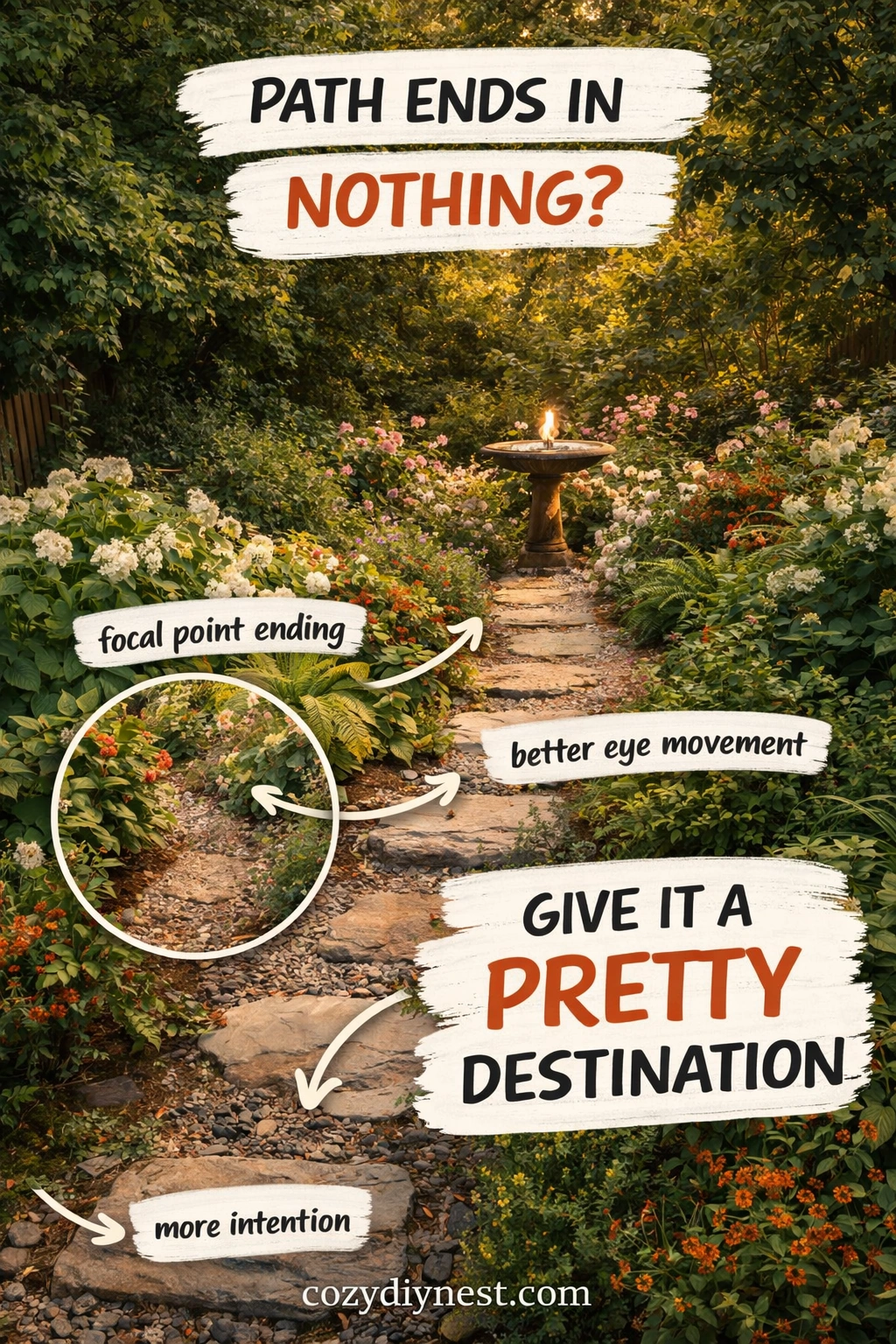
This path style feels less formal and more woven into the life of the garden. The greenery softens the visual line, and the stones still provide enough structure for movement and rhythm.
This works especially well when the path currently feels too cold or too visually separate from the planting around it. It keeps the route usable while making it feel more alive.
If your goal is a path that feels practical but still romantic, this is one of the prettiest options in the article. Better Homes & Gardens recently highlighted several low-growing groundcovers that work beautifully between stones and along pathway edges, which makes this approach especially helpful if you want a softer, more garden-like finish.
Quick Garden Path Checklist
- Use stepping stones when the yard feels too open and random.
- Choose gravel when you want a softer connection to seating.
- Soften path edges with planting if the route feels too harsh.
- Turn a side yard into a useful connector instead of ignoring it.
- Give the path a real destination so the layout feels purposeful.
- Add edging if the route looks too loose or unfinished.
- Use walkable greenery for a softer, more garden-like path.
Once you start looking at small garden path ideas this way, the value of a path becomes much clearer. It is not only a route through the yard. It is one of the main things that makes a small backyard feel designed rather than accidental.
The best small garden path ideas add both function and quiet beauty. That combination is what makes a backyard feel more intentional, more connected, and much easier to enjoy.
To keep building this garden cluster, explore more ideas in Home Garden Ideas, Bird Baths & Garden Paths and the broader foundation article on home garden ideas.
FAQ
What is the best path for a small garden?
The best path for a small garden depends on the mood and layout you want. Stepping stones, gravel, and simple paver routes are all strong options because they can add flow and structure without overwhelming a compact yard.
How do I make my backyard path look more intentional?
To make a backyard path look more intentional, give it a clear route, soften the edges with planting where appropriate, and make sure it leads to a meaningful destination such as seating or a focal point.
Are gravel paths good for small backyards?
Yes. Gravel paths are often excellent for small backyards because they feel softer and more relaxed than many hardscape options while still adding clear movement and connection through the space.
Do I need edging around a garden path?
Not always, but edging can make a big difference if the path material is loose or the route feels too undefined. It gives the walkway a cleaner finish and helps it feel more deliberate.