
If you’ve been searching for back door drop zone ideas because your home has no true mudroom, you are not imagining the problem. The back door becomes the landing strip for shoes, bags, mail, jackets, dirty sports gear, and all the small daily things that never seem to belong anywhere. That is exactly why the best back door drop zone ideas do not try to fake a full mudroom. They create one smart, compact system that handles the daily pile without making the whole area feel crowded or visually messy.
Even without a dedicated mudroom, you can still create a highly functional entry. For more inspiration on compact mudroom thinking, see Better Homes & Gardens, House Beautiful, The Spruce, and Real Simple.
If you already have a larger laundry-mudroom combo, browse the full Laundry Mud Room Ideas & Organization category. And if your current layout feels tight before it even gets messy, these small laundry mud room ideas can help you rethink the flow first.
These back door drop zone ideas focus on one main pain point: how to create a back-door landing zone that works every day when you do not have a true mudroom at all.
1. Start With a Wall-Mounted Hook Rail and Shelf So the Drop Zone Uses Vertical Space First
One of the smartest back door drop zone ideas is also the easiest to add: use the wall instead of the floor. When there is no mudroom, floor-based storage can make the entry feel crowded fast. A narrow hook rail with a slim top shelf creates a compact landing strip without taking over the walking path.
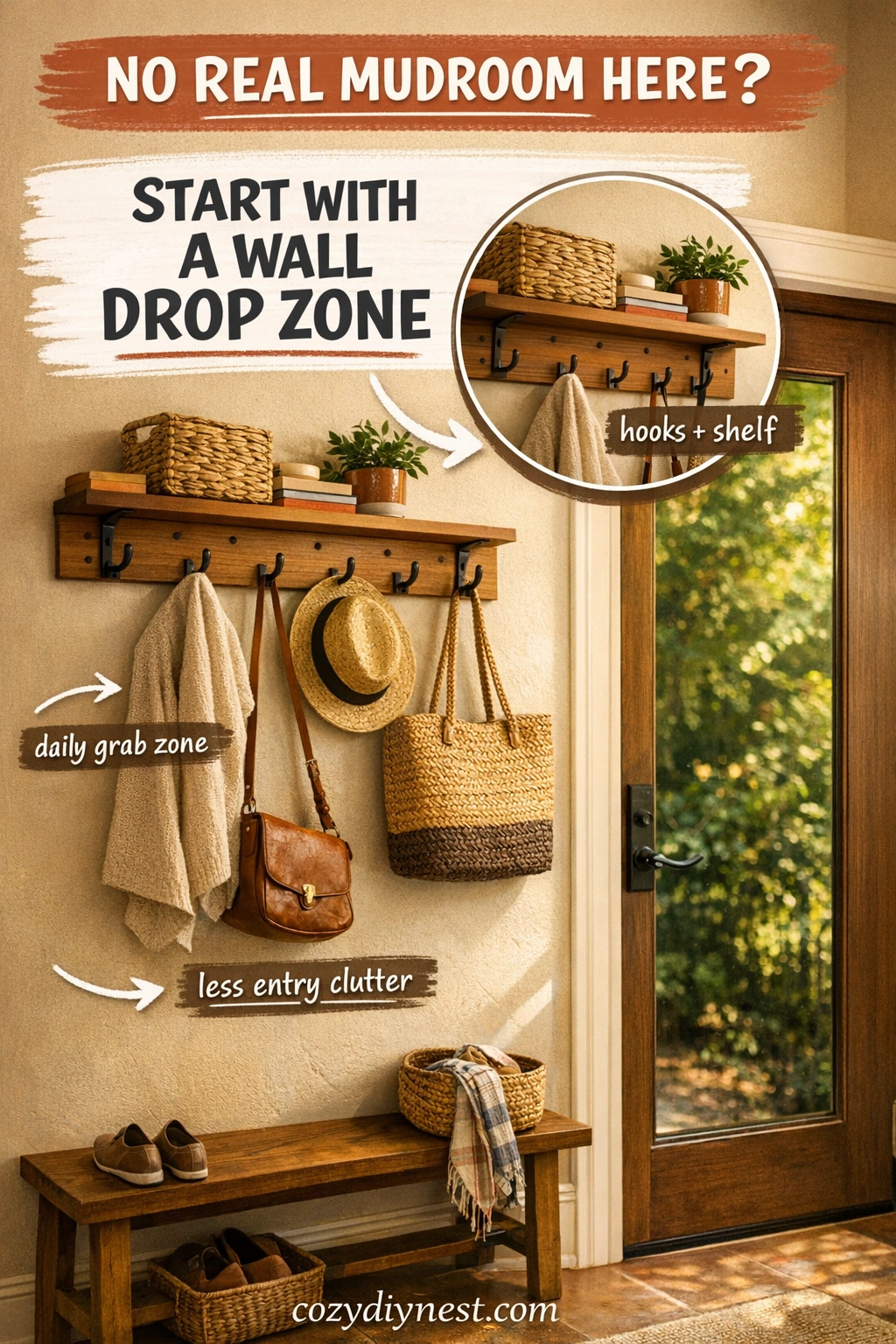
This works especially well for the items that need the fastest daily access: bags, light jackets, hats, and grab-and-go essentials. The shelf above keeps smaller items from floating to random surfaces.
When the drop zone starts vertically, the space feels lighter and more deliberate. You get real function without needing a full bench wall or locker system.
If the back door currently feels like a pile-up point the second people walk in, this is one of the cleanest ways to begin.
2. Add a Slim Closed Shoe Cabinet So the Floor Stops Advertising the Chaos
One reason a back door feels messy so quickly is that shoes are always the first thing to spread visually. One of the strongest back door drop zone ideas for homes without a mudroom is using a narrow closed shoe cabinet instead of open shoe piles or oversized racks.
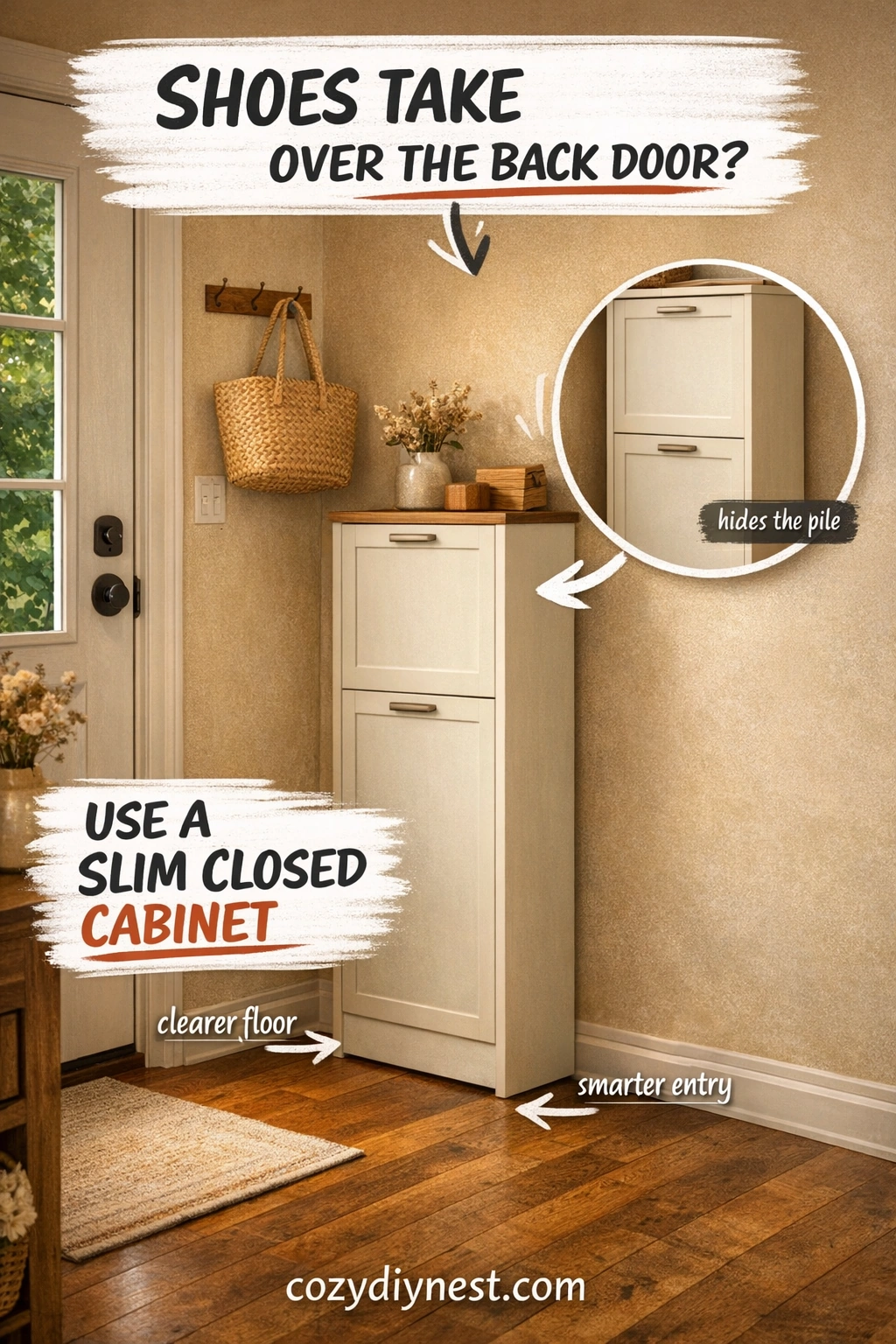
A closed cabinet does two things at once: it hides the visual clutter and keeps the walking path clearer. That matters especially in tight back entries where even a few pairs of shoes can make the whole area feel chaotic.
This is a particularly good fix when you want the entry to feel organized even when people have just come in and not everything has been perfectly reset yet.
If your back door always looks messy from the ground up, shoe containment is probably the real problem.
3. Use a Storage Bench When You Need a Seat and Hidden Storage in One Piece
Some entries need more than hooks and a cabinet. They need one piece that can do two jobs. That is exactly why one of the most practical back door drop zone ideas is a lift-top storage bench placed directly under the hook zone.
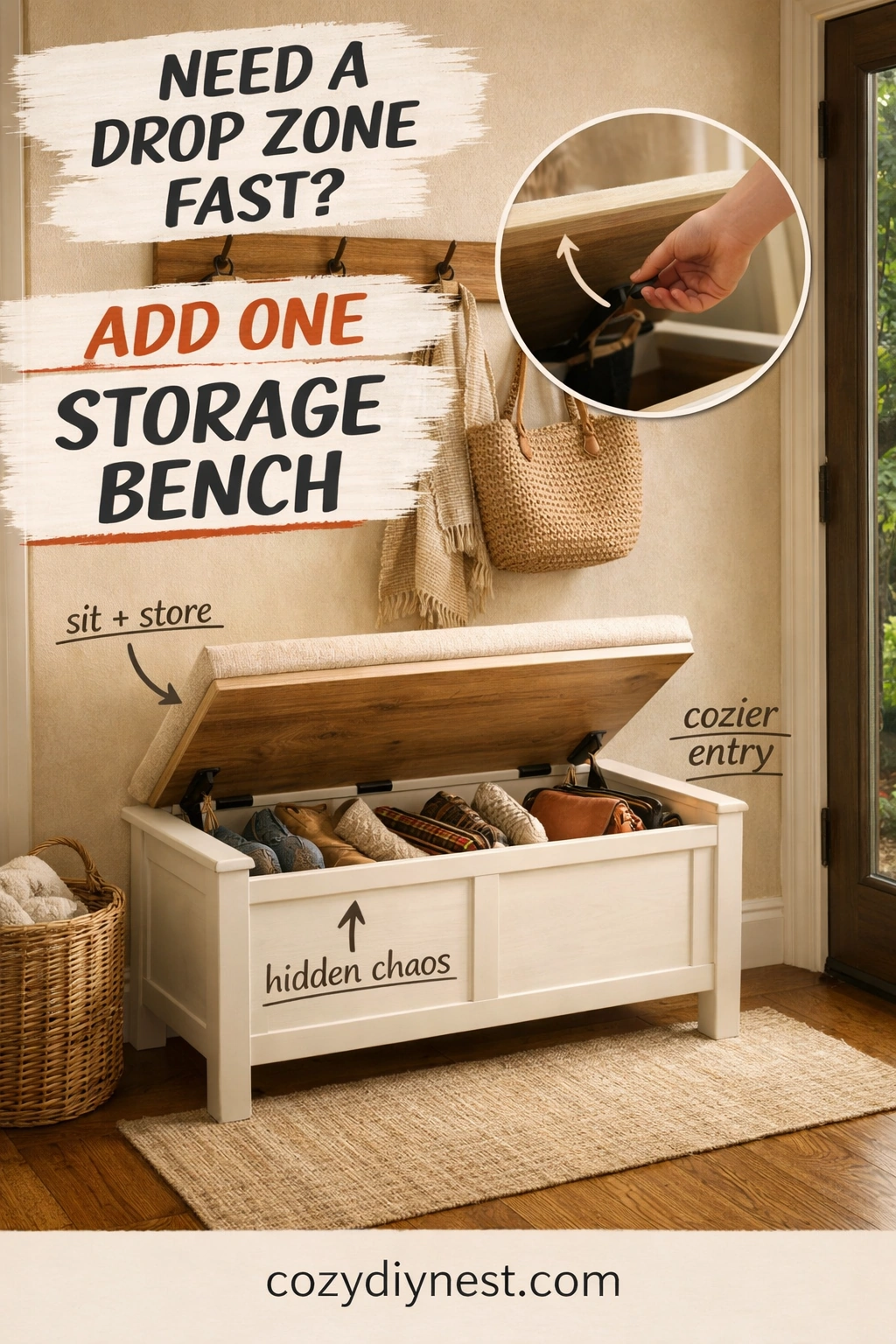
The bench gives you a place to sit for shoes while also hiding the soft clutter that tends to collect near the back door: scarves, pet gear, reusable bags, seasonal items, or extra kid accessories.
This is especially useful when you want the area to feel more like a designed nook than a bare utility strip. A bench can visually anchor the whole entry.
If the pain is “we need a real landing zone, not just hooks,” this is one of the best online-buyable solutions.
4. Turn a Nearby Closet or Door-Back Into Overflow Support So the Main Entry Stays Cleaner
One of the smartest no-mudroom moves is accepting that the back door itself may not need to hold everything. Some of the best back door drop zone ideas use a nearby closet, utility cabinet, or even the back of a door as hidden overflow support for the daily mess.
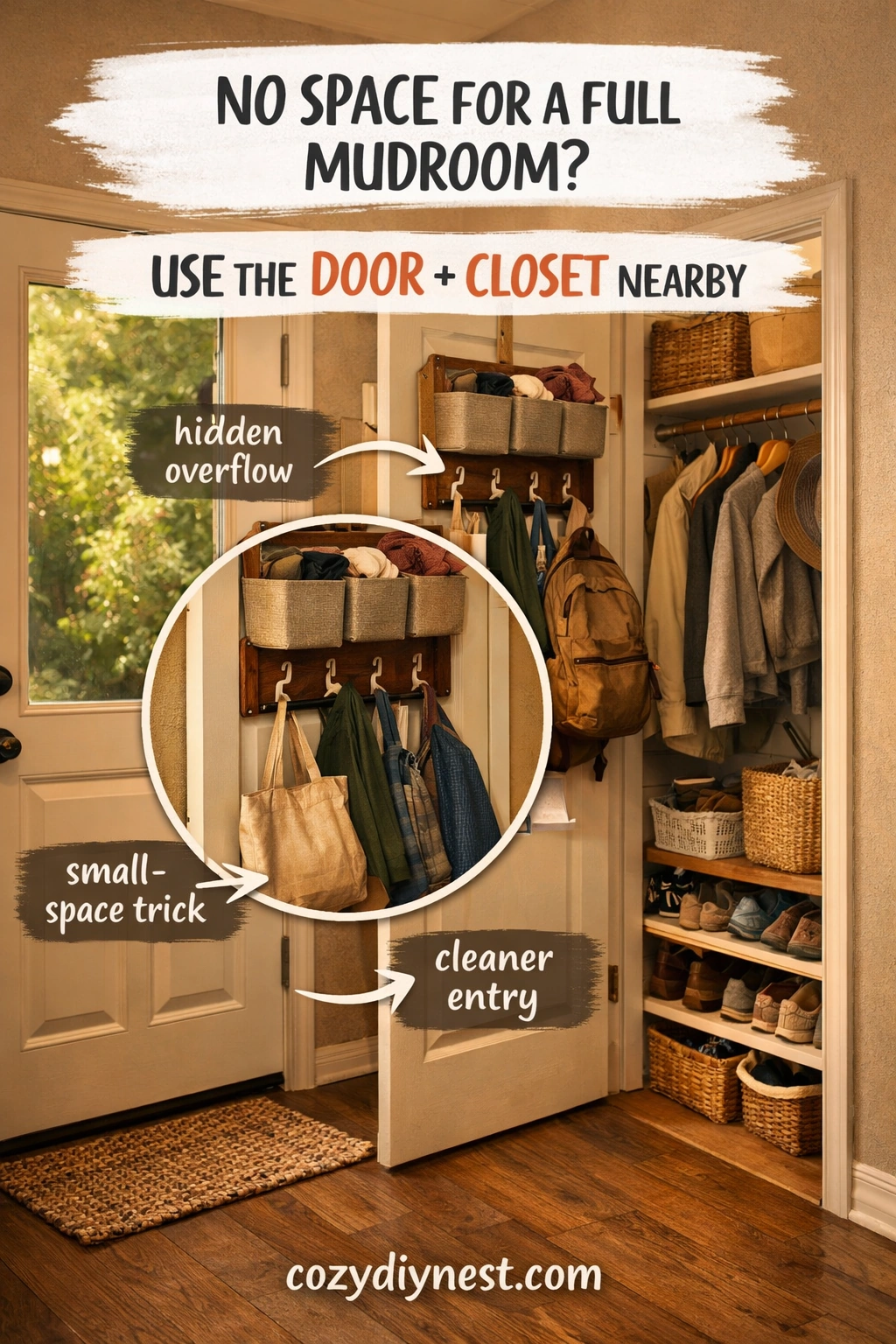
This is where bulkier or less attractive items can go: umbrellas, cleaning wipes, backstock shoes, pet leashes, or overflow bags. That lets the visible entry stay calmer and more selective.
The Spruce has highlighted the idea of using a coat closet as a mudroom nook, and this logic works well for any nearby hidden storage support. You do not need a full mudroom room. You need a visible zone plus a hidden support zone.
If the back door keeps feeling overloaded, the answer may be to give it help, not more exposure.
5. Add a Floating Catch-All Ledge for Keys, Mail, and Charging So Surfaces Stop Getting Hijacked
Back doors do not only collect coats and shoes. They also collect the invisible clutter that spreads even faster: keys, mail, chargers, AirPods, receipts, school notes, and loose odds and ends. One of the most effective back door drop zone ideas is adding one floating ledge that controls all of that in one place.
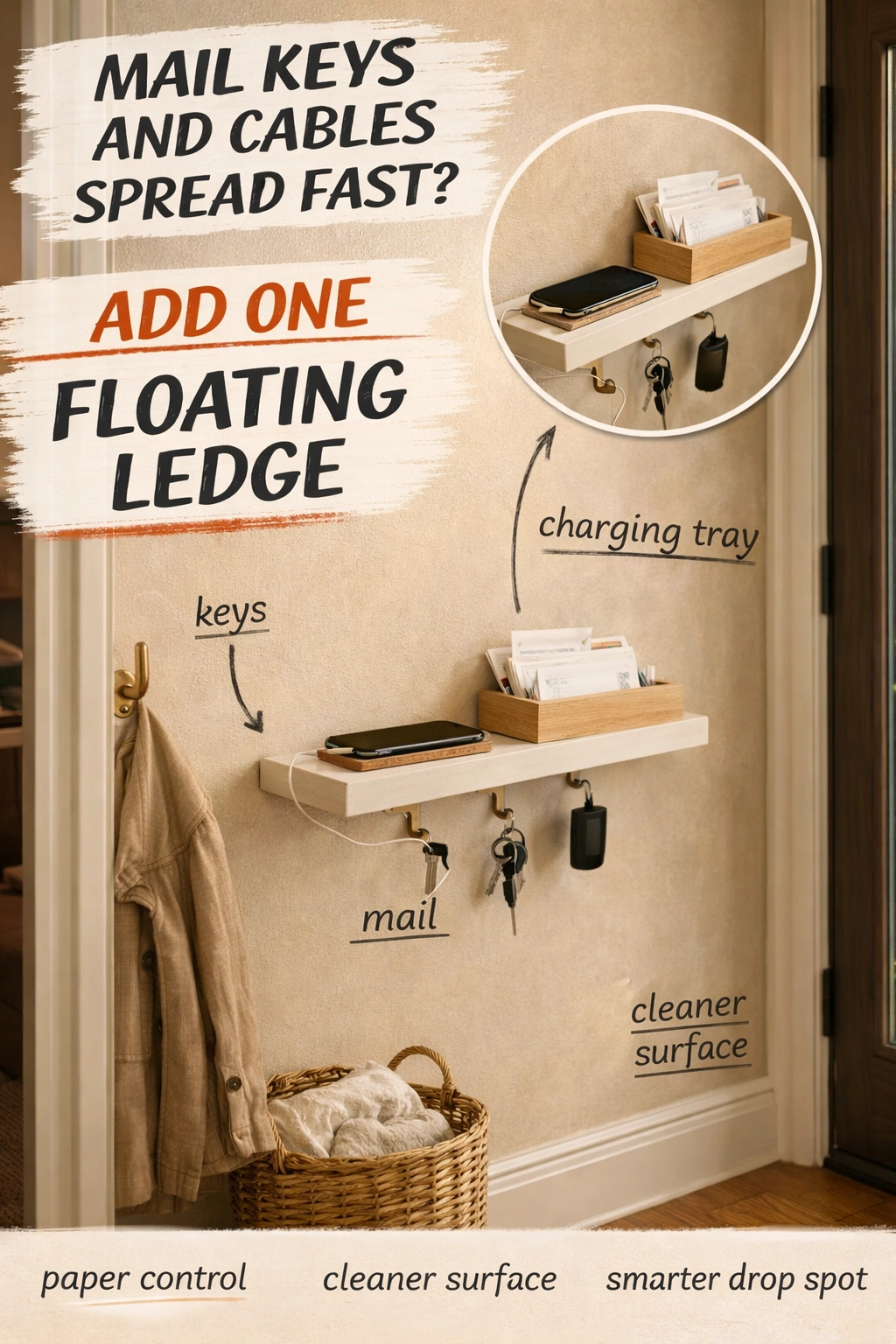
A slim wall ledge works because it creates a clear paper-and-pocket-item landing spot without demanding a full console table. It can also support a discreet charging tray or small vertical sorter for mail.
This is especially helpful in homes where the back door functions as the real daily entry and paper clutter keeps spreading into the kitchen or laundry surfaces.
If the room always feels one mail pile away from chaos, this is one of the highest-impact fixes you can add quickly.
6. Park a Rolling Hamper Near the Back Door So Dirty Gear Has Somewhere Better to Land
One reason no-mudroom entries get messy so fast is that dirty things have nowhere better to go. One of the most practical back door drop zone ideas for family homes is placing a slim rolling hamper or laundry basket station right where the dirty gear actually appears.
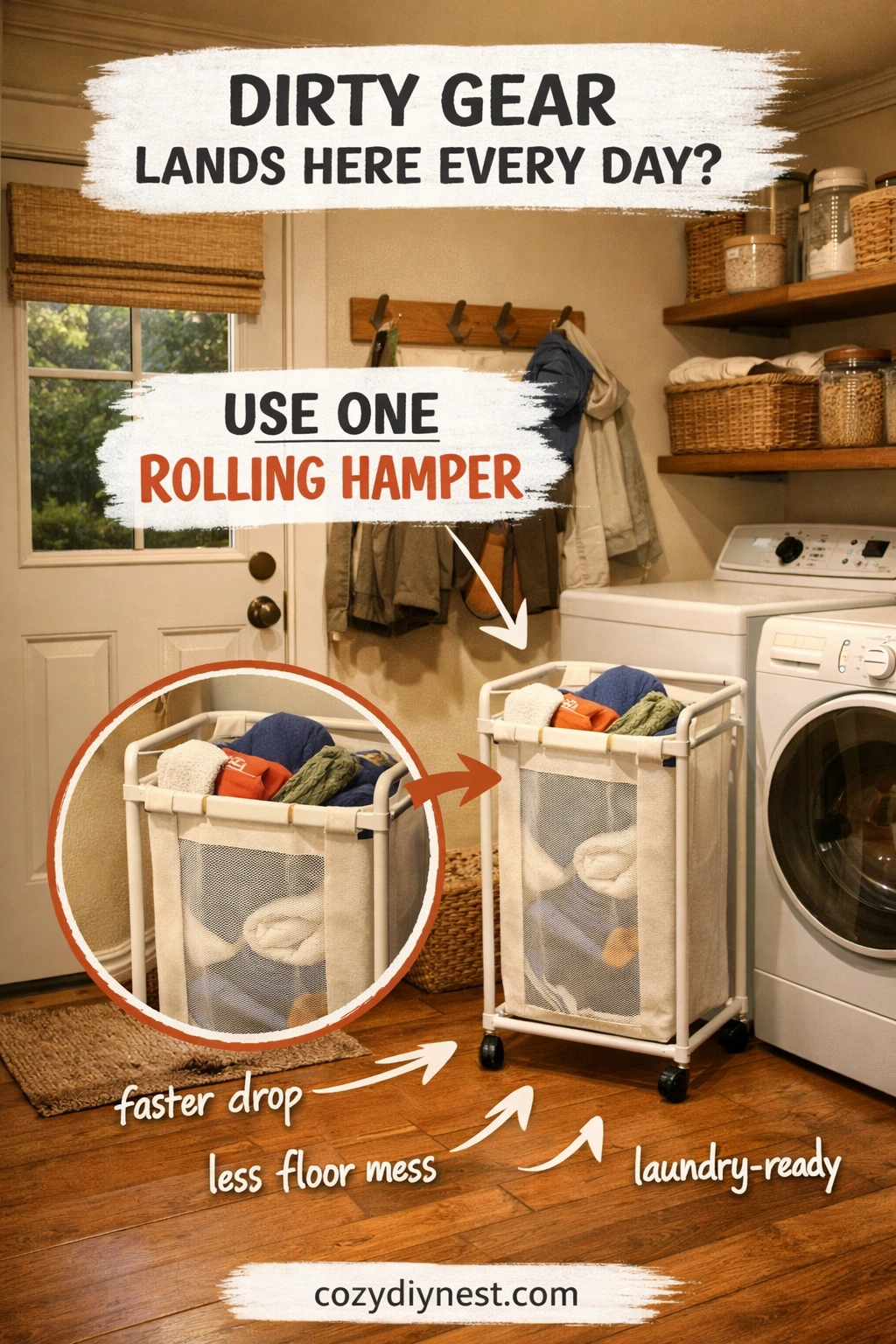
This works especially well for sports uniforms, muddy socks, towels, dog towels, or after-school clothes that otherwise end up on the bench, the floor, or the washer top.
Because this is a laundry-adjacent zone, it makes sense to let the drop zone connect to wash-day reality instead of pretending everything comes in clean and folded.
If the back door always becomes the first stop for dirty gear, give that behavior a real container instead of fighting it.
7. Create a Weather Strip With a Boot Tray and Wipeable Wall Protection So Rainy Days Do Less Damage
When there is no real mudroom, wet weather can make the back door feel impossible to keep clean. One of the most practical back door drop zone ideas is building one small weather-ready strip with a boot tray, umbrella spot, and wipeable wall protection.
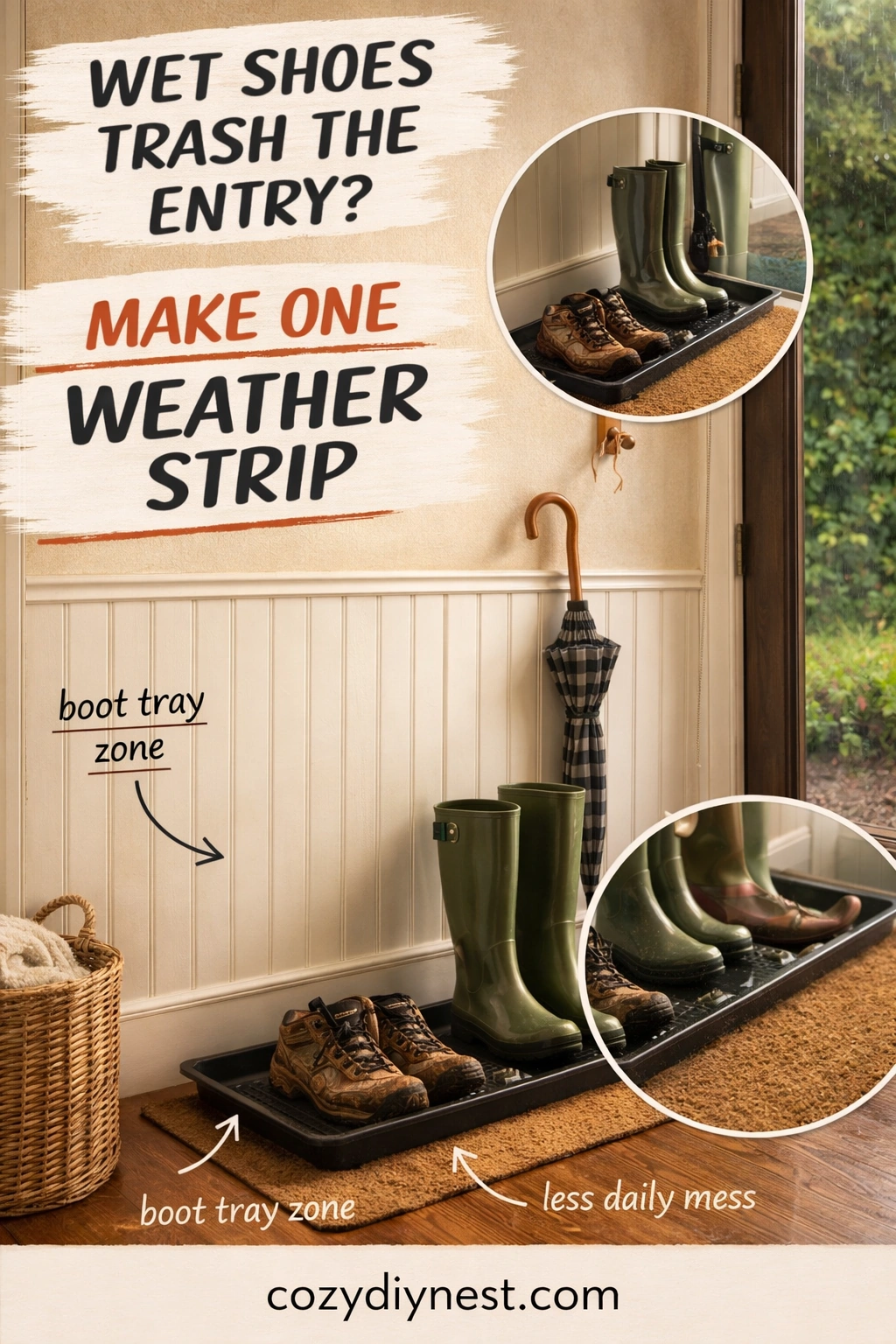
This works because it contains the worst of the mess at the exact point of arrival. Instead of water, grit, and muddy marks spreading out, they hit one zone that is meant to handle them.
This is especially useful in family homes, pet homes, or any climate where rain, snow, or wet shoes are part of everyday life for part of the year.
If rainy days always make the entry feel twice as chaotic, weather containment is probably the missing layer.
Quick No-Mudroom Drop Zone Checklist
- Start vertically with hooks and one shelf.
- Hide shoes in a slim closed cabinet.
- Add a storage bench if you need seat + storage in one.
- Use a nearby closet or door-back for overflow support.
- Create one ledge for keys, mail, and charging clutter.
- Give dirty gear a rolling hamper instead of the floor.
- Contain wet weather with a tray and wipeable wall zone.
Once you start thinking about back door drop zone ideas this way, the goal becomes much clearer. You do not need a full mudroom to make the entry feel organized. You need one compact system that matches the chaos your household actually creates.
The best back door drop zone ideas make a no-mudroom home feel calmer, easier to reset, and much more practical every single day.
To keep building this cluster, explore the full Laundry Mud Room Ideas & Organization category and related articles like Laundry Mud Room Storage Ideas, Small Laundry Mud Room Ideas, and Family Laundry Mud Room Ideas.
FAQ
How do I create a mudroom if I do not have one?
Create a compact drop zone near the back door using hooks, shoe containment, one small storage piece, and one controlled surface for daily clutter. You do not need a full room to get mudroom function.
What should be in a back door drop zone?
A back door drop zone usually needs hooks, shoe storage, a landing spot for keys and mail, and one place for messy or dirty daily items such as sports gear, pet gear, or wet-weather accessories.
What is the best storage for a small no-mudroom entry?
The best storage is usually a mix of vertical hooks, a slim closed shoe cabinet, and one hidden-storage bench or hamper. That combination gives function without blocking the walkway.
How do I keep my back door entry from looking messy every day?
Limit every category of clutter to one dedicated landing spot. Shoes need one cabinet or tray, paper needs one ledge, dirty gear needs one hamper, and coats need one hook zone. Clarity matters more than volume.