
Green kitchen accents are one of the easiest ways to warm up a white kitchen without paying for a full remodel. If your kitchen looks clean but still feels cold, flat, or a little too builder-basic, the real problem is usually not the white itself. The problem is that the room needs softer contrast, warmer materials, and a few more intentional layers that make it feel finished instead of sterile.
That is exactly why so many recent kitchen features from Better Homes & Gardens and House Beautiful keep returning to greens, warm woods, and earthy finishes. These updates add personality without making a kitchen feel loud or trendy in a short-lived way. For more whole-home reset inspiration built around the same warm-up logic, browse our Seasonal Home Decor & Refresh Ideas.
This article focuses on practical green kitchen accents you can actually buy online and use right now. Nothing here depends on tearing out cabinets or replacing countertops. The goal is to make a white kitchen feel warmer, softer, and more magazine-worthy with smart details that solve the real pain points in the room.
1. Start With a Washable Sage Runner to Warm Up a White Kitchen Floor
One of the biggest reasons a white kitchen feels cold is the amount of hard surface you see in one glance. White cabinetry, pale counters, tile, and flooring can all blend into one sharp visual strip that reads clean but not comfortable. That is why the floor is such a smart place to add warmth first.
A washable sage runner is one of the easiest green kitchen accents because it immediately softens the most used path in the room. It also brings in color without taking over the whole kitchen. If you want a stronger sense of color balance before choosing one, our rug color cheat sheet can help you think through tone and contrast in a warmer, less stark way.
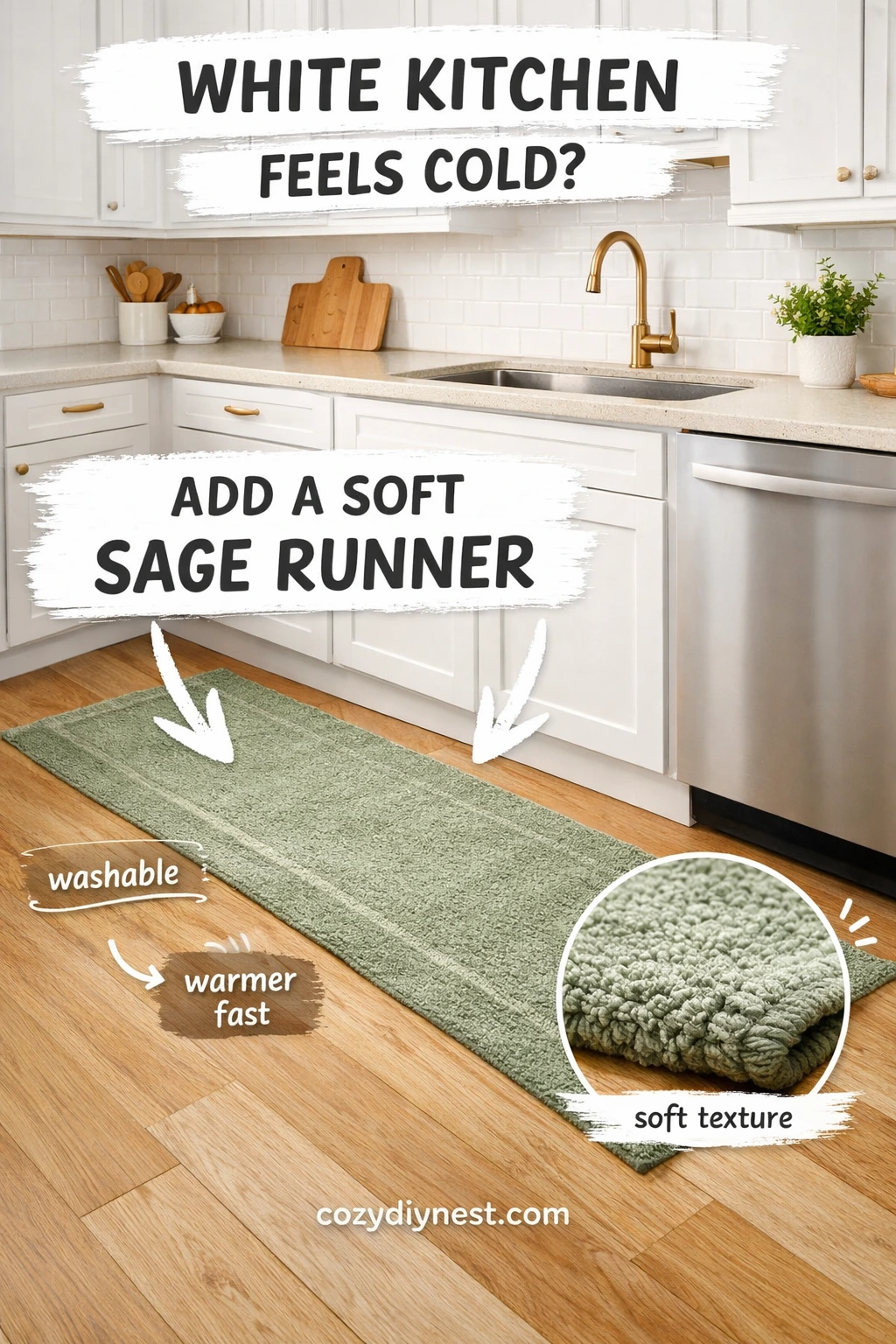
Look for a low-pile washable runner in sage, olive, or muted moss rather than a bright green that feels too sharp against white cabinets. The best version should feel earthy and calm, not loud or seasonal. This is especially effective in kitchens that already feel a little echoey or visually hard.
It is also one of the most practical upgrades in the whole article because it works for spills, everyday cooking, kids, and pets. You are not just decorating. You are solving the exact place where the kitchen feels least welcoming.
2. Layer Warm Wood With Green Kitchen Accents So the Room Feels Richer
Color alone does not always fix a cold kitchen. If you add green without a warmer supporting material, it can still feel disconnected from the rest of the room. This is why white kitchens tend to look far better when they are paired with wood that adds grain, depth, and warmth.
The Spruce’s white-and-wood kitchen ideas make this point really clearly: wood is often what takes the chill out of a white kitchen. The same rule applies here. When green kitchen accents are layered with cutting boards, wood trays, or warm oak and walnut details, they stop looking random and start looking intentional.
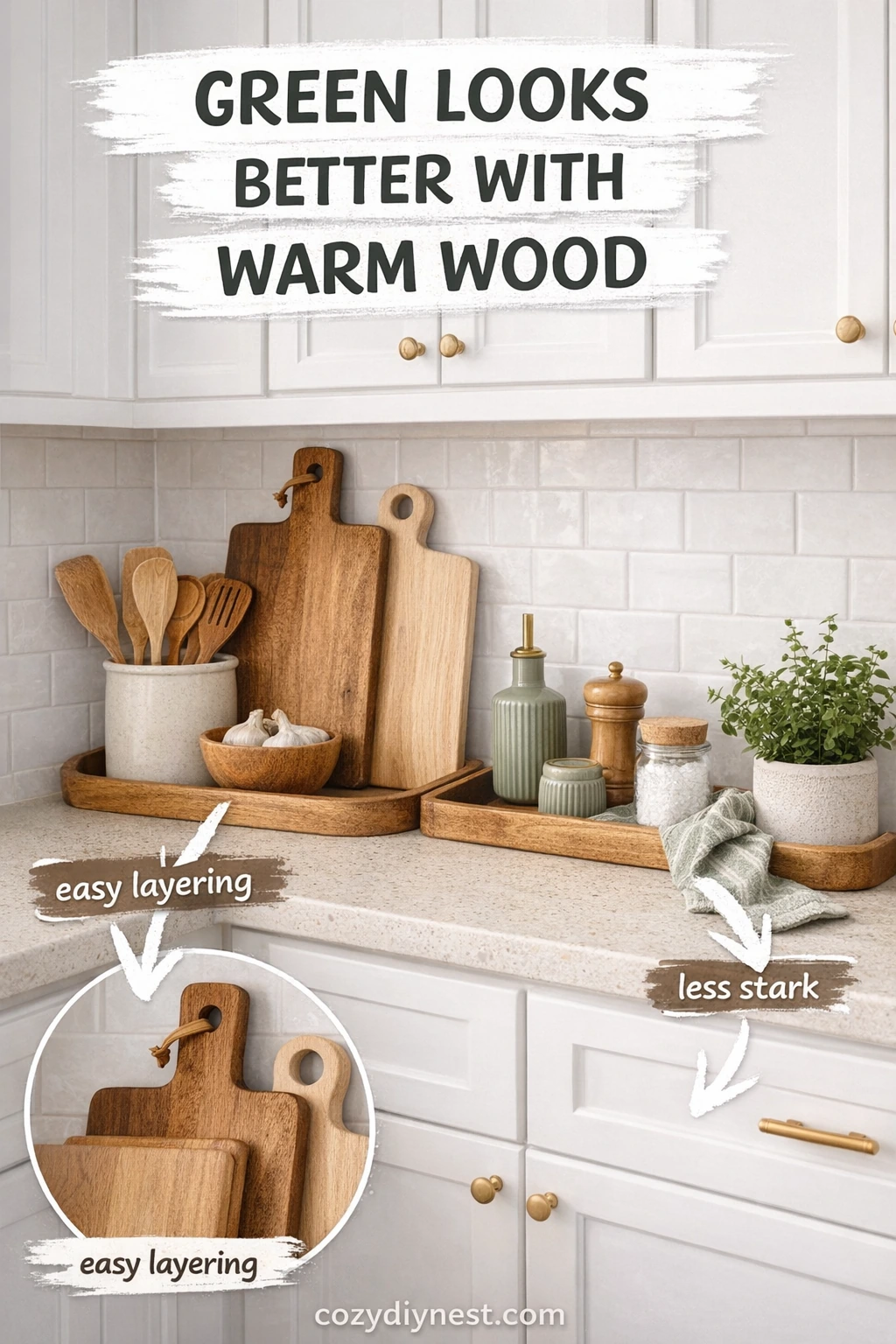
The easiest way to do this is with pieces that already make sense in a kitchen: a stack of cutting boards, a wood riser, a walnut utensil crock, or a wood tray that grounds your countertop styling. These are small online purchases that create a surprisingly expensive-looking shift.
If your white kitchen currently feels flat instead of cozy, this pairing is often the missing link. The green adds life. The wood adds warmth. Together, they make the room feel more complete.
3. Upgrade the Counter With Useful Green Kitchen Accents Instead of Random Clutter
A lot of white kitchens do not actually need more decor. They need better everyday pieces. When the counter is filled with generic plastic, random soap bottles, or mismatched containers, the kitchen starts to feel accidental instead of styled.
This is where useful green kitchen accents do their best work. Real Simple’s kitchen decorating coverage leans heavily into practical updates that make a room feel better without turning it into a staged showroom, and that is the right mindset here. The goal is to replace visual clutter with pieces you really use every day.
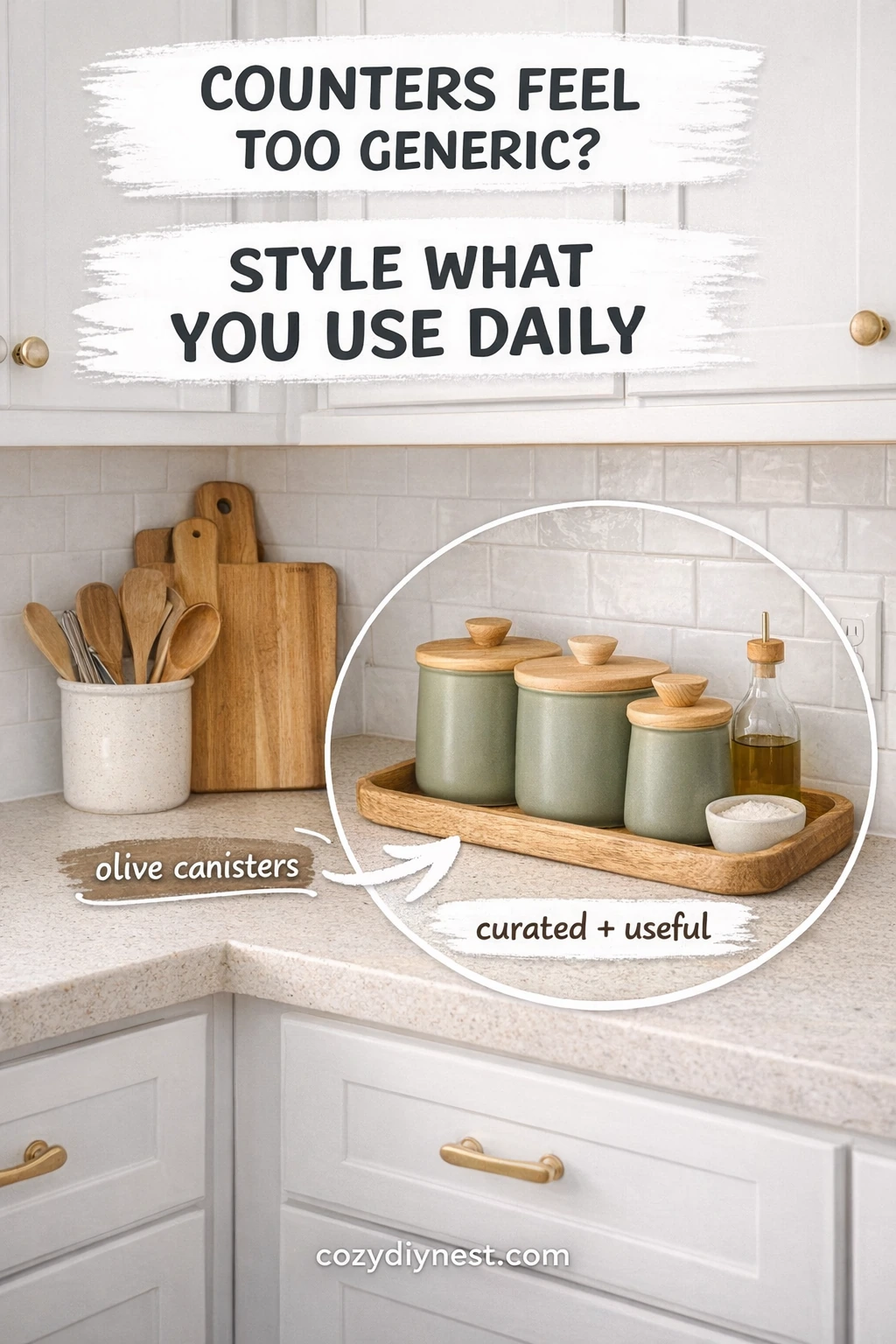
Try olive or sage canisters, a ceramic utensil crock, a better soap tray, or one warm-toned board leaning at the backsplash. Keep the grouping tight and edited. Two or three useful pieces are much stronger than ten small decorative objects that make the counter feel busy.
This is one of the fastest ways to make a white kitchen feel more custom because the counter is where daily mess is most visible. When that zone looks calmer and more coordinated, the entire kitchen feels more intentional.
4. Add a Small Herb Near the Sink So a White Kitchen Feels Less Stark
The sink area is one of the easiest places for a white kitchen to feel dead. It is useful, but it often has no softness, no movement, and no real focal detail. That is exactly why one tiny living accent can change the mood so quickly.
A basil pot, rosemary planter, or even a realistic faux herb in the right vessel is one of the smartest green kitchen accents for this zone. It adds color in a way that feels fresh and believable, not forced. In a room that already has a lot of white and hard edges, that little green moment can keep the sink from feeling like a purely functional corner.
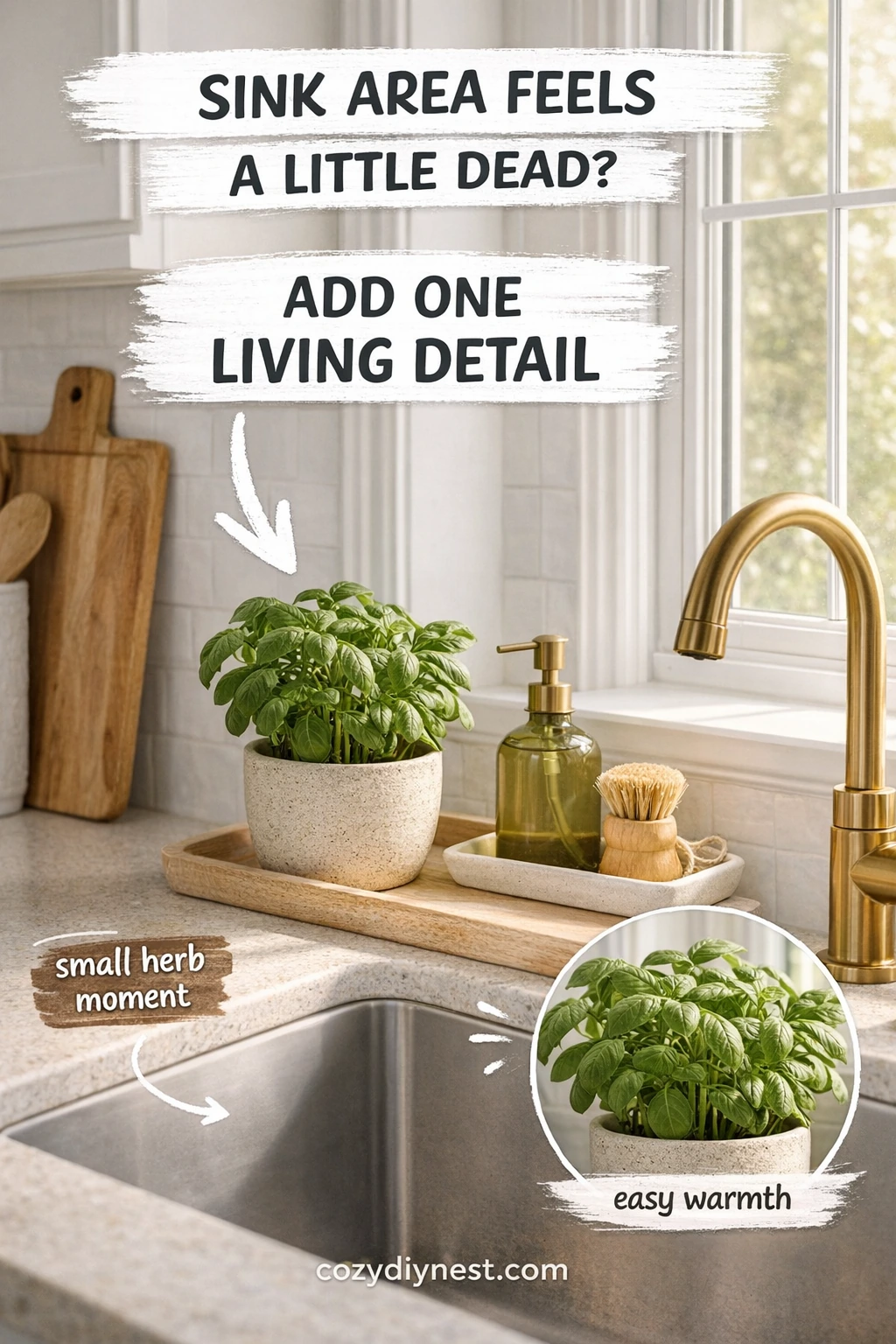
Choose a planter that also adds warmth. Stoneware, ceramic, aged terracotta, or matte finishes usually work better than shiny plastic because the texture matters as much as the greenery itself. The right vessel helps the accent feel more editorial and less temporary.
This move is also ideal if your kitchen budget is tight. You are not trying to transform the entire room at once. You are solving one visually dead zone with a small, high-impact layer.
5. Use Layered Lighting to Make Green Kitchen Accents Glow at Night
Some white kitchens look fine in daylight but disappointing after sunset. That is usually a lighting problem, not a style problem. If the room relies on one overhead fixture, even beautiful accents can look flat, chilly, and less expensive than they really are.
House Beautiful’s kitchen lighting guidance is clear on this point: the goal is not just brightness, but balance through layers. A kitchen should have a mix of ambient, task, and softer mood lighting. That is what makes green kitchen accents look rich instead of dull, especially in the evening.
This same idea shows up in our own 7-point spring light test and broader lighting mood ideas, because good light changes how every material in a room is perceived. It can make white feel creamy instead of clinical, and make green feel grounded instead of cold.
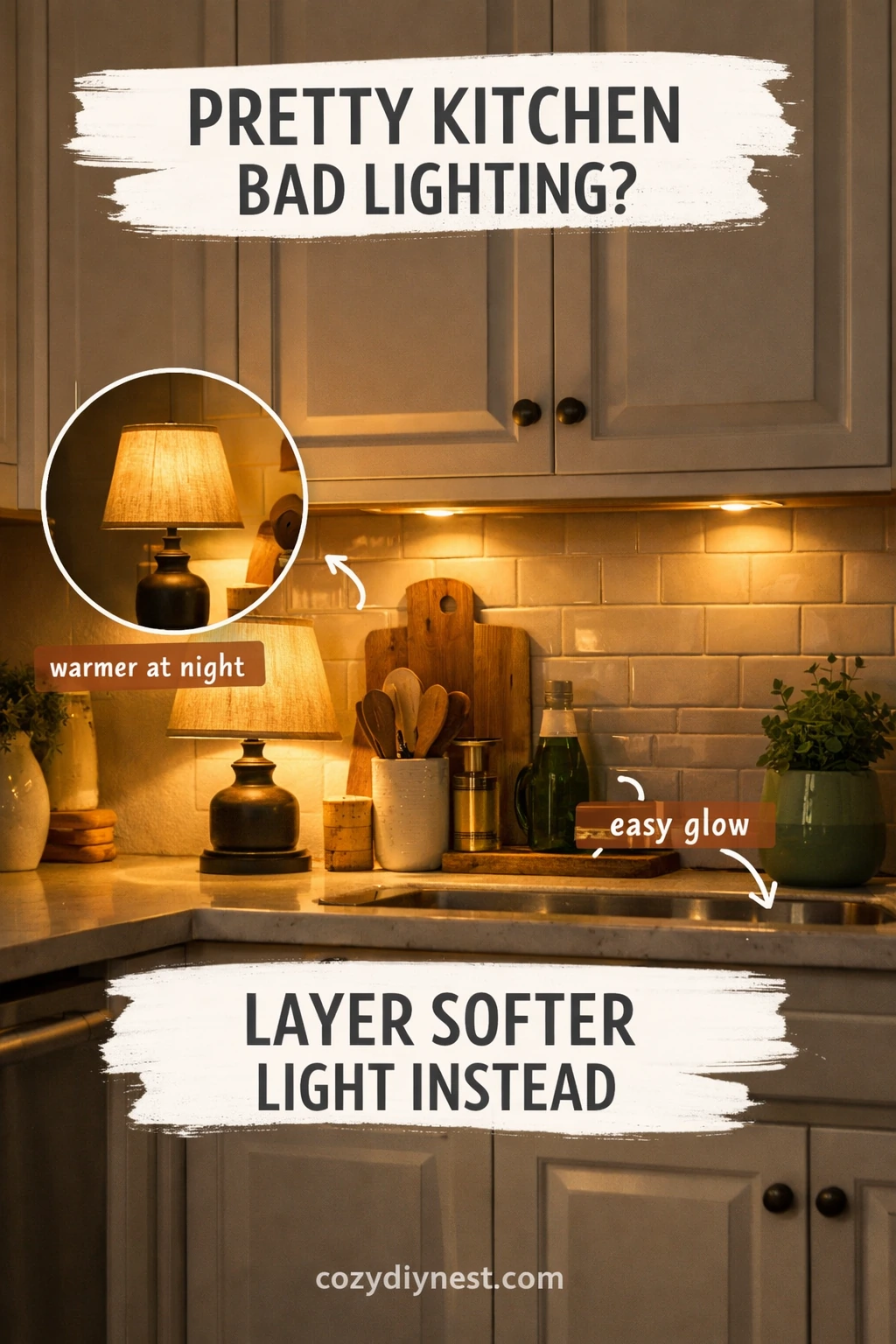
A tiny countertop lamp, rechargeable lamp, warmer bulb, or under-cabinet light bar can be enough to shift the whole mood. This is one of the most practical upgrades in the article because it improves both the way the kitchen looks and the way it functions at night.
6. Bring in Soft Green Textiles That Make a White Kitchen Feel Less Hard
White kitchens often feel cold because they are made of almost nothing but hard planes. Cabinets, backsplash, counters, floors, and appliances all read as rigid surfaces. When there is no softness in the room, the result can feel more clinical than cozy.
That is why soft textiles are such smart green kitchen accents. A sage dish towel, olive-striped hand towel, stool cushion, or simple potholder introduces both color and texture in a way that still feels useful. You are not adding decorative fluff. You are making daily-use pieces do more visual work.
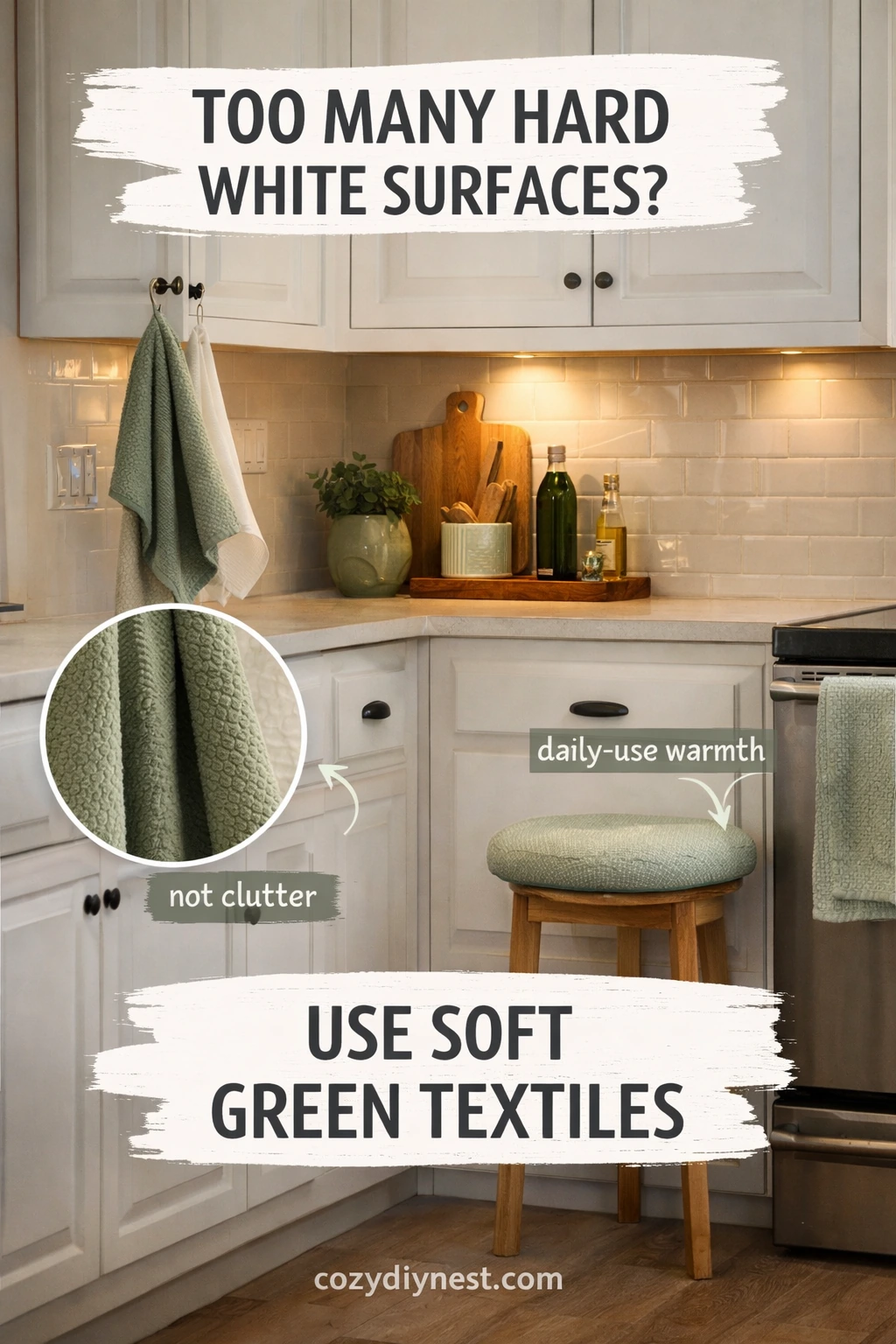
The key is restraint. Avoid overly themed prints or anything that looks like seasonal novelty decor. Muted olive, sage, or moss works best because those tones are easier to repeat across the room without making it feel forced.
This is one of the easiest budget-friendly fixes in the whole article, and it solves a very real problem: too many hard white surfaces with nothing to soften them.
7. Repeat Green in Three Places So the Kitchen Looks Styled, Not Random
The biggest mistake with accent color is using it once and expecting the room to feel complete. One green vase alone can feel accidental. One towel can look like an afterthought. What makes green kitchen accents work is repetition with discipline.
Better Homes & Gardens’ 2026 kitchen trend coverage continues to emphasize kitchens that feel more personal, layered, and connected to natural materials. In a white kitchen, the easiest way to get that look is to echo green in two or three intentional places rather than sprinkling it everywhere.
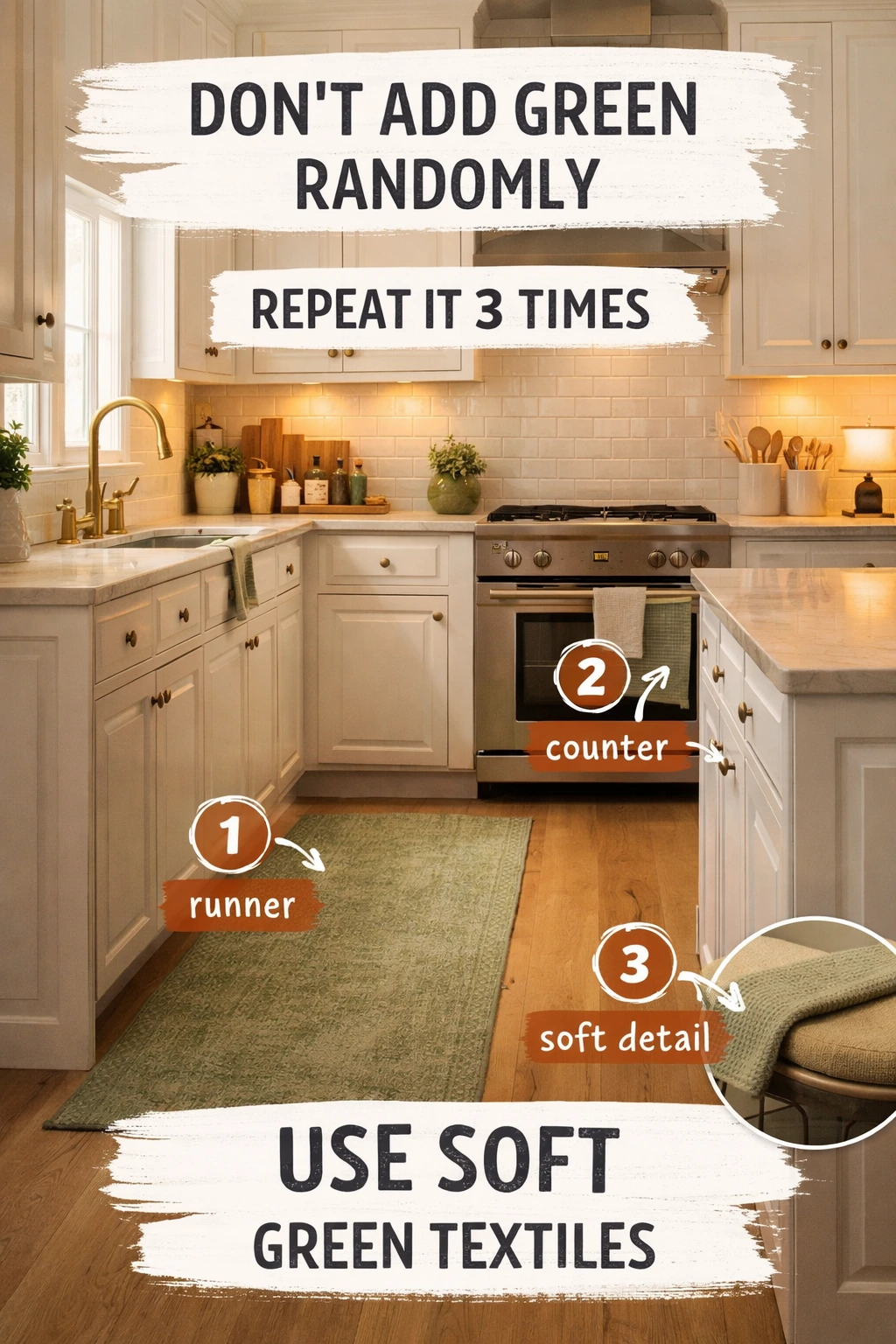
A simple formula works well here: one floor-level green accent, one countertop accent, and one softer accent at eye level. For example, a sage runner, olive canisters, and one herb planter or towel detail. That rhythm makes the kitchen look styled instead of random.
When you keep the palette disciplined, even affordable updates can look elevated. That is the difference between a kitchen that feels decorated and one that feels genuinely pulled together.
Final Thoughts
If your kitchen feels too white, too cold, or just a little too basic, the answer is not always a renovation. Often, the smarter move is to add warmth exactly where the room feels hardest, flattest, or most unfinished.
That is why green kitchen accents work so well. They bring in color without fighting the calm brightness that makes white kitchens appealing in the first place. Paired with warm wood, softer light, useful countertop pieces, and practical textiles, they make a kitchen feel richer without making it feel crowded.
Start with the zone that bothers you most. If the floor feels hard, add a runner. If the counter feels generic, upgrade the daily-use pieces. If the room falls flat at night, fix the lighting first. The best warm-up moves are always the ones that solve a real pain point instead of adding more random decor.
FAQ
Are green kitchen accents still in style?
Yes. Sage, olive, and moss tones still work beautifully because they feel grounded, natural, and easy to pair with white kitchens, warm wood, and softer metals.
How do I warm up a white kitchen without remodeling?
The easiest place to start is with layers that add softness and warmth: a washable runner, wood accessories, green textiles, a small herb planter, and better layered lighting.
What shade of green works best in a white kitchen?
Muted greens usually work best in a white kitchen. Sage, olive, and moss feel softer and more expensive than brighter greens, and they are easier to repeat throughout the room.
Can green kitchen accents work in a small kitchen?
Yes. In a small kitchen, green accents can actually help the room feel more intentional as long as the color is repeated in a few controlled places rather than used everywhere at once.