
If you’ve been looking for mudroom boot tray ideas because your back door floor keeps getting trashed by wet shoes, muddy boots, and rainy-day drips, you’re not imagining the problem. One of the fastest ways an entry starts to feel chaotic is when the weather comes inside with everyone’s shoes. The best mudroom boot tray ideas do more than hold boots. They create one controlled wet zone that keeps water, dirt, and shoe clutter from spreading across the entire entry.
That logic shows up clearly in the best entryway guidance. Better Homes & Gardens recommends an all-purpose tray for rain boots to catch mud and drips, The Spruce highlights boot mats and wet-shoe storage as core mudroom elements, and Real Simple calls a boot tray an essential for fall and winter entries. The Spruce’s small-space shoe storage guidance also supports using mats and simple shoe containment to stop dirt from traveling deeper into the house.
If your home does not even have a true mudroom, start with No Mudroom? 7 Back Door Drop Zone Ideas That Still Feel Organized. And if your current entry already feels too tight before the weather mess begins, these small laundry mud room ideas can help improve the layout first.
These mudroom boot tray ideas focus on one main pain point: how to keep a back door floor cleaner when wet shoes and bad weather hit the same spot every single day.
1. Start With One Oversized Boot Tray So Drips Stop Spreading Across the Floor
One of the smartest mudroom boot tray ideas is also the simplest: use one oversized tray that is big enough for how your household actually comes in. A tray that is too small usually fails fast, because one pair fits and the rest still ends up on the floor.
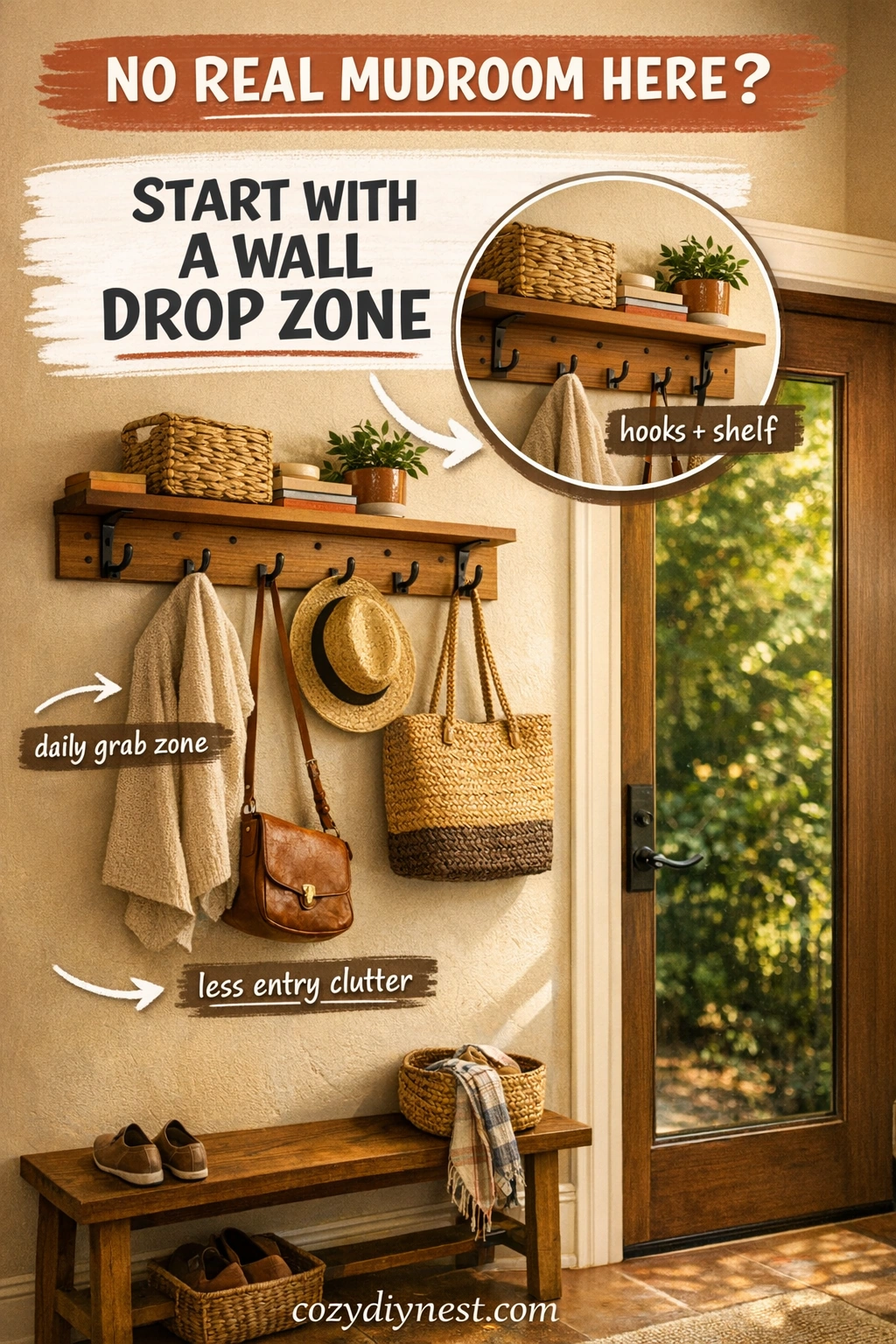
An oversized tray creates one obvious landing zone for wet boots and muddy shoes. That one move immediately gives the mess a boundary, which is what most back doors are missing on rainy days.
This works especially well in family homes where several pairs come through the same door in a short amount of time.
If your entry always loses the battle at the exact first step in, this is where to start.
2. Pair the Tray With a Slatted Rack So Wet Shoes Dry Instead of Sitting in a Puddle
One reason wet-shoe systems fail is that the boots stay wet too long. One of the most practical mudroom boot tray ideas is pairing the tray with a slatted rack or raised shoe stand so air can move around the shoes while drips still stay contained.
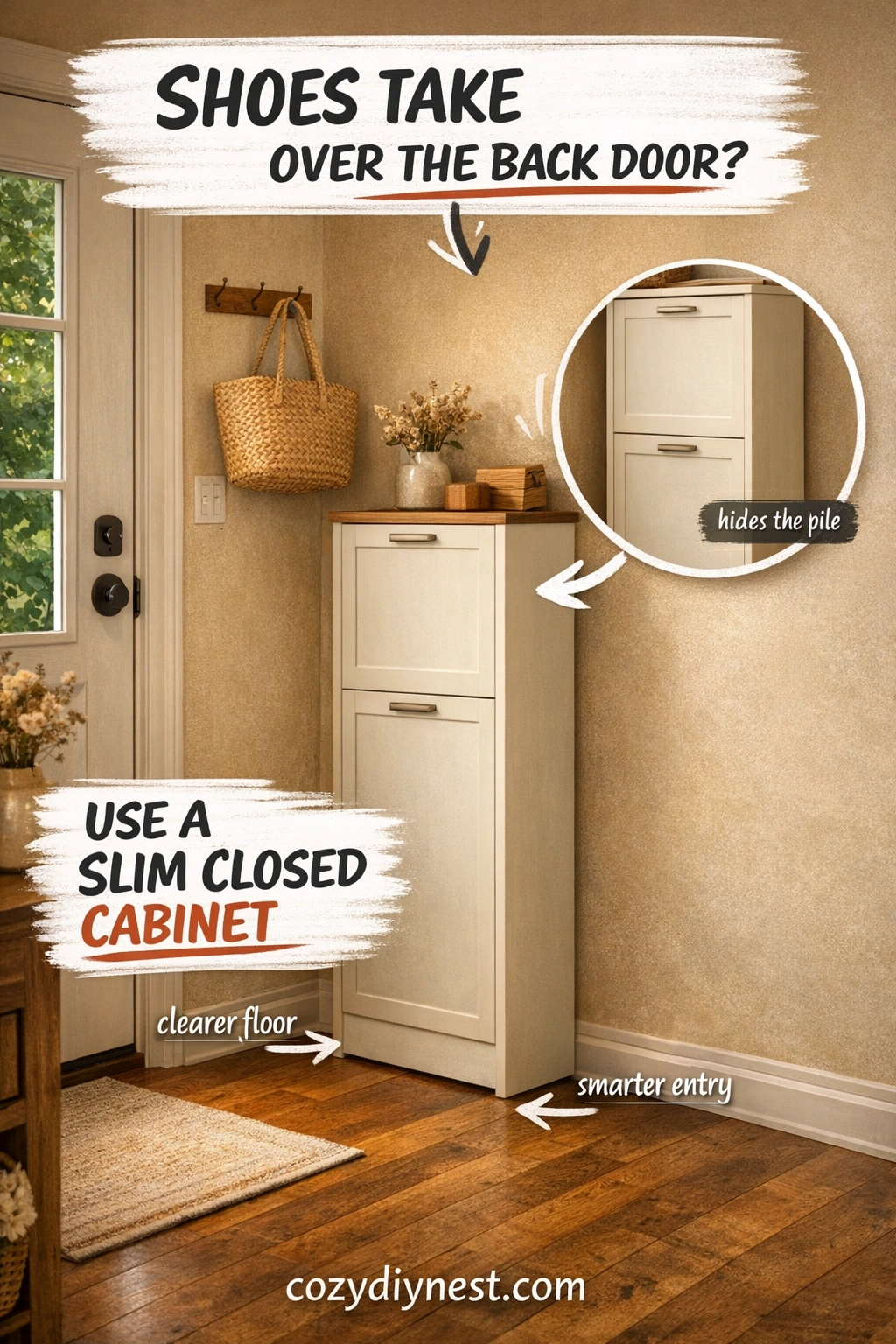
This is especially useful for snow boots, rain boots, kids’ shoes, and any household where shoes come in damp over and over again. The rack keeps the system from turning into one long shallow puddle.
It also helps the entry smell fresher and feel less grimy because the shoes are drying more cleanly.
If your boot tray still feels messy after two rainy days, this drying layer is often the missing fix.
3. Protect the Lower Wall So Splash and Scuff Marks Stop Ruining the Entry
The floor is not the only victim of wet weather. One of the most overlooked mudroom boot tray ideas is protecting the lower wall behind the shoe zone with wipeable paint, paneling, or a practical wall strip. Wet boots, dog paws, umbrellas, and quick kick-offs often mark the wall just as much as the floor.
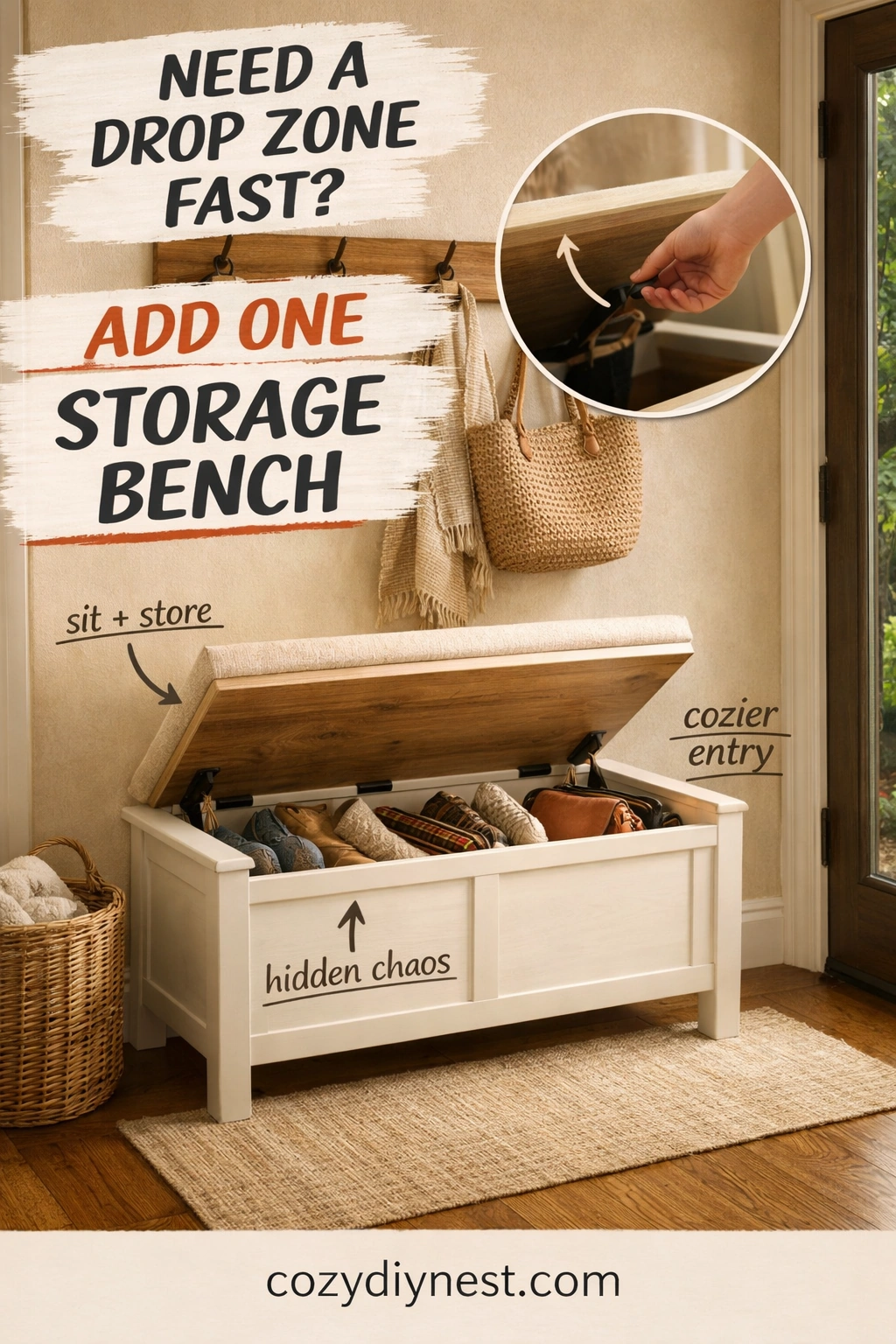
This one layer makes the whole area easier to maintain because cleanup becomes less stressful. You stop treating the wall like something fragile and start treating the zone like the real working entry it is.
This is especially useful in narrow entries where shoes hit the wall almost automatically when people come in too fast.
If the space still feels messy even after you control the floor, the wall may be the real reason.
4. Give Tall Rain Boots Their Own Upright Storage Spot Instead of Letting Them Collapse Everywhere
One of the biggest visual problems in wet-weather entries is that tall boots never seem to fit the normal shoe setup. One of the strongest mudroom boot tray ideas is giving those taller boots a dedicated upright basket, tall cubby, or vented cabinet space so they stop toppling over in the walkway.
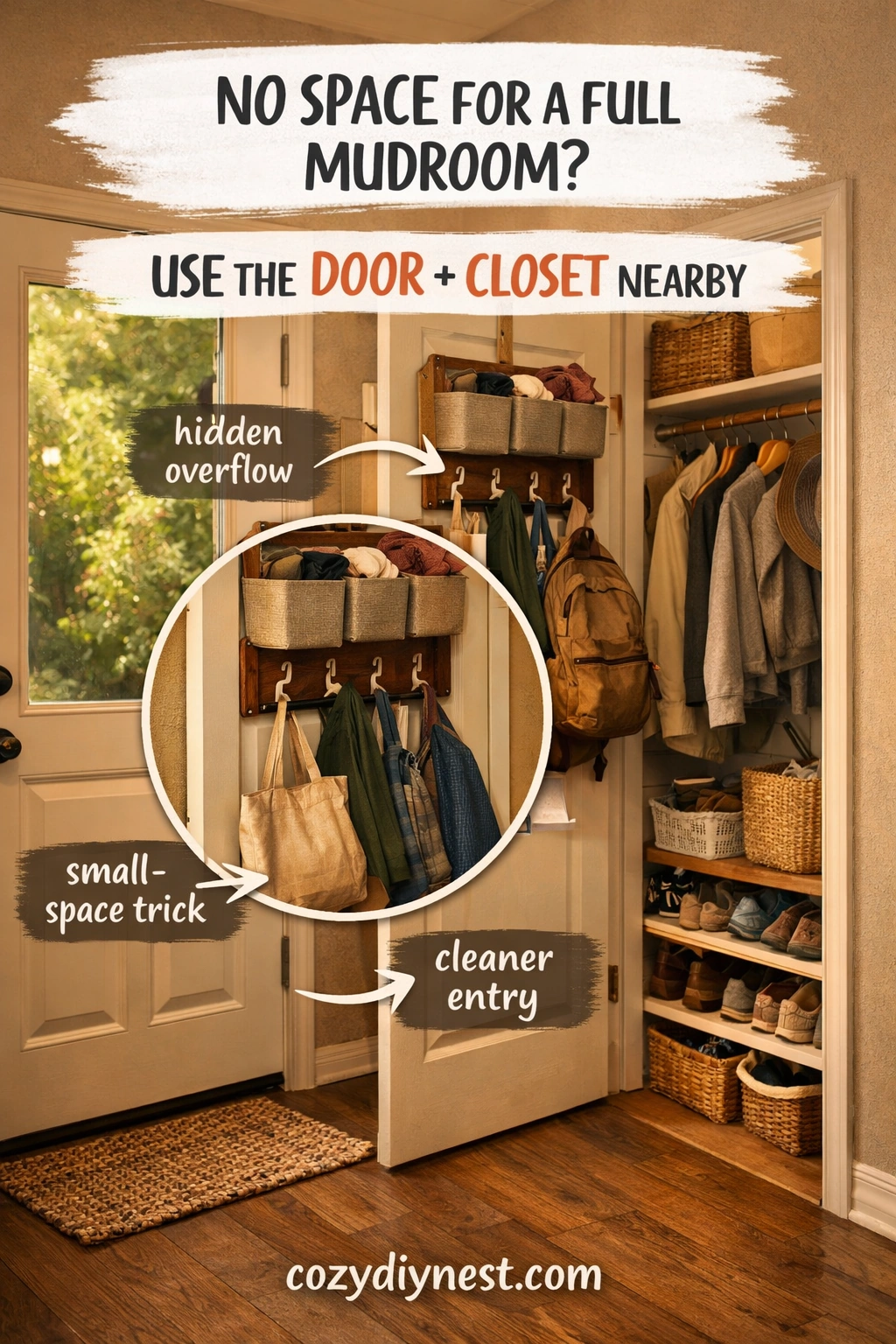
Better Homes & Gardens specifically points out that tall shoes often need their own tray or special handling because they do not fit standard cubbies well. That is exactly why a tall-boot solution can calm the whole entry visually.
This is especially important in climates where rain boots or snow boots are part of everyday life for whole seasons at a time.
If your entry always looks messy because of the same two pairs of tall boots, solve them directly instead of redesigning everything else.
5. Use a Two-Mat System So Dirt Gets Scraped Outside and Absorbed Inside
One of the most practical mudroom boot tray ideas is not only a tray. It is a weather system. Many households rely on one doormat and expect it to do everything, but a cleaner entry usually needs two stages: one rough mat outside to knock off mud, and one absorbent mat or runner inside to catch what remains.
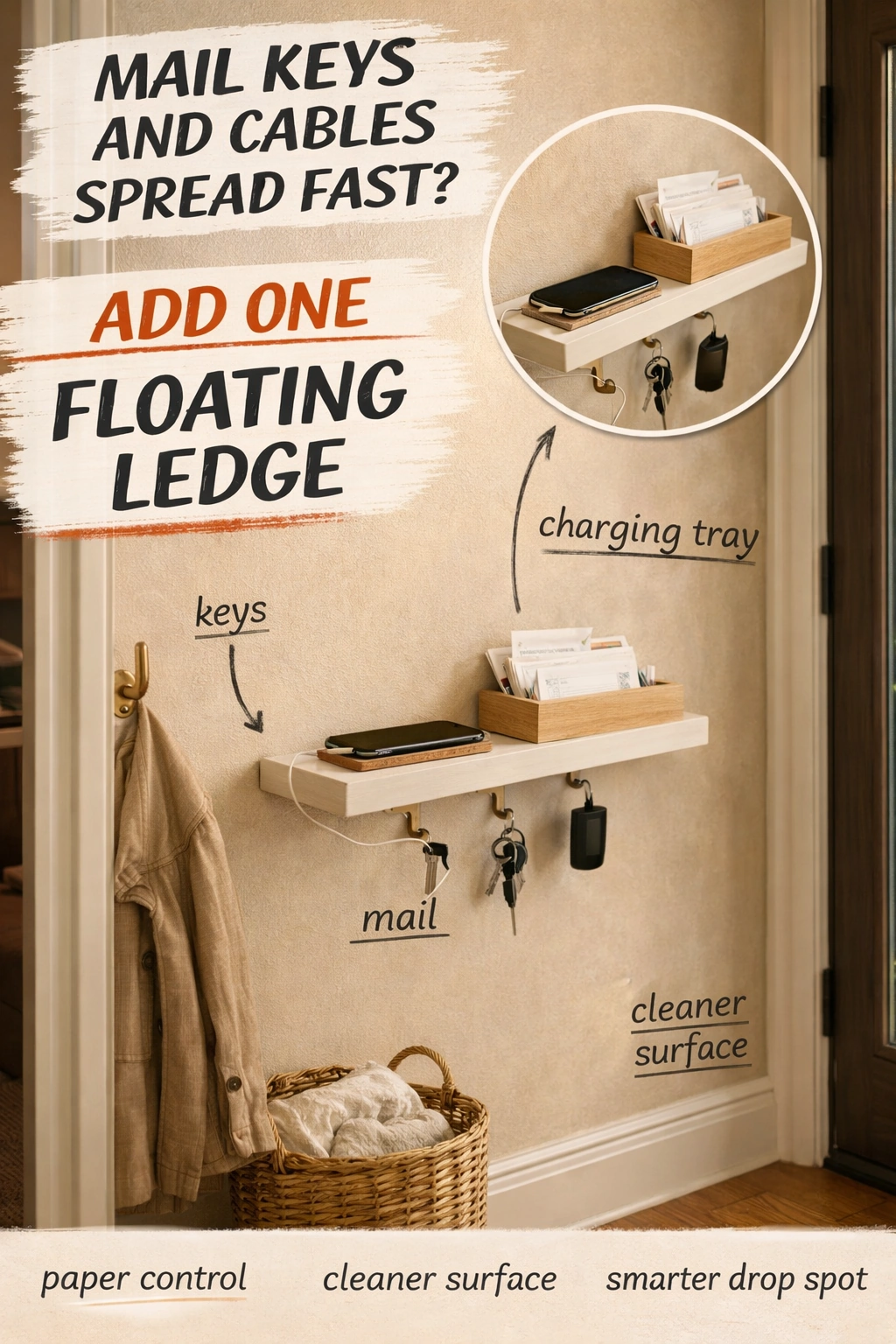
The Spruce specifically recommends sturdy mats for storing or drying outdoor shoes in wet months, and that logic works even better when you split the job between scrape and absorb. The result is less water tracked deeper into the house.
This is especially useful when your boot tray helps, but the floor still feels damp or gritty around the rest of the entry strip.
If one mat has never been enough, that is because it probably was not meant to do two jobs at once.
6. Make One Umbrella and Wet-Gear Station So Damp Accessories Stop Spreading Everywhere
Wet-weather mess does not stop at shoes. Umbrellas, gloves, dog towels, hats, and reusable bags often end up draped over the nearest surface. One of the most useful mudroom boot tray ideas is creating one compact wet-gear station right beside the shoe zone.
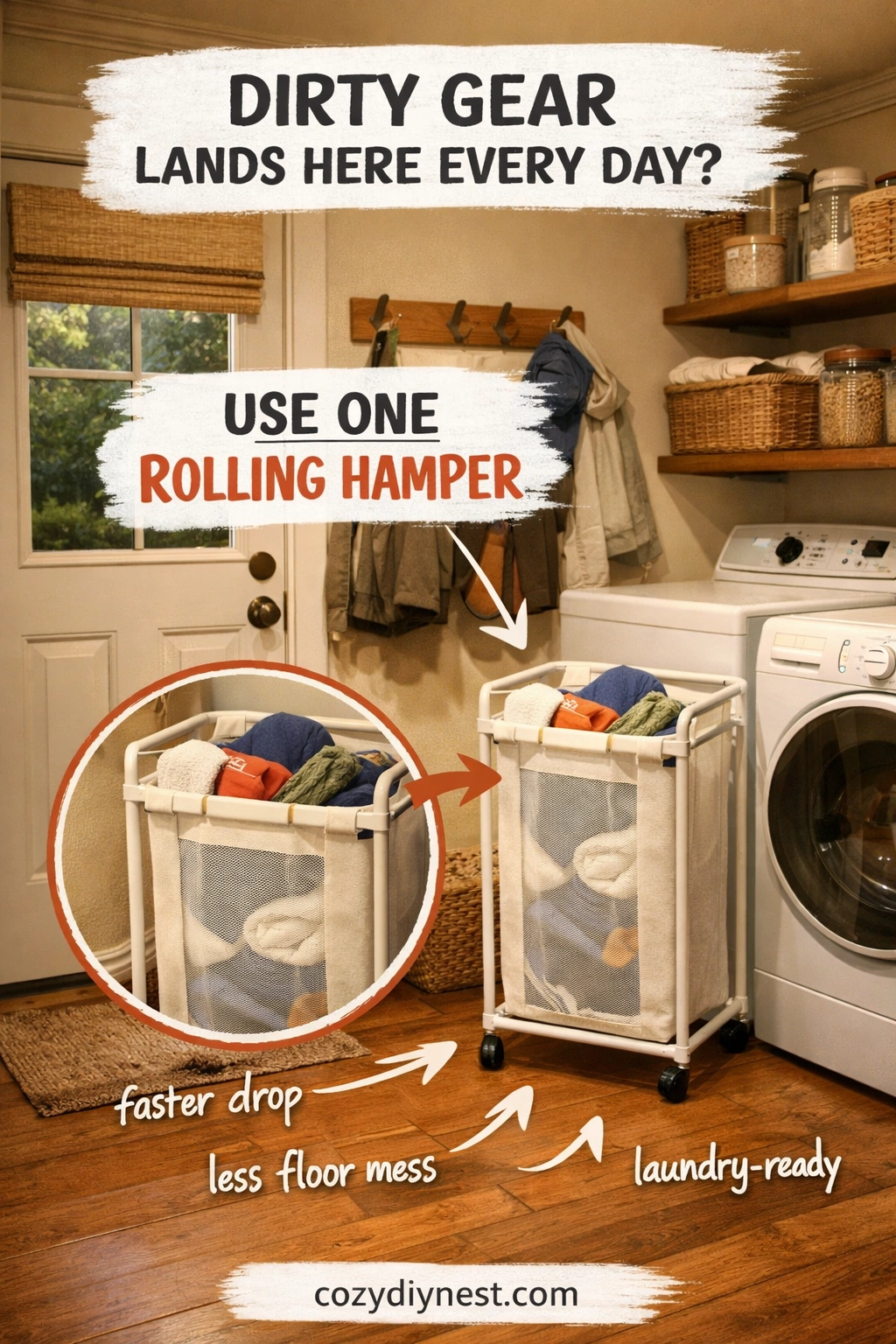
This could be an umbrella stand, a crock, a washable basket, or a small wipeable bin. The point is to stop these damp extras from spreading over the bench, floor, washer top, or kitchen counters.
This is especially helpful in family homes where a rainy day means multiple damp categories arriving all at once.
If your entry gets messy from the “small wet stuff” more than the boots themselves, this is probably the fix you need most.
7. Build a Rainy-Day Reset Zone So Every Wet Category Has One Home
The strongest mudroom boot tray ideas do not stop at one product. They turn the back door into a simple reset system. Hooks for coats, a tray for boots, one basket for weather gear, and one washable floor strip all work together to stop the mess from multiplying.
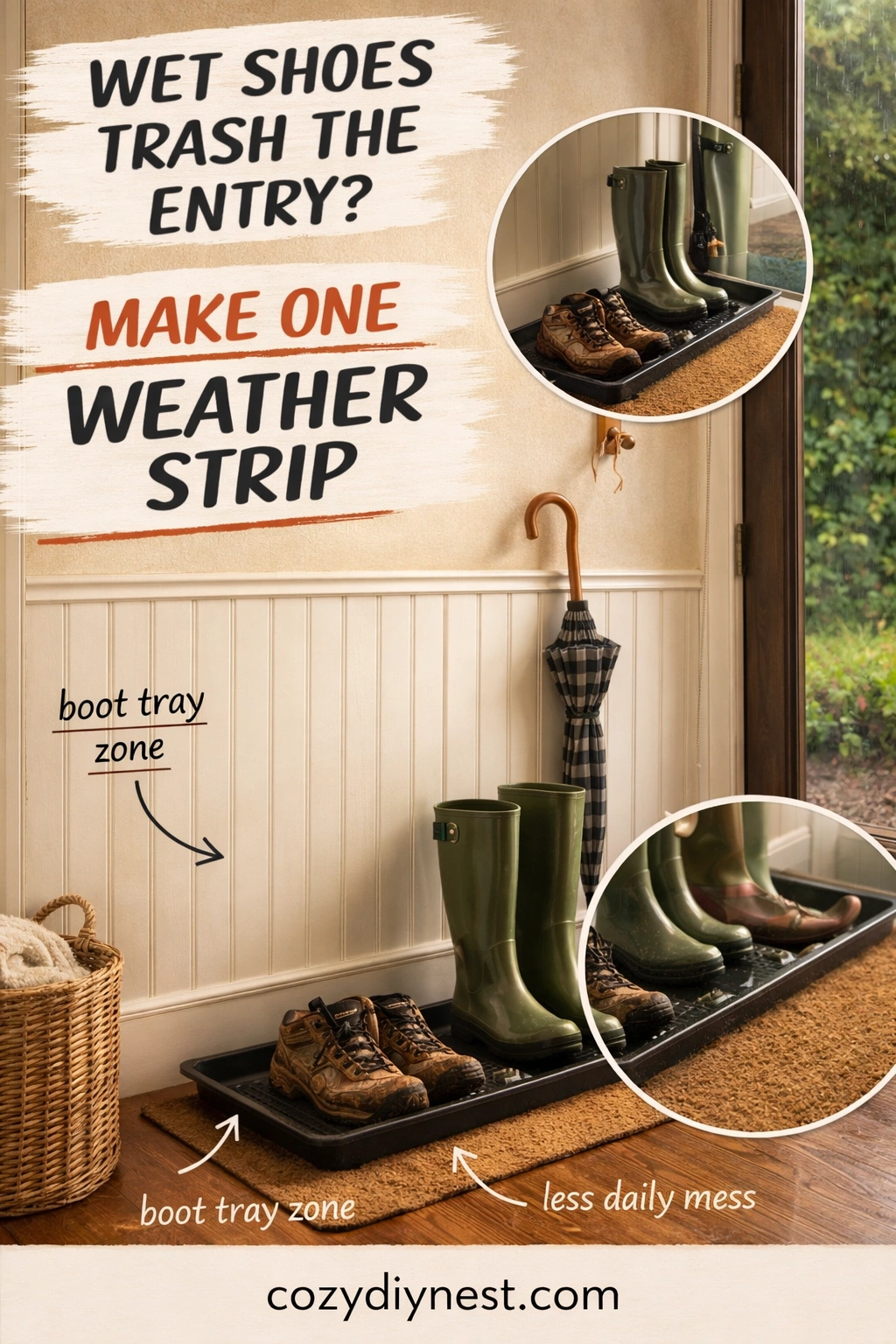
This is the real shift: instead of thinking “how do I keep the back door clean,” you think “where does each wet thing go the second it comes in?” That mindset is what makes even a no-mudroom home feel much more controlled.
This is especially powerful when you are tired of cleaning the same entry mess over and over again without changing the system that causes it.
If weather chaos keeps winning, a reset zone is the difference between reacting and actually containing the problem.
Quick Wet-Shoe Entry Checklist
- Use one oversized boot tray, not a tray that is too small.
- Add a drying rack if shoes stay wet too long.
- Protect the lower wall if splash marks build up.
- Give tall boots one upright storage spot.
- Use an outside scrape mat and an inside absorbent mat.
- Create one umbrella and wet-gear drop station.
- Treat the whole back door as a rainy-day reset zone.
Once you start thinking about mudroom boot tray ideas this way, the goal becomes much clearer. You are not just buying a tray. You are creating one wet-weather system that keeps the entry from falling apart every time it rains.
The best mudroom boot tray ideas make a back door floor cleaner because they contain the whole chain of mess, not just the shoes themselves.
To keep building this series, browse the full Laundry Mud Room Ideas & Organization category and related articles like No Mudroom? 7 Back Door Drop Zone Ideas That Still Feel Organized, Small Laundry Mud Room Ideas, and Laundry Mud Room Storage Ideas.
FAQ
What is the best tray for muddy boots in a mudroom?
The best tray is usually one that is larger than you think you need and easy to wipe clean. It should be able to catch water, dirt, and drips without overflowing into the rest of the entry.
How do I keep wet shoes from ruining my entry floor?
Use a controlled wet zone with a boot tray, a drying rack or raised shoe stand, and a two-mat system that helps scrape and absorb moisture before it spreads deeper into the house.
What should I put under rain boots by the back door?
A boot tray is usually the simplest option, especially if paired with a slatted rack or ventilated spot for taller boots. This keeps water and dirt from pooling directly on the floor.
Do I need a mudroom to make a wet-shoe entry work?
No. Even a small back door can work well if wet shoes, umbrellas, and gear each have one dedicated landing spot. A compact system matters more than a large room.