
If your front door area feels crowded before anyone even walks inside, the problem may not be the size of the entryway. The problem may be that the floor is doing all the work while the wall is doing nothing. These entryway wall storage ideas are for tiny foyers, apartment entries, narrow front-door corners, and small homes where shoes, bags, keys, mail, and daily clutter keep landing on the floor.
This article is not a mudroom makeover and it is not a coat closet article. It is specifically about the vertical wall space near the front door. When the wall works harder, the floor can stay clearer, the path can feel more open, and the entry can become easier to reset every day.
Better Homes & Gardens recommends floating shelves near the front door for essentials like wallets and glasses, with a basket below for larger outgoing items. Homes & Gardens also notes that wall-mounted solutions are especially important in narrow entryways because they free up floor space and improve circulation. The Spruce highlights wall storage such as hooks, floating shelves, and decorative storage pieces as practical ways to tidy a space.
That is why strong entryway wall storage ideas should solve a real problem, not just decorate a blank wall. The goal is to create small wall zones for keys, mail, bags, shoes, returns, and daily items without turning the entry into a crowded display.
If your issue is the whole front-door zone, read small entryway storage ideas. If shoes are the main problem, use entryway shoe storage ideas. If the mess is hiding inside the closet, read coat closet organization ideas. If the clutter is happening in a narrow pass-through, continue with small hallway storage ideas.
1. Start With the Wall Before You Add More Floor Furniture
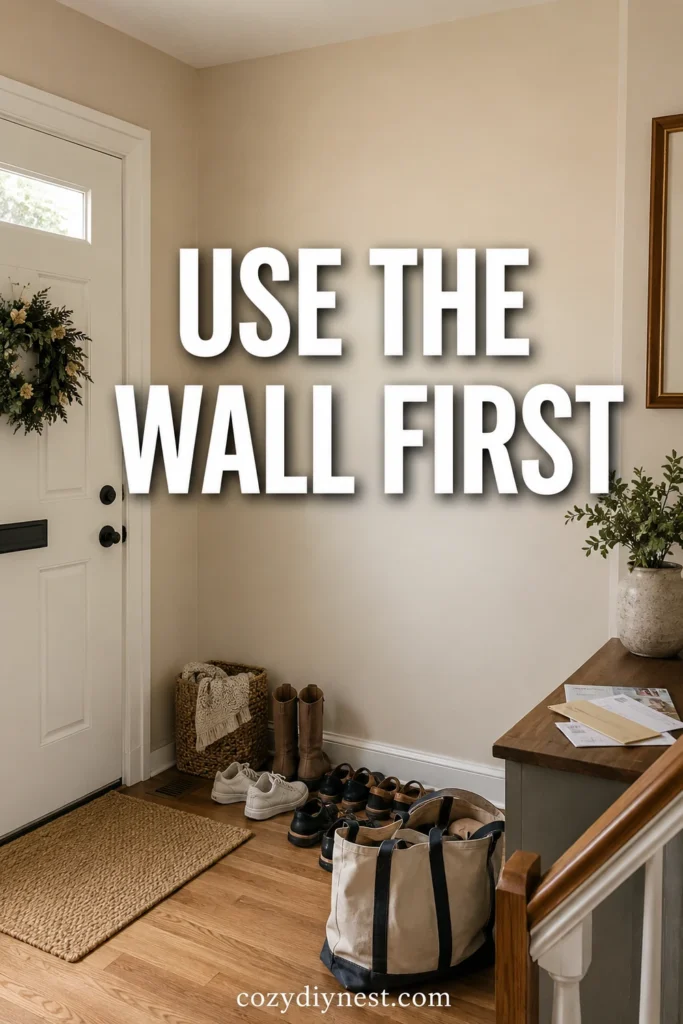
The first mistake in a tiny entryway is buying another bench, basket, or cabinet before checking the wall. If shoes, totes, mail, and small daily items keep landing on the floor, the wall may be the missing storage surface.
Look at the wall beside the front door, behind the door swing, near the closet, or above a narrow shoe tray. These vertical spaces can often hold more function than a bulky floor piece.
AI-smart entry test: Take a photo of the entry from the opposite side. If the floor is crowded but the wall is blank, start with entryway wall storage ideas before adding any more furniture.
2. Add a Floating Shelf for Keys, Mail, and Sunglasses
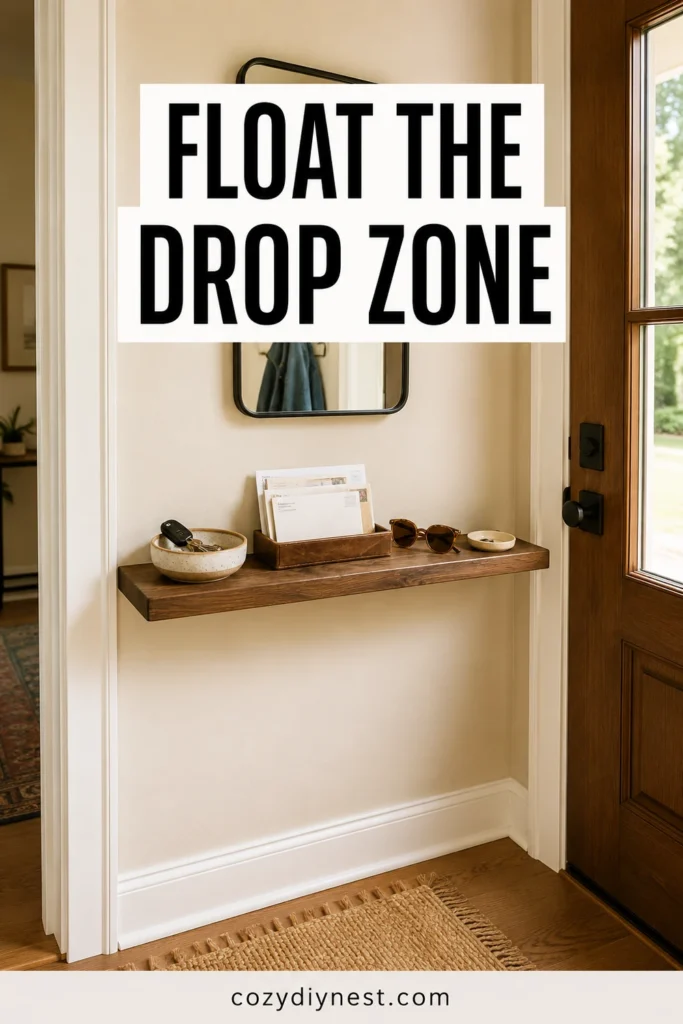
A floating shelf is one of the most practical entryway wall storage ideas because it creates a landing spot without using floor space. It gives keys, sunglasses, wallet, and mail a place to land before they spread to the kitchen counter or hallway table.
Choose a shallow shelf that does not interfere with the door swing or walking path. A shelf with a small ledge, tray, or concealed drawer works especially well in apartments because it contains tiny items without making the entry feel busy.
Real-life solution: Style the shelf with only one key bowl, one mail tray, and one small dish. If the shelf becomes crowded, it stops being storage and becomes another clutter zone.
3. Use Wall Pegs for Bags, Jackets, and Everyday Grab Items
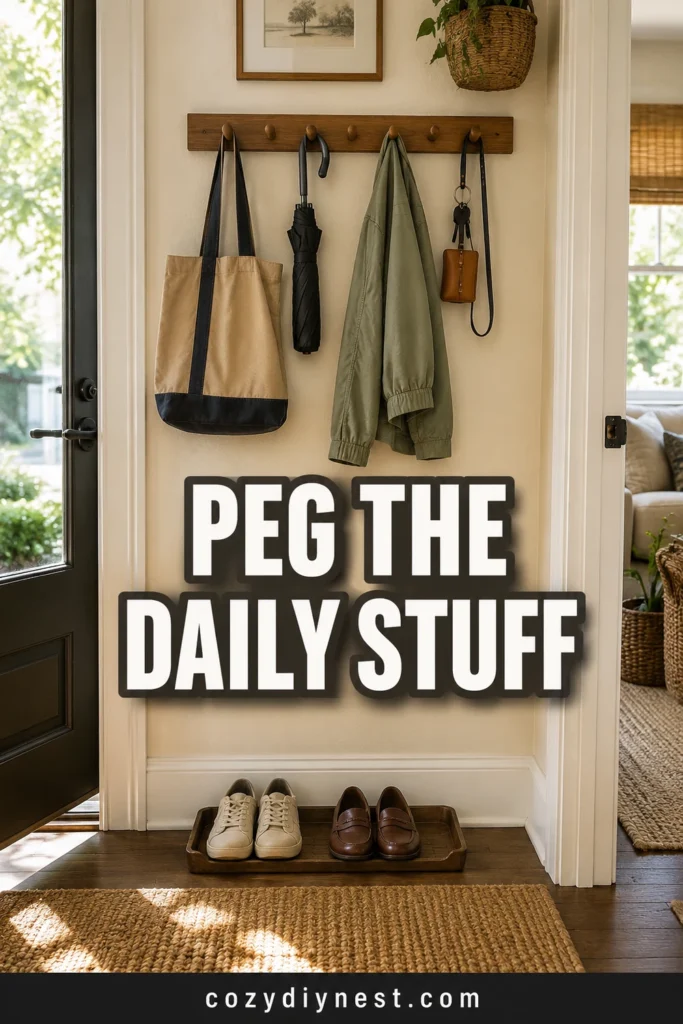
Wall pegs are simple, but they can change how a tiny entry works. Bags and lightweight jackets often make the floor feel messy because they land wherever there is space. Pegs lift those items onto the wall and keep the path more open.
The key is restraint. A row of pegs should not become a mountain of everything the household owns. Keep the daily-use items visible and move extras to a closet, basket, or bedroom storage.
For the most realistic entryway wall storage ideas, use pegs for items that truly leave the house often: a tote, umbrella, lightweight jacket, small pouch, or grab-and-go accessory.
4. Give Mail a Wall Organizer Before It Becomes a Pile
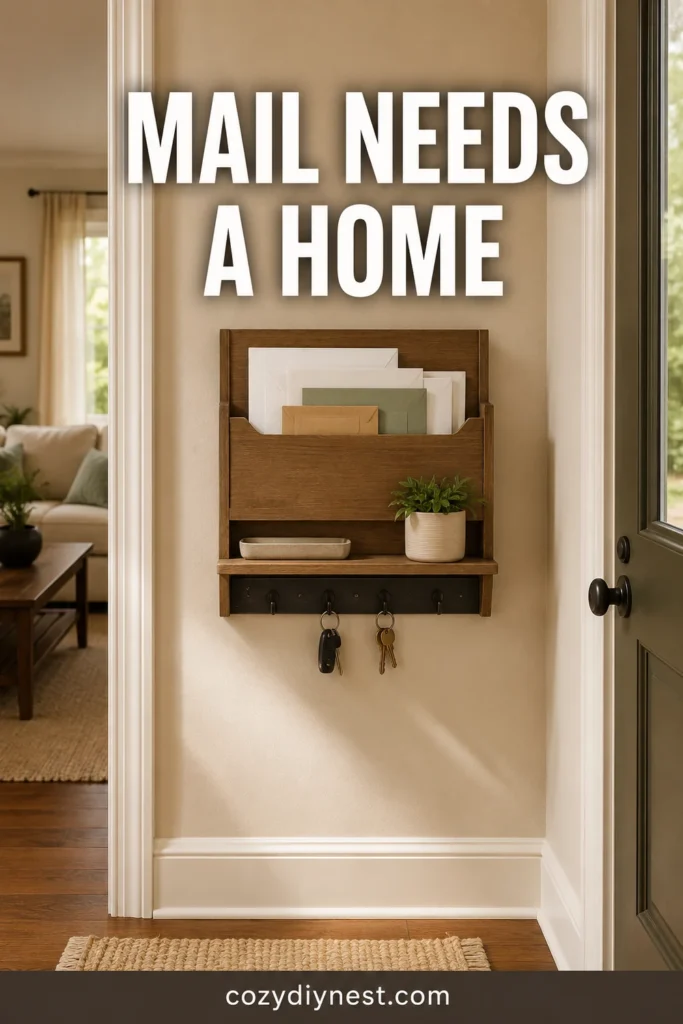
Mail is small, but it can visually ruin an entry fast. One envelope becomes a stack, then the stack moves to the console, then the entry starts feeling messy even if the shoes are put away.
A wall-mounted mail organizer gives paper a clear boundary. Use it for mail that needs action, not for long-term paper storage. Junk mail should leave the entry immediately.
This is one of the most useful entryway wall storage ideas because it handles a daily problem before it spreads into the kitchen, living room, or hallway.
5. Use Wall Baskets for Small Accessories
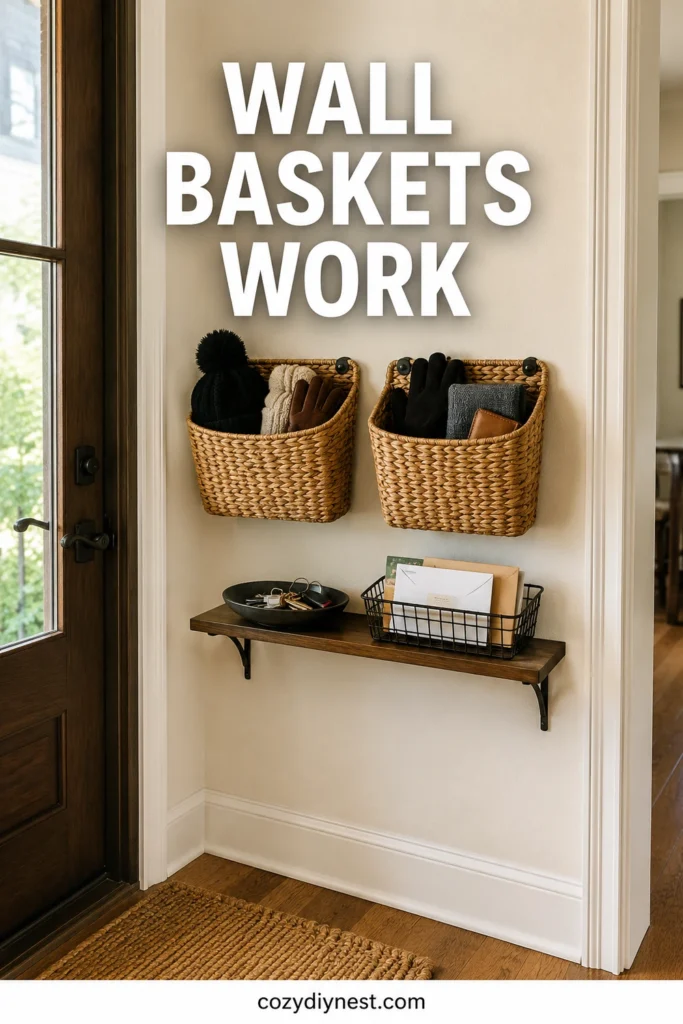
Small accessories are difficult because they are too tiny for hooks and too messy for open shelves. Wall baskets can hold folded gloves, hats, small pouches, pet bags, and seasonal extras without stealing floor space.
Use two or three baskets at most. Too many wall baskets can make the entry feel like a storage wall instead of a calm transition space.
Choose baskets that match the wall color, wood tone, or existing decor. The best entryway wall storage ideas blend into the entry instead of shouting that the wall is full of storage.
6. Pair a Mirror With Wall Storage to Make the Entry Feel Lighter
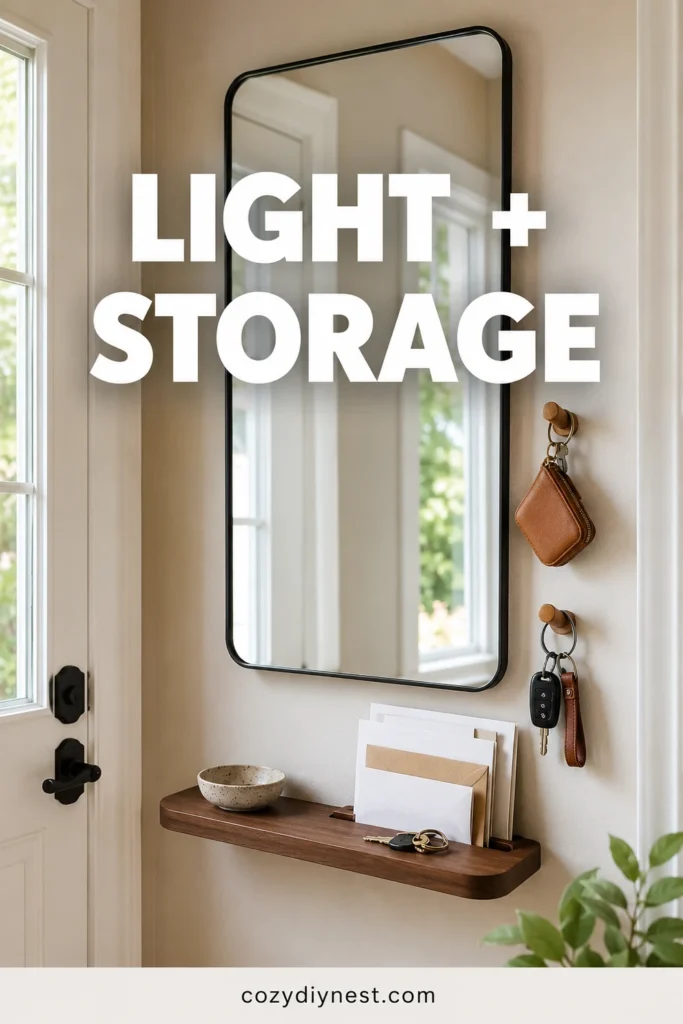
A mirror does not organize the entry by itself, but it makes wall storage feel lighter. In a tiny entryway, a mirror above a shelf can reflect light, give the eye more depth, and create a practical last-look zone before leaving.
Pair the mirror with one slim shelf and a few pegs. This keeps the wall functional without filling the floor with furniture.
Use this idea when the entry feels dark, tight, or visually closed in. It is one of the most balanced entryway wall storage ideas because it adds both function and openness.
7. Lift Shoes Off the Floor With a Low Wall Shelf
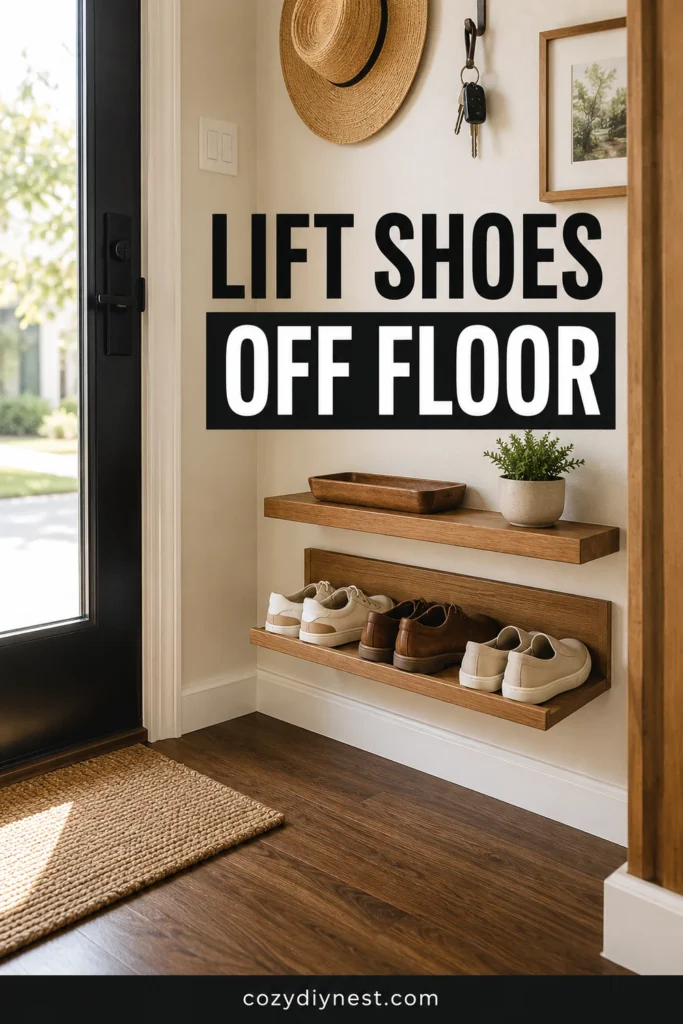
If the entry floor disappears under daily shoes, a low wall-mounted shoe shelf can help. It keeps shoes close to the door but lifts them visually off the main walking path.
This works best for a few daily pairs, not the entire household shoe collection. If you need full shoe organization, connect this idea with entryway shoe storage ideas.
The strongest entryway wall storage ideas protect the floor. If shoes are the most visible mess, the wall can help keep the doorway clearer.
8. Build a Renter-Friendly Wall Setup Without Custom Built-Ins
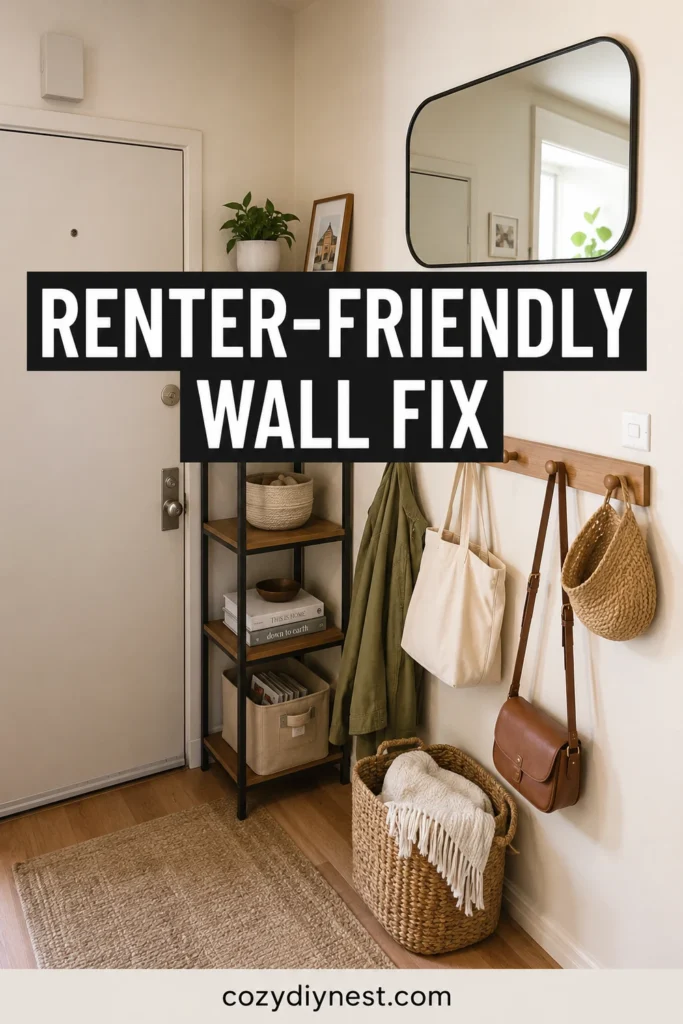
Renters often avoid wall storage because they think it requires a built-in system. But a renter-friendly setup can still use light shelves, removable-style pegs, narrow freestanding pieces, and baskets that sit close to the wall.
The goal is to create the effect of a wall system without making the entry feel permanent or heavy. Keep the pieces light, simple, and easy to remove or rearrange.
For renters, entryway wall storage ideas should be practical, affordable, and flexible. Think shelf, tray, mirror, pegs, and basket—not a full custom mudroom.
9. Create Small Wall Zones for Each Daily Category
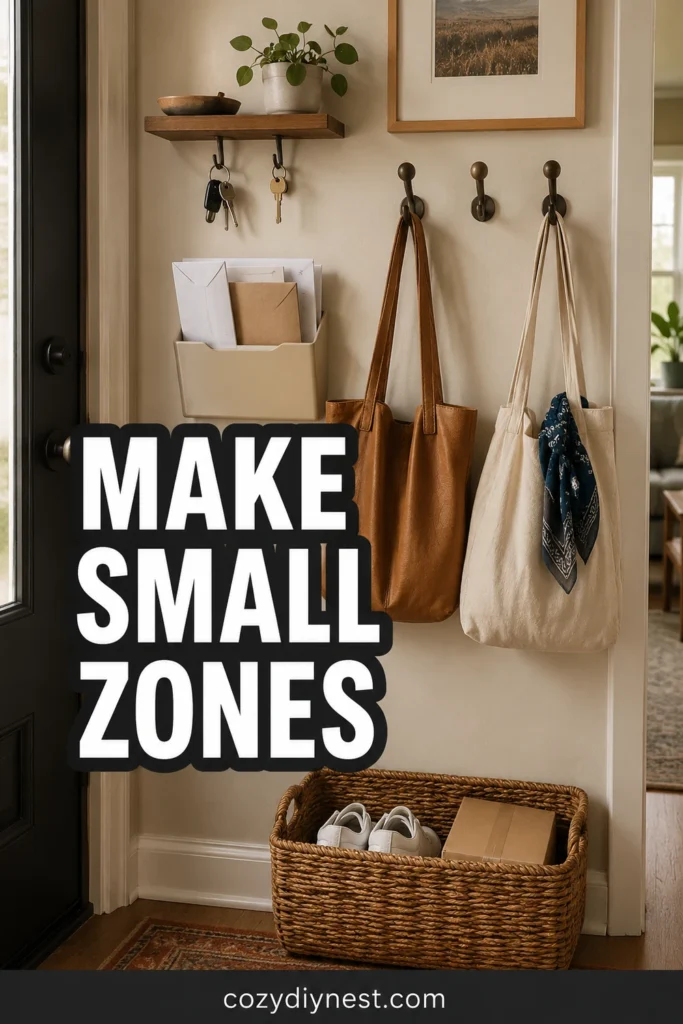
A tiny entry becomes easier to reset when every daily category has a wall zone. Keys need one spot. Mail needs one spot. Bags need one spot. Shoes need one limit. Returns need one basket.
That does not mean you need a complicated organizer. A shelf, mail holder, pegs, and a low basket can create a complete system if each piece has a clear job.
This is where entryway wall storage ideas become smarter than random decor. The wall is not just styled; it is solving the exact items that make the entry messy.
10. Turn an Unused Entry Corner Into a Wall Storage Zone
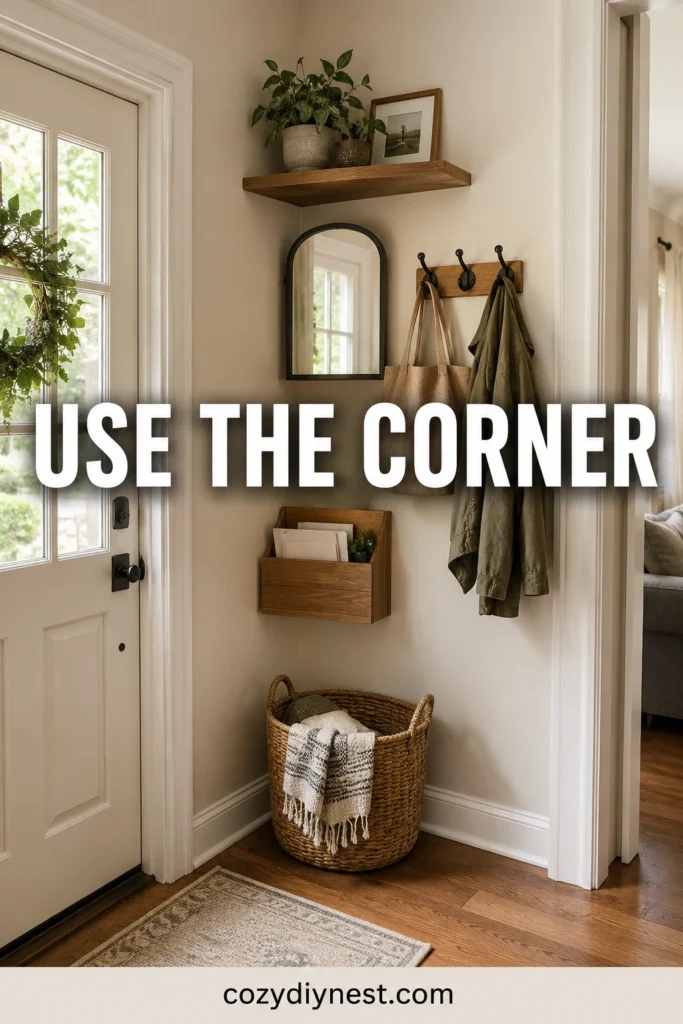
Many tiny entries have a corner that is too small for furniture but perfect for wall storage. A corner shelf, small mirror, wall pegs, and compact mail tray can turn that unused spot into a useful landing zone.
This works especially well when the front door opens directly into a hallway or living room. A small wall corner can define the entry without needing a bench, console, or built-in cabinet.
Use this approach when the entry technically has no foyer. The best entryway wall storage ideas help create an entry zone where the house did not provide one.
11. Use Closed Wall Storage When Open Shelves Look Too Busy
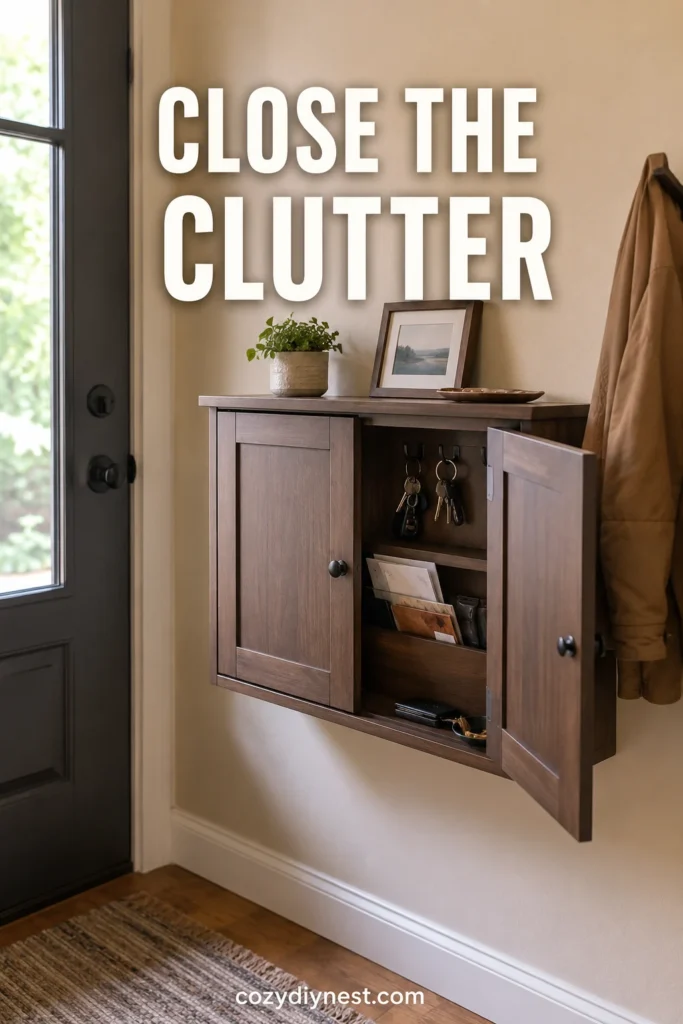
Open shelves are helpful, but they are not always calm. If your entry wall still looks messy after organizing, the problem may be that every tiny item is still visible.
A shallow wall cabinet, small closed cubby, or wall-mounted drawer can hide keys, mail, chargers, sunglasses, and tiny daily clutter. Closed storage is especially useful if the entry opens into the living room.
More refined entryway wall storage ideas decide what should be seen and what should disappear. Not every useful item needs to be on display.
12. Add a Wall-Based Charging Drop Zone
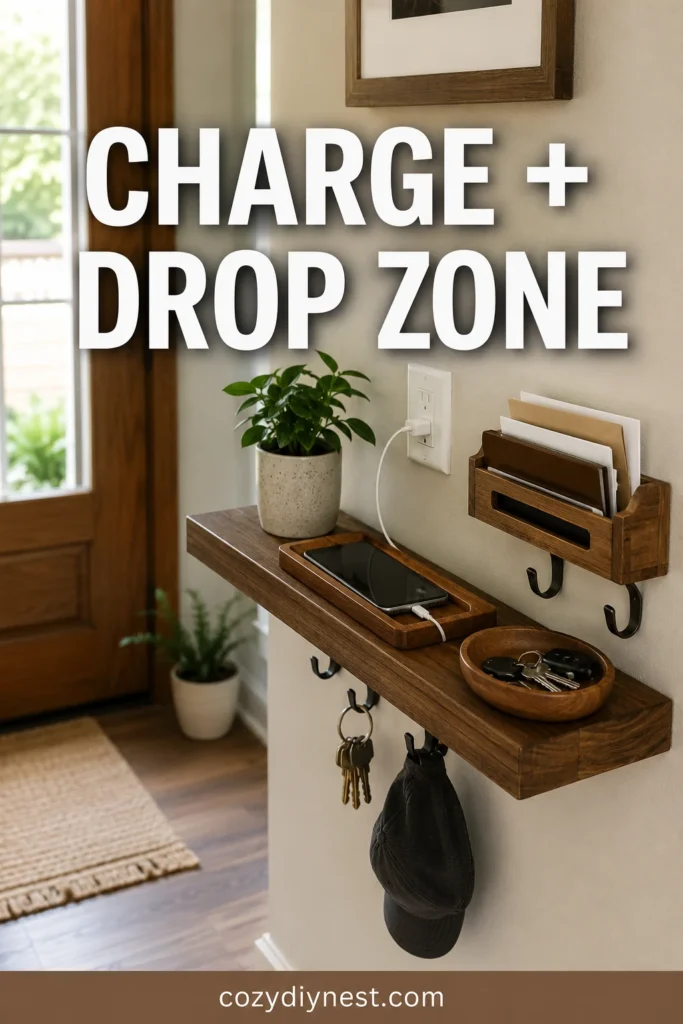
Modern entry clutter is not only shoes and bags. Phones, earbuds, chargers, small tech items, and keys can create a messy little pile near the front door.
A wall-based charging drop zone gives daily tech a home without taking over the entry. Keep cords tidy and subtle so the wall still looks calm.
This is one of the newer entryway wall storage ideas that fits real life. The goal is not a tech station that looks complicated; it is a quiet place for the things you grab every day.
13. Build a Complete Wall Zone System Instead of Random Hooks
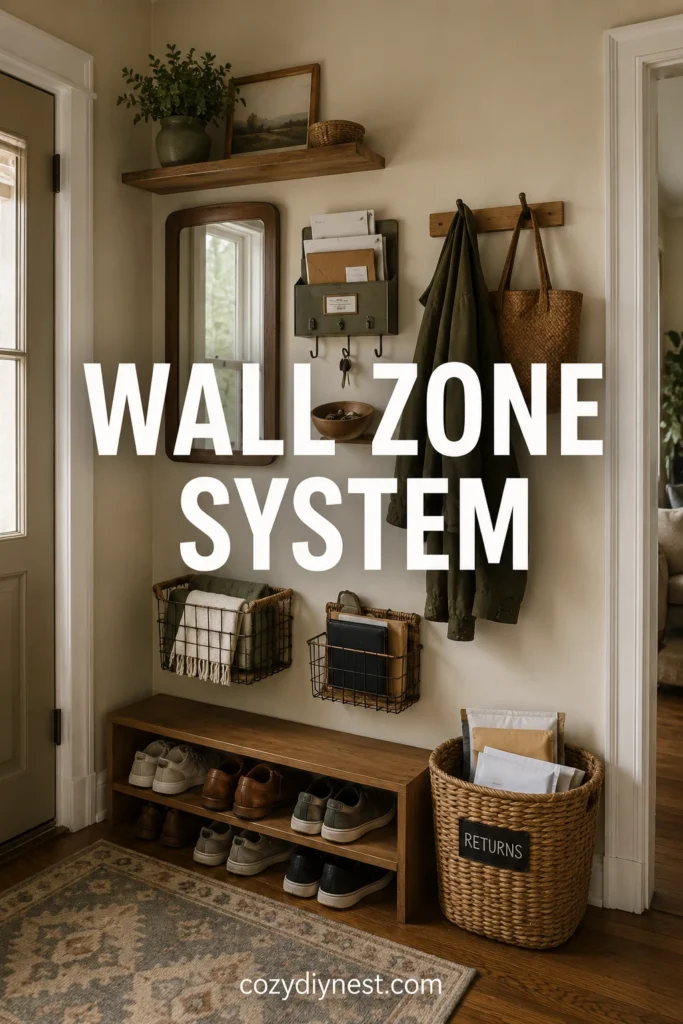
The final fix is to stop thinking about one shelf or one peg rail and start thinking in zones. A strong wall system may include a mirror, floating shelf, key bowl, mail organizer, wall pegs, wall baskets, a low shoe shelf, and one return basket.
You do not need every piece at once. Choose the wall zones that match your real entry pain. If bags hit the floor, start with pegs. If mail spreads, start with a mail organizer. If shoes block the door, add a low shoe zone.
The best entryway wall storage ideas make the entry easier to reset in under one minute. When the wall has a job, the floor finally gets to stay clear.
Quick Entryway Wall Storage Formula
- Use the wall first: check vertical space before buying floor furniture.
- Add a landing shelf: keys, mail, and sunglasses need one small home.
- Use pegs carefully: lift bags and jackets without overcrowding the wall.
- Contain paper: mail needs a wall organizer before it becomes a pile.
- Hide tiny clutter: use closed wall storage when open shelves look busy.
- Protect the floor: choose wall-friendly shoe and bag solutions.
- Build zones: every daily category should have one clear wall spot.
For the full entryway system, read small entryway storage ideas. For shoe-specific fixes, use entryway shoe storage ideas. For hidden closet clutter, read coat closet organization ideas. For narrow hallway movement issues, continue with small hallway storage ideas.
Final Thoughts: A Tiny Entryway Needs the Wall to Work
A tiny entryway does not need more floor clutter. It needs the wall to do some of the work.
Start with the most annoying daily item. If keys disappear, add a shelf and bowl. If mail spreads, add a wall organizer. If bags land on the floor, add pegs. If shoes crowd the door, use a low wall shelf or pair this article with shoe storage.
With the right entryway wall storage ideas, even a very small front door area can feel more organized, more intentional, and easier to reset every day.
FAQ: Entryway Wall Storage Ideas
What are the best entryway wall storage ideas for a small space?
The best entryway wall storage ideas for a small space include floating shelves, wall pegs, mail organizers, wall baskets, mirror shelves, closed wall cabinets, and low wall-mounted shoe shelves.
How do I add storage to a tiny entryway with no floor space?
Use vertical storage first. A slim floating shelf, mail holder, wall pegs, mirror, and wall basket can create storage without adding a bulky bench or deep console.
Are entryway wall hooks enough for storage?
Wall hooks help, but they are not enough by themselves if you also have mail, shoes, keys, and small accessories. Combine hooks with a shelf, tray, mail organizer, or basket so each category has a clear home.
What entryway wall storage works for renters?
Renters can use lightweight floating shelves, removable-style pegs, freestanding wall-leaning organizers, baskets, small mirrors, and narrow shelves that do not require a full built-in system.
How do I stop mail and keys from cluttering the entryway?
Give mail and keys one wall-based landing spot. Use a floating shelf with a key bowl and a small mail organizer so these items do not spread onto counters, tables, or the floor.
How can entryway wall storage still look stylish?
Choose materials that match the home, such as warm wood, woven baskets, matte metal, ceramic trays, and a simple mirror. Keep the number of visible items low so the wall feels intentional instead of crowded.