
If your front door area feels messy before anyone even walks fully into the house, the problem may be the shoes. These entryway shoe storage ideas are for the small front entryway, apartment entry, narrow foyer, or tiny inside-the-door zone where sneakers, sandals, boots, kids’ shoes, and daily pairs keep taking over the floor.
This is not a mudroom article and it is not a back-door family drop zone article. This guide is specifically about the indoor front entryway: the place guests see first, the place shoes land fastest, and the place that can make the whole home feel messy if the floor is crowded.
The strongest entryway shoe storage ideas do not just hide shoes. They protect the walkway, reduce visual clutter, make daily pairs easier to grab, and keep the entry feeling like part of the home instead of a shoe pile with a door attached.
Recent home organizing guidance supports the same idea. The Spruce recommends solutions like entryway baskets, over-door storage, and open/closed shelving for small-space shoe organization. House Beautiful also notes that good shoe storage helps keep footwear organized while preventing the entry from feeling cluttered. Real Simple highlights compact shoe cabinets and adjustable shelving as practical entryway options, especially when shoes need to be hidden out of sight.
If your entry problem is broader than shoes, start with small entryway storage ideas. If your issue is a back door family landing zone, read no mudroom back door drop zone ideas. For wet shoes and boots, connect this with mudroom boot tray ideas.
1. Start With a Daily-Shoe Limit by the Door
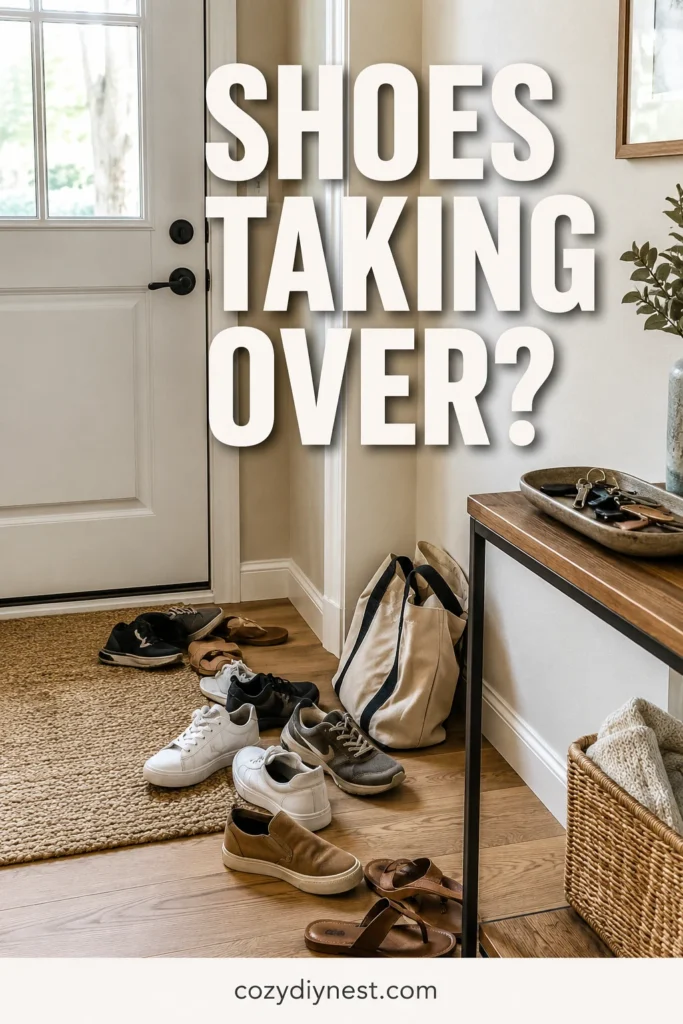
The first fix is not buying a shoe cabinet. It is deciding how many shoes are allowed to live by the door. A small entryway usually becomes messy because every pair becomes “daily shoes.” Sneakers, sandals, work shoes, kids’ shoes, slippers, and guest shoes all gather in the same spot.
A good rule is one or two pairs per person near the front door. Everything else should move to a closet, bedroom, under-bed bin, or seasonal storage area. This one rule makes every other entryway shoe storage ideas solution work better.
AI-smart styling test: Take a photo of your entry at the end of the day. Count the pairs on the floor. If there are more shoes than people in the house, the problem is not the storage piece yet. The problem is the limit.
2. Use a Slim Shoe Cabinet When the Entry Needs to Look Calm
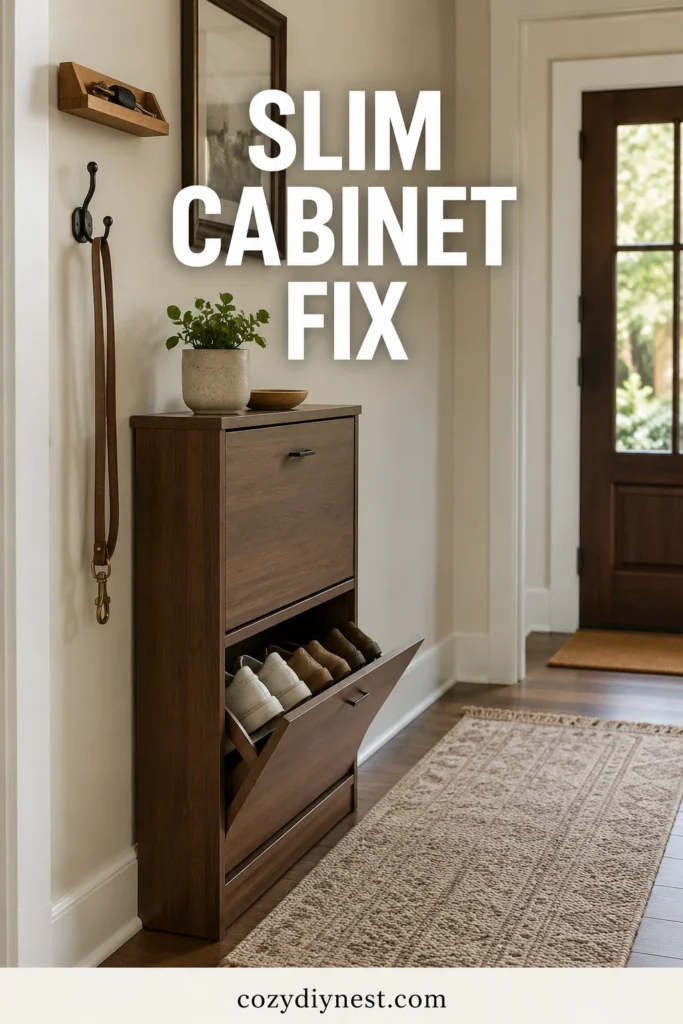
A slim shoe cabinet is one of the best entryway shoe storage ideas when the shoes are visually loud. Open racks can be practical, but they still show every pair. A closed cabinet hides the clutter and makes the entry feel more like a styled room.
Look for a cabinet that is narrow enough to protect the walkway. Flip-door shoe cabinets, shallow cabinets, and slim vertical cabinets work especially well in apartment entries where there is not enough room for a deep bench.
Real-life solution: Search for narrow shoe cabinet entryway, slim shoe cabinet, front entryway shoe cabinet, or apartment entryway shoe storage. These products are practical because they hide the visual clutter while keeping shoes close to the door.
3. Add Woven Shoe Baskets Under a Bench
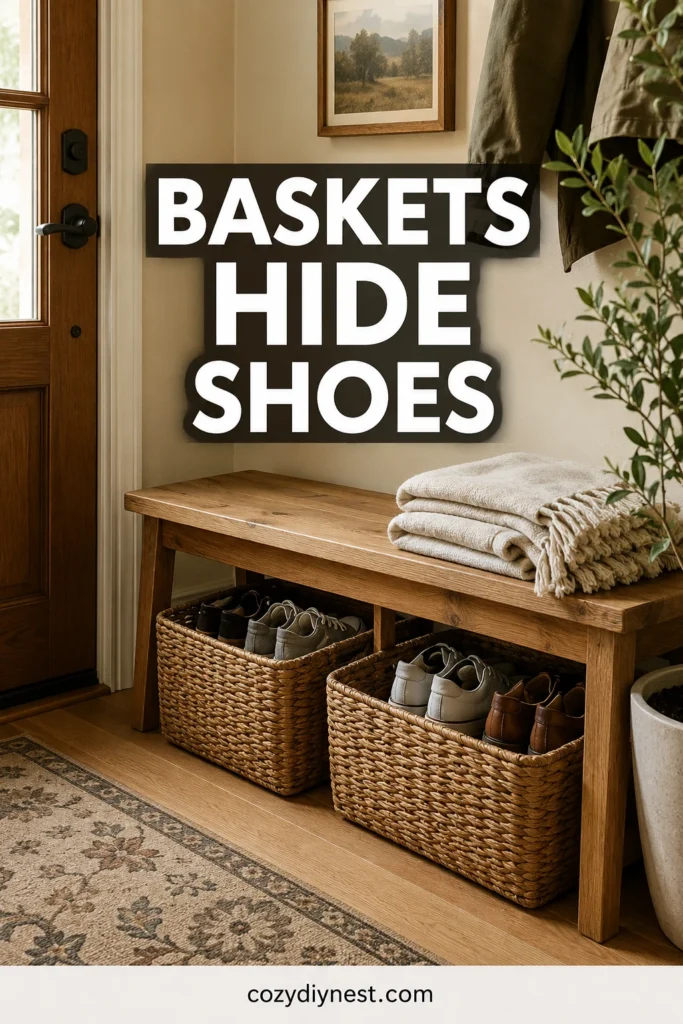
Woven baskets are a softer version of shoe storage. They are especially useful when the entry is open to the living room and you do not want a metal rack to be the first thing people see.
Use one larger basket for casual shoes or smaller baskets for each family member. The texture makes the entry feel warmer, while the basket keeps shoes from spreading across the floor.
These entryway shoe storage ideas work best for casual daily shoes, not tall boots or delicate heels. They are quick, forgiving, and easy for kids or guests to use.
4. Choose a Narrow Shoe Bench Only If the Walkway Stays Open
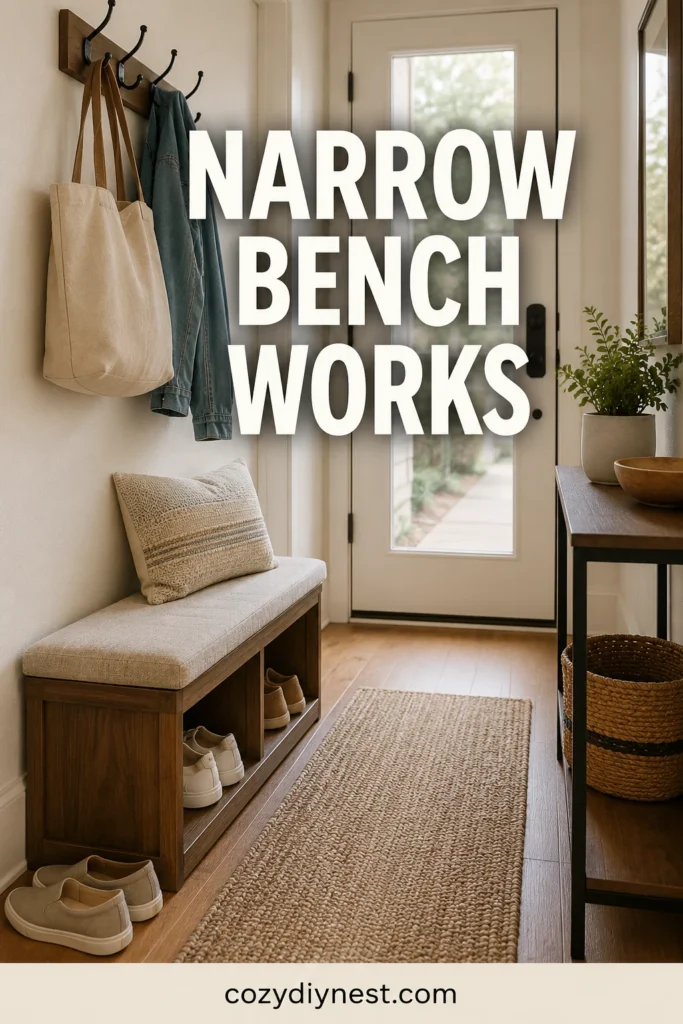
A shoe bench can solve two problems at once: where to sit and where to tuck shoes. But in a tiny entryway, the bench must be narrow. A deep bench can make the doorway feel blocked, even if it stores shoes well.
Before buying one, measure the walkway and mark the bench depth with painter’s tape. If you have to turn sideways to pass, it is too deep for that spot.
The best bench-based entryway shoe storage ideas have open cubbies, baskets underneath, or a lift-top compartment that hides shoes without making the entry feel bulky.
5. Go Vertical When the Floor Is Too Narrow
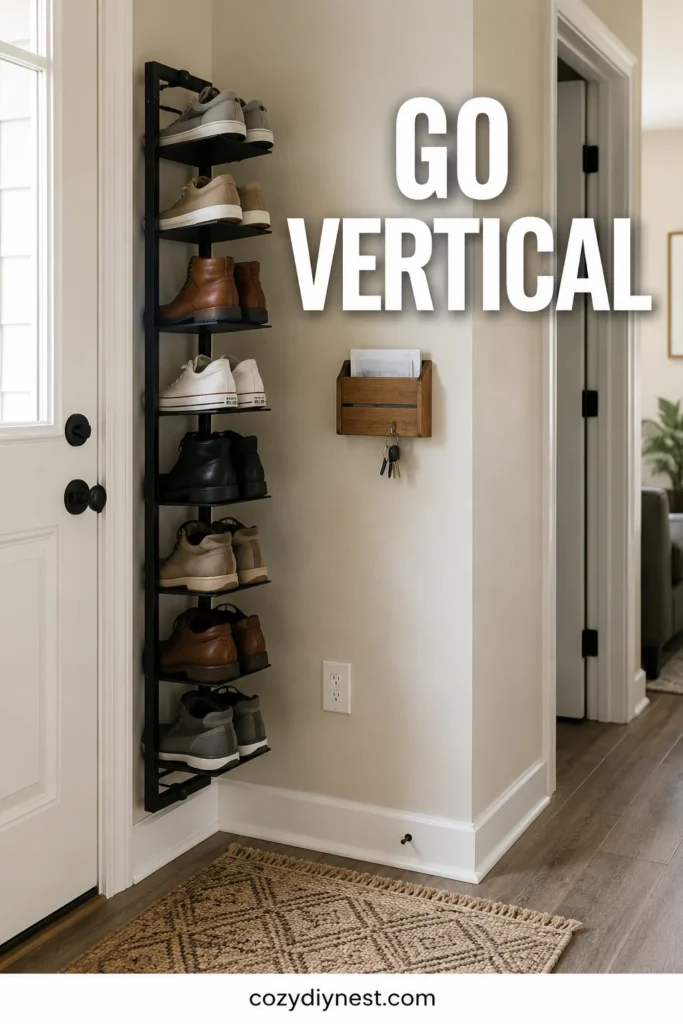
If the entry is more like a narrow hallway than a real foyer, horizontal storage can make things worse. A vertical shoe rack or stackable system uses height instead of stealing floor width.
This is helpful for renters and apartments where the front door opens into a small wall, hallway, or living room corner. The goal is to keep the walkway open while giving shoes a clear home.
Vertical entryway shoe storage ideas are best for sneakers, flats, sandals, and lightweight daily shoes. Choose a piece that looks stable, not wobbly or temporary.
6. Use a Shoe Tray for Only the Current Daily Pairs
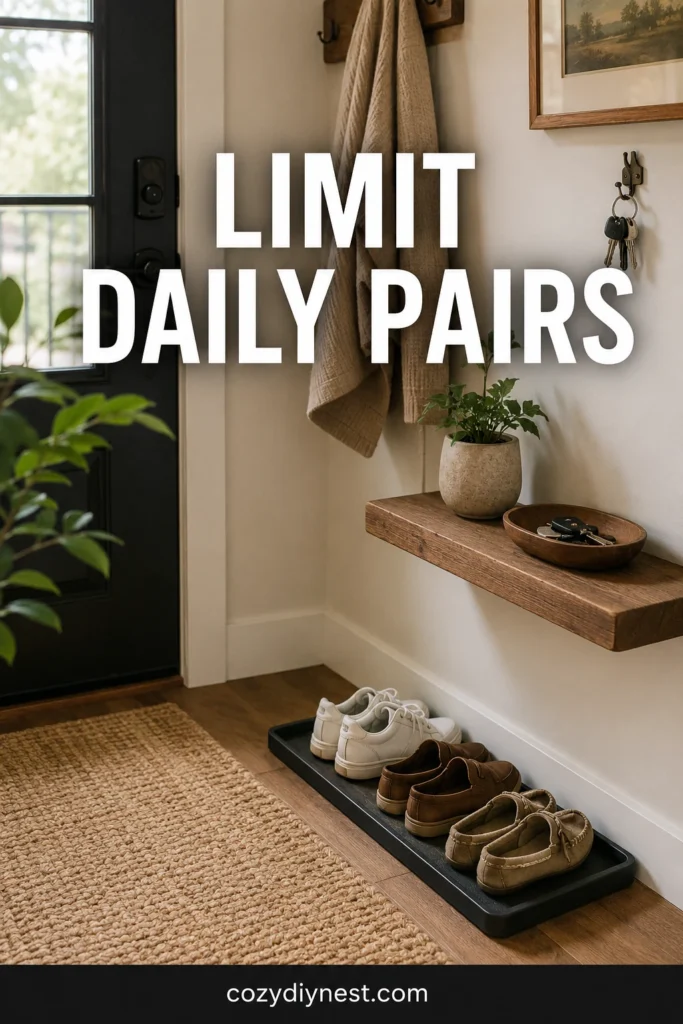
A shoe tray is simple, but it works because it creates a physical boundary. Once the tray is full, no more shoes belong there. That visual limit is useful in small entries where the floor can disappear quickly.
Use a tray for shoes that are worn every day: school shoes, work shoes, walking shoes, or house-to-car shoes. Seasonal, dressy, or backup shoes should not live on the tray full-time.
This is one of the easiest renter-friendly entryway shoe storage ideas because it requires no drilling, no furniture assembly, and no permanent changes.
7. Hide Shoes Inside a Storage Ottoman or Lidded Bench
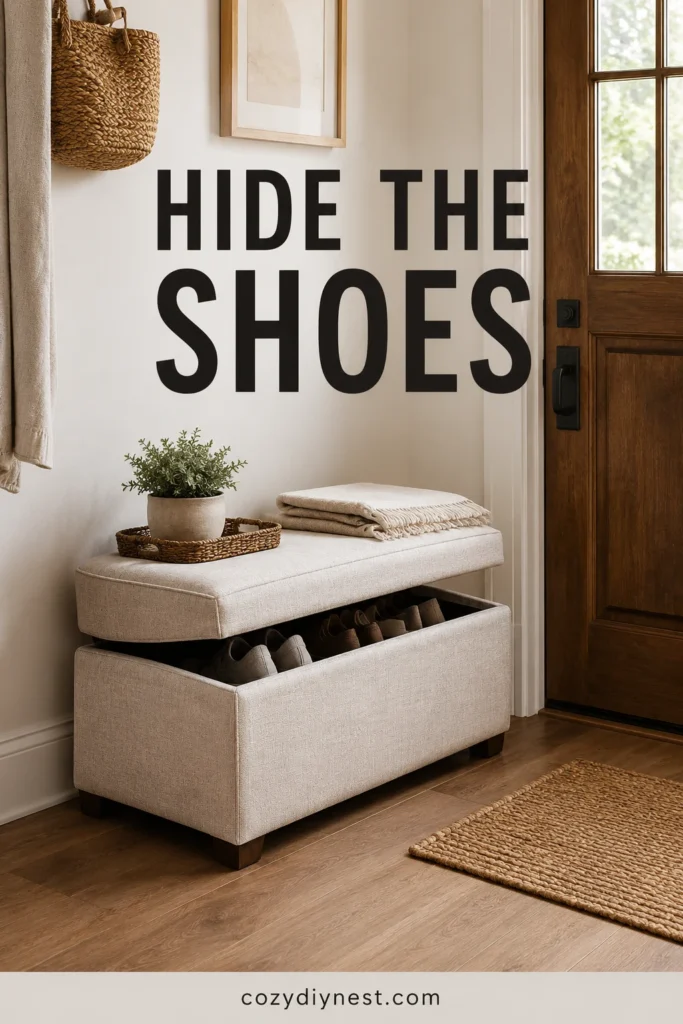
If your front entry opens directly into the living room, visible shoes can make the whole space feel messy. Hidden storage is better here because the entry is part of the main living view.
A storage ottoman, lidded bench, or closed basket can hold a few daily pairs while keeping the entry visually calm. Choose breathable storage when possible and avoid stuffing damp shoes into closed containers.
Hidden entryway shoe storage ideas are strongest when the entry needs to look like decor, not utility storage.
8. Use the Wall Before You Add Another Floor Piece
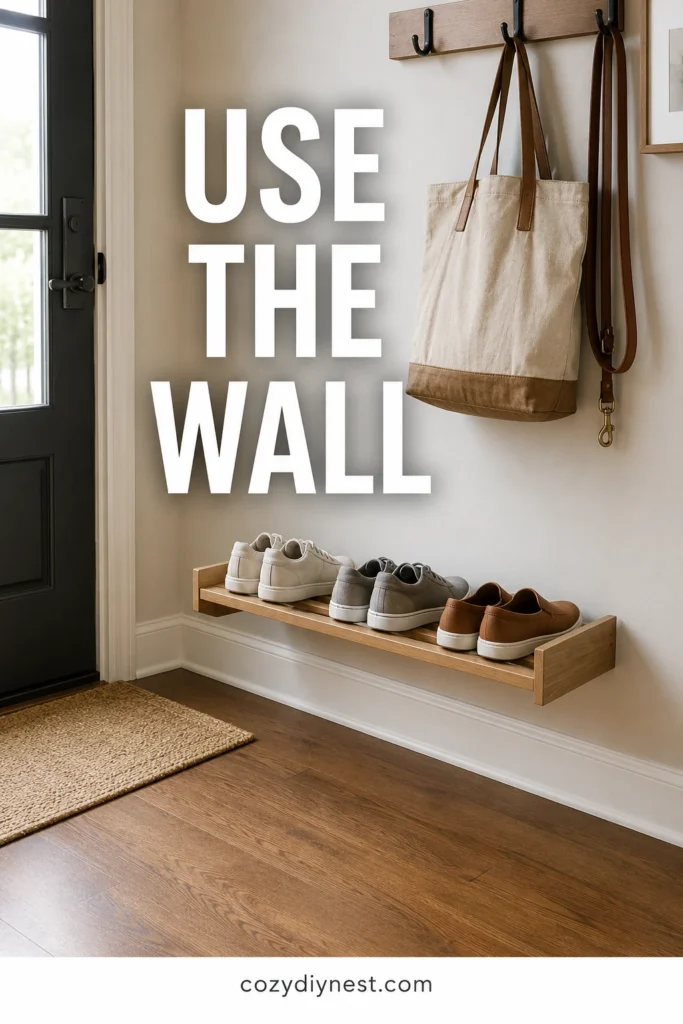
Some tiny entries cannot handle another cabinet, bench, or rack. In that case, look at the wall. A low wall-mounted shelf, floating shoe rail, or shallow wall unit can lift shoes off the floor and keep the walkway clearer.
Wall-mounted storage is especially useful when paired with hooks above it. Shoes stay low, bags and leashes go higher, and the whole zone uses vertical space instead of spreading outward.
These entryway shoe storage ideas are best when the wall system looks intentional, not improvised. Keep the lines simple and the number of visible pairs limited.
9. Create a Temporary Guest Shoe Zone
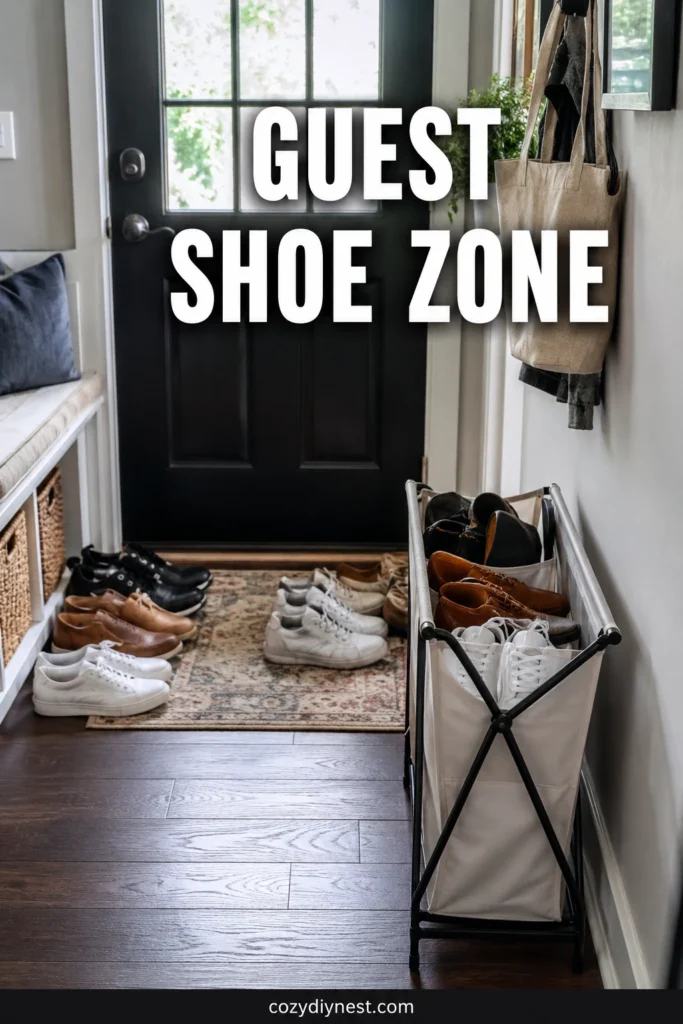
Many entryways look fine during normal weekdays and then fall apart when guests arrive. If shoes pile up during visits, create a temporary guest shoe zone instead of letting every pair land in the walkway.
A spare basket, collapsible rack, or low bin can live in a closet and come out when needed. This keeps the entry from becoming chaotic during family visits, playdates, or gatherings.
Guest-focused entryway shoe storage ideas are especially helpful when your front entry opens into the living room or dining room and clutter is immediately visible.
10. Rotate Seasonal Shoes Out of the Entry
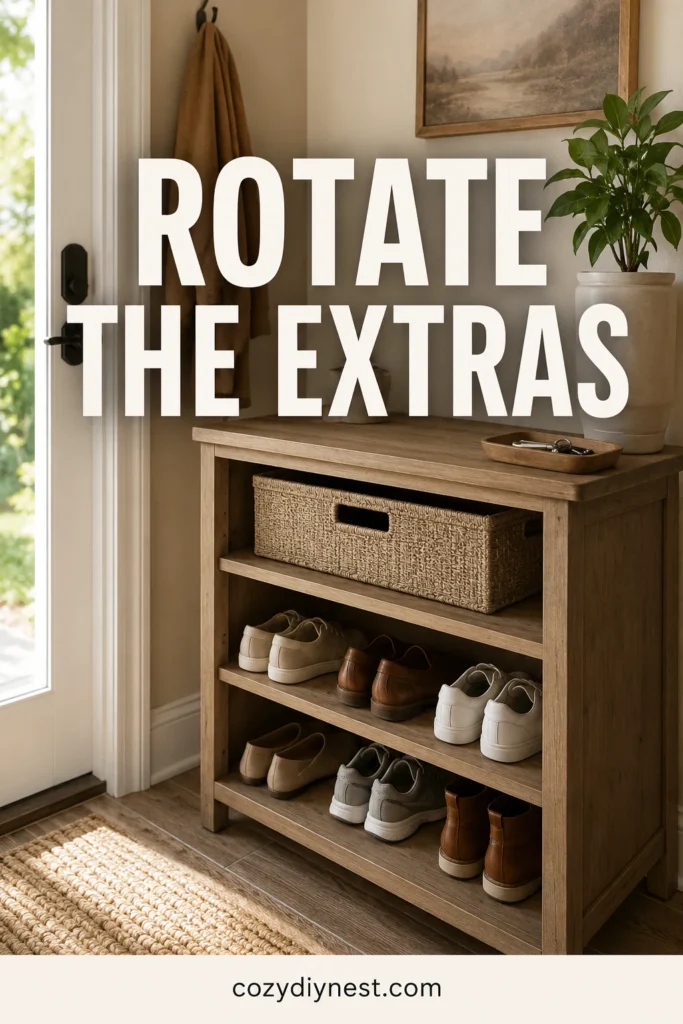
A small entryway cannot store every season at once. Summer sandals, rain boots, sneakers, winter boots, dress shoes, and kids’ extras will overwhelm the door if everything stays there year-round.
Choose a seasonal rotation system. Keep current daily pairs near the door and move out-of-season shoes into labeled bins, closet shelves, under-bed storage, or bedroom storage.
This may be the least glamorous of all entryway shoe storage ideas, but it is one of the most effective. The entry gets calmer because it stops trying to be a full shoe closet.
11. Build a Complete Shoe System, Not a Random Shoe Pile
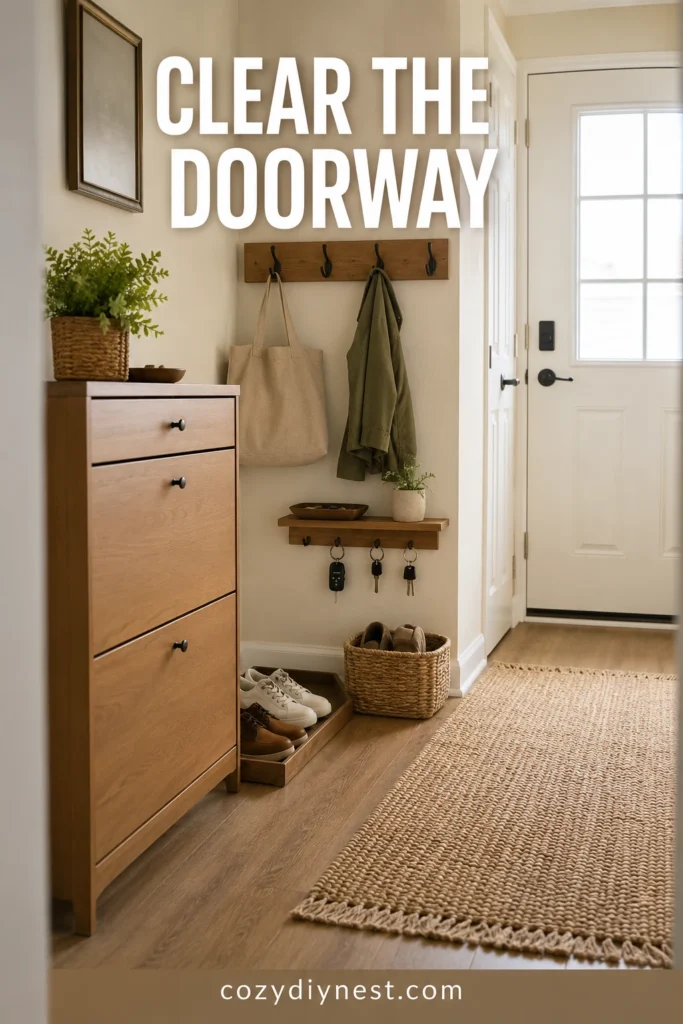
The final fix is to combine the right pieces into a system. A small entryway may need a slim cabinet for hidden shoes, a tray for daily pairs, a basket for guest overflow, hooks for bags, and a small shelf for keys.
That does not mean you need all 11 ideas at once. Choose the pieces that match your real pain: too many shoes on the floor, no walkway, guest overflow, visible clutter, or no place to sit.
The best entryway shoe storage ideas make the front door easier to reset in under one minute. When every pair has a place, the entry stops feeling like a dumping zone and starts feeling like a calm beginning to the home.
Quick Entryway Shoe Storage Formula
- Limit daily pairs: keep only the shoes actually used every day by the door.
- Hide visual clutter: use a slim shoe cabinet when open racks look messy.
- Use baskets for casual shoes: woven baskets soften the entry and contain clutter.
- Protect the walkway: choose narrow benches, shallow cabinets, or vertical racks.
- Use the wall: wall-mounted storage can save floor space in a tiny entry.
- Plan for guests: keep a temporary basket or collapsible rack for extra shoes.
- Rotate by season: the entry should not hold every shoe you own.
For a full front-door system beyond shoes, read small entryway storage ideas. If your shoes are wet, muddy, or coming through the back door, read mudroom boot tray ideas and no mudroom back door drop zone ideas.
Final Thoughts: The Front Door Needs a Shoe System, Not a Bigger Entryway
A small entryway does not need to hold every shoe in the house. It needs a clear system for the shoes that actually belong near the door.
Start with the most visible pain. If shoes are scattered on the floor, add a daily-pair limit and a tray. If the entry still looks messy, use a slim cabinet or hidden storage. If the walkway is too narrow, go vertical or use the wall.
With the right entryway shoe storage ideas, the doorway can feel clearer, calmer, and easier to reset every day—even if the entry itself is tiny.
FAQ: Entryway Shoe Storage Ideas
What are the best entryway shoe storage ideas for a small space?
The best entryway shoe storage ideas for a small space include slim shoe cabinets, woven baskets, narrow benches, vertical racks, shoe trays, hidden storage ottomans, and wall-mounted shoe shelves.
How do I stop shoes from piling up by the front door?
Limit the number of daily pairs by the door and give them one clear home. Use a tray, basket, cabinet, or bench cubby, then move out-of-season or rarely worn shoes to a closet or bedroom storage area.
What shoe storage is best for an apartment entryway?
For an apartment entryway, use narrow and renter-friendly storage such as a slim shoe cabinet, vertical rack, shoe basket, wall-mounted shelf, or compact storage bench that does not block the walkway.
Is open or closed shoe storage better for an entryway?
Open storage is easier for daily shoes, but closed storage looks calmer. If your entry opens into the living room, closed cabinets or lidded baskets usually look better. If the entry is hidden or narrow, a simple open rack may be easier to use.
How many shoes should stay by the front door?
A good rule is one or two daily pairs per person. Keeping every pair by the front door makes the entry feel crowded and makes even good storage look messy.
Can renters use entryway shoe storage without drilling?
Yes. Renters can use freestanding shoe cabinets, baskets, trays, vertical racks, storage benches, and over-door organizers. These entryway shoe storage ideas create order without permanent changes.