
Best rug color for living room is often the real question behind a space that still feels cold even when the sofa, curtains, and furniture look fine. In many American homes, the room is not missing more decor. It is missing warmth from the floor up. A rug that is too gray, too washed out, or too emotionally cool can make the whole living room feel flatter than it should.
If your living room still feels cold, the rug may be doing more damage than you think. A warm rug does not just fill the floor. It changes the mood of the entire seating area, helps wood tones feel richer, and makes beige, cream, and greige furniture feel much more grounded.
Recent design coverage points in the same direction. House Beautiful says designers are moving away from overly washed-out looks and embracing rugs with more saturated, expressive color. Homes & Gardens specifically warns against cool-toned grays and “invisible neutrals” when you want a room to feel warmer. Better Homes & Gardens also notes that vintage and antique-inspired rug patterns are bringing character back into modern rooms.
And the market is already moving with them. Amazon is full of warm-toned washable vintage rugs in brick red, rust, and brown, while Etsy is packed with warm 8×10 vintage and Oushak-style rugs that give a living room much more character than a generic gray option. If you want a room to feel warmer fast, the rug is one of the strongest places to intervene.
If your room also needs better evening glow, pair this article with layered lighting living room. If you still need a full-room warmth reset, keep this open beside how to make a living room feel cozy. And if you still need better rug size placement, read our existing rug size guide too.
1. Stop Choosing Cool Gray Rugs If the Room Already Feels Cold
One of the biggest reasons a living room still feels cold is that the rug is too cool-toned for the room around it. Gray rugs can work in some spaces, but in many beige, cream, greige, or wood-heavy living rooms, a cool gray base can flatten everything and make the room feel less inviting.
This is why best rug color for living room often starts with a temperature question, not a style question. If the room already lacks warmth, a cool gray rug usually pushes it farther in the wrong direction instead of balancing it.
If your living room feels nice but still emotionally cold, this is the first rug mistake I would check.
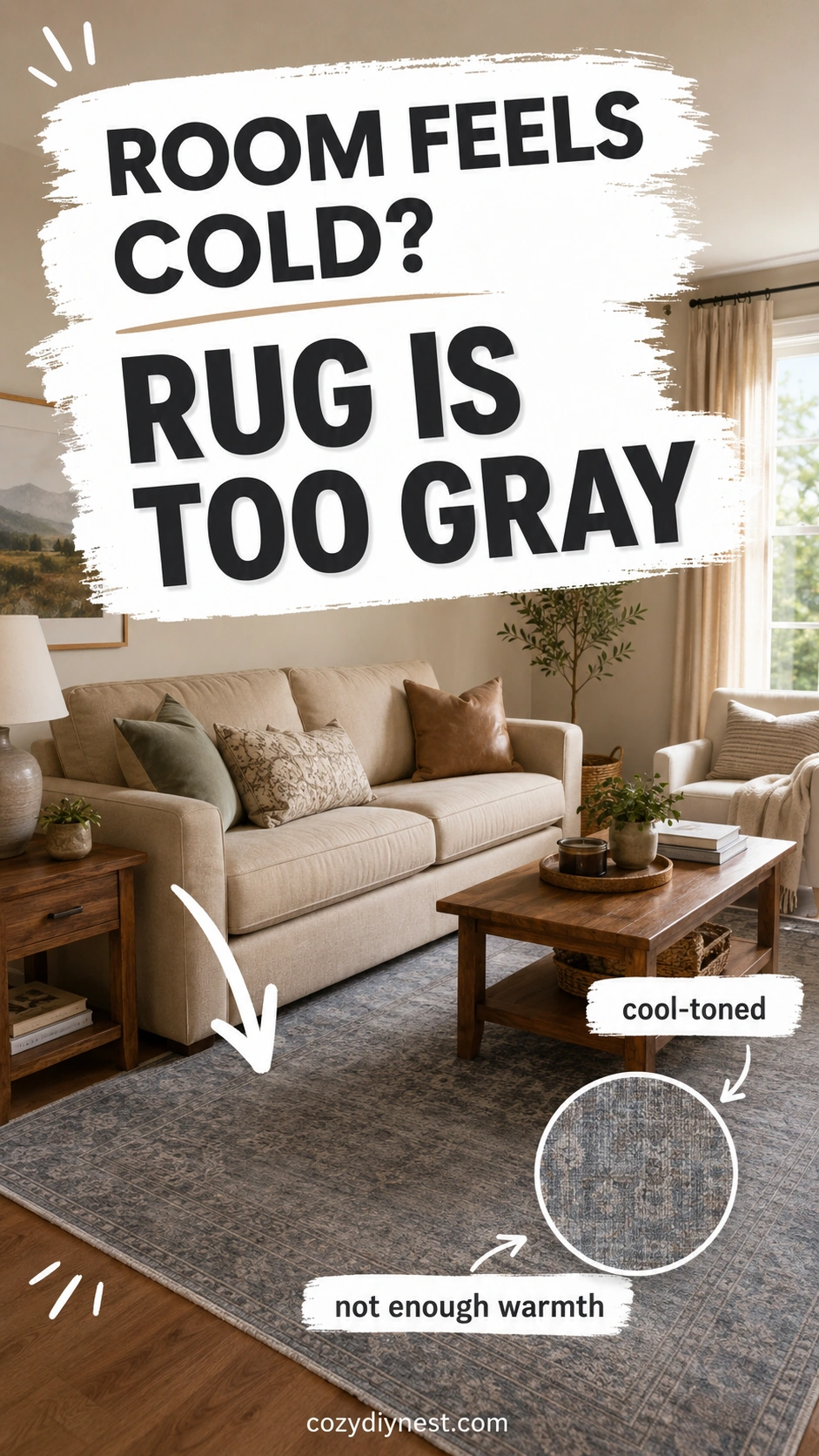
This is also why many current trend articles are moving away from cold gray floors and toward richer, warmer underfoot tones.
2. Use a Warm Vintage-Style Rug Instead of a Flat Cool Neutral
A warm vintage-style rug is often one of the fastest ways to make a living room feel more grounded. Brick, rust, muted terracotta, caramel, warm brown, and faded earthy medallion patterns can soften a room immediately without making it feel overly traditional.
This is where best rug color for living room becomes more practical than abstract. Warm vintage-style rugs are everywhere in the U.S. market right now because they solve both mood and style at once. They add warmth, but they also add character.
If your room still feels too plain from the floor up, a warmer vintage palette usually does much more than another neutral ever will.
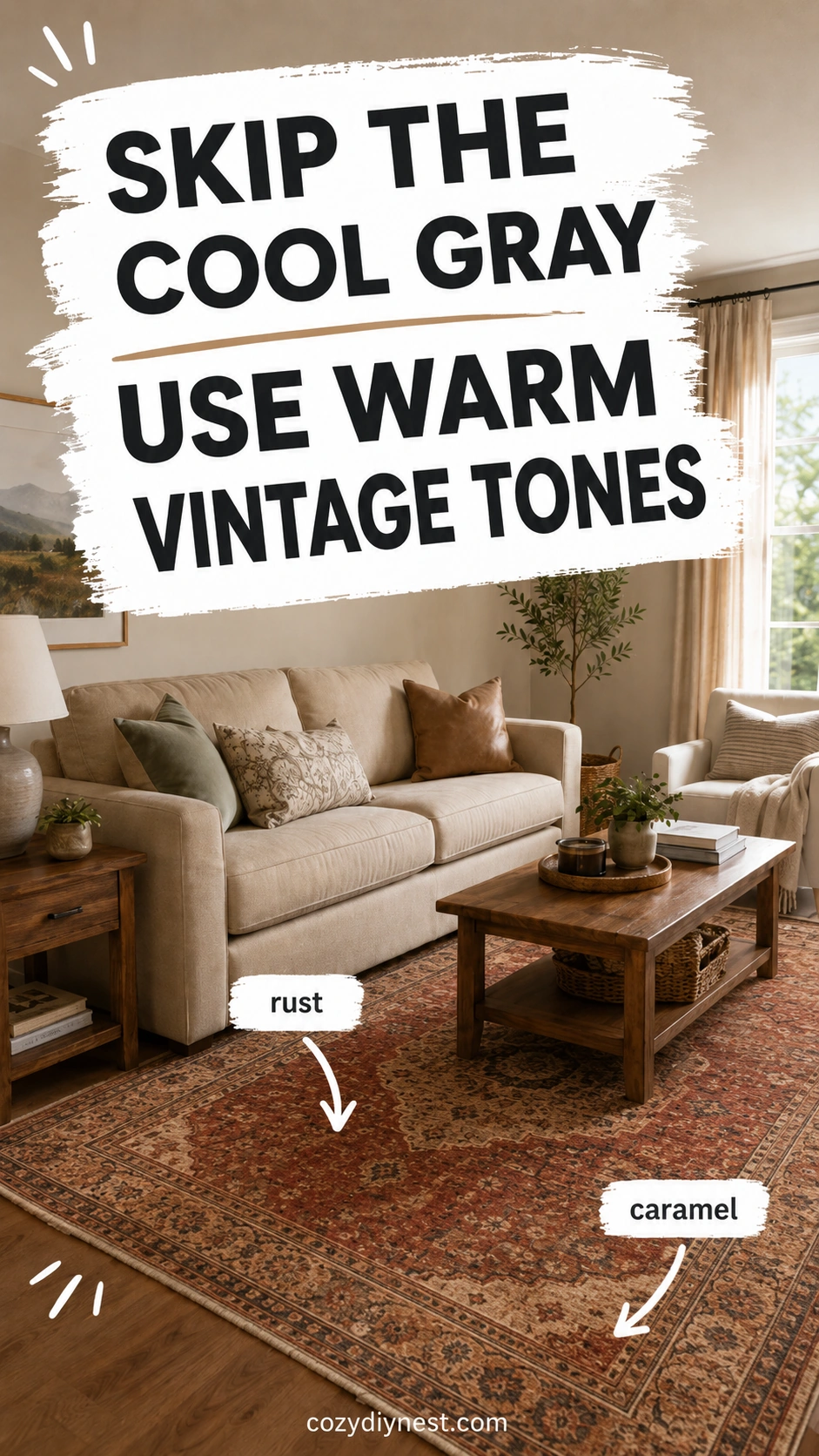
This kind of rug works especially well in living rooms with creamy taupe curtains, medium wood furniture, and neutral upholstery.
3. Add Brick Red or Rust Under a Beige Sofa
Beige and greige sofas often look warmer and more expensive when the rug underneath adds earthy depth. If the rug is too pale or too gray, the sofa can end up looking flatter than it should.
This is one of the most useful answers to best rug color for living room when your seating is neutral. Brick red, rust, muted clay, and warm brown can create the kind of cozy contrast that makes beige furniture finally feel intentional instead of washed out.
If your sofa looks fine but the whole seating area still feels flat, the rug color under it may be the missing depth.
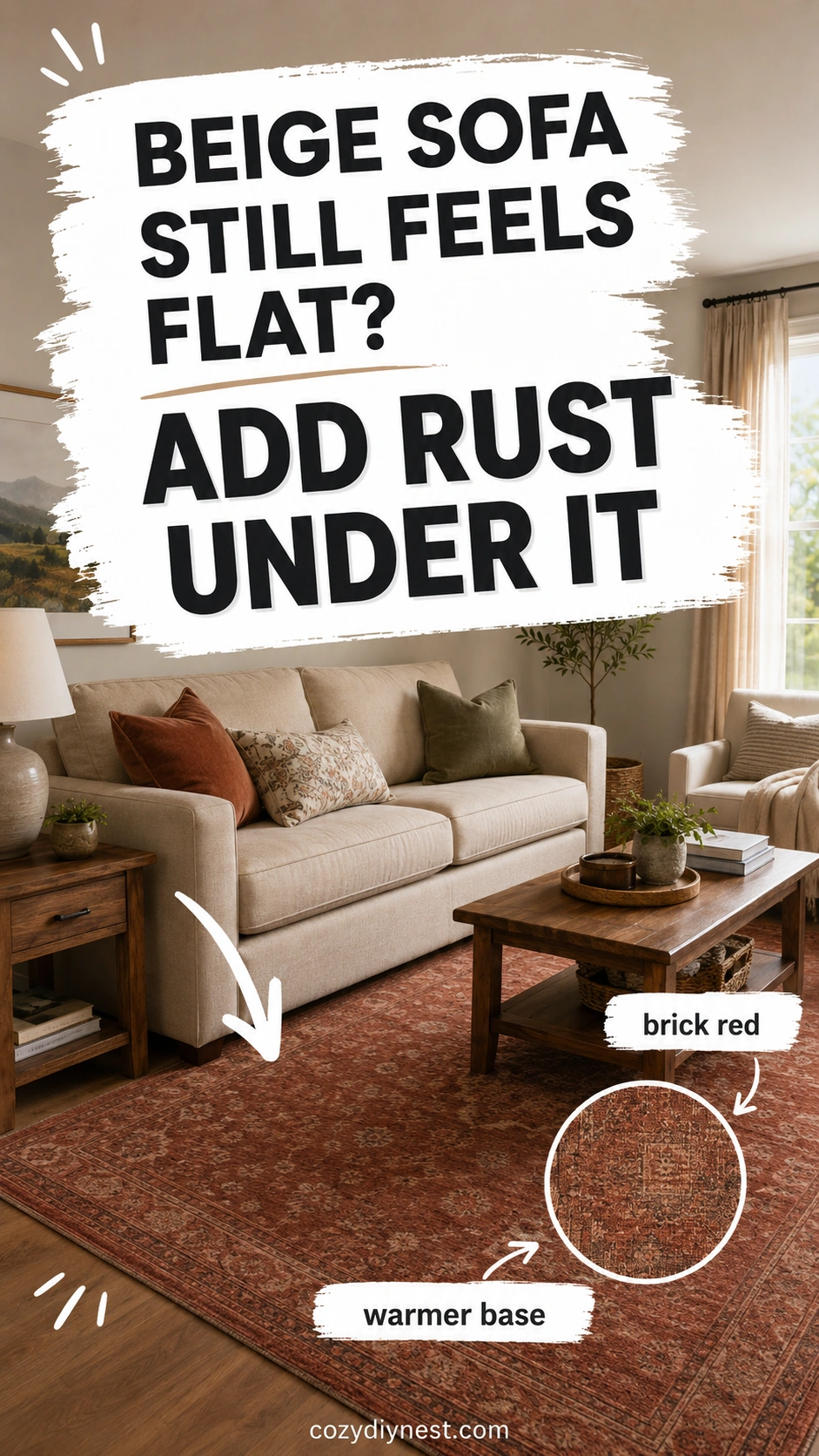
This is also one of the easiest market-backed fixes because brick-red and rust washable rugs are widely available now in common living room sizes.
4. Choose a Rug With Character, Not an “Invisible” Neutral
Some rugs are technically safe, but they disappear too much. When the rug has no pattern, no visible warmth, and no personality, it can make the room feel unfinished rather than calm.
This is why best rug color for living room is not only about color chips. It is also about visual life. A rug with soft medallion detail, vintage floral rhythm, or collected-looking pattern gives the room more warmth than an invisible neutral that blends into the floor.
If your room still feels colder than your styling should allow, the rug may be too quiet in the wrong way.
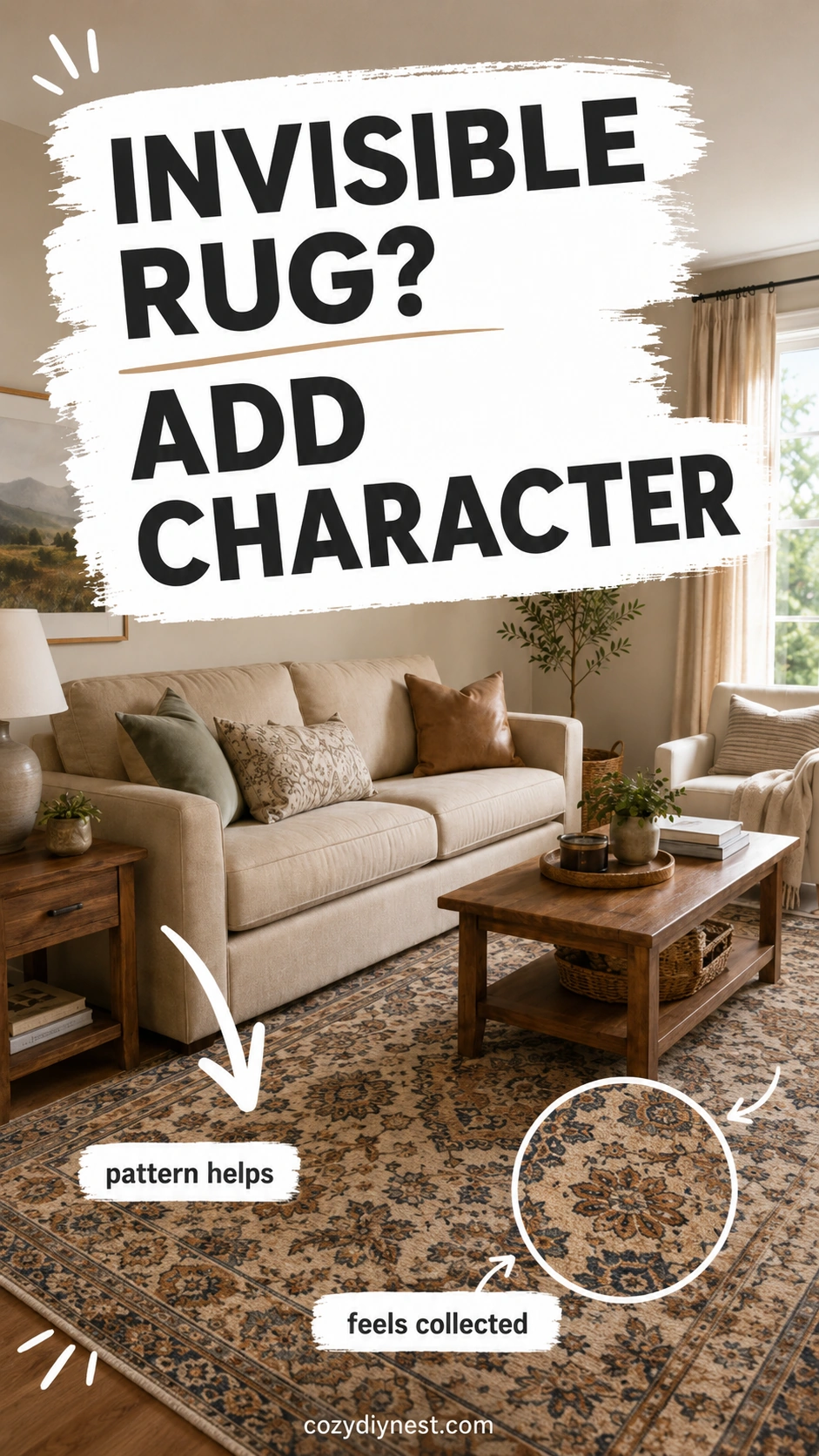
This is one reason editors keep returning to vintage and antique-inspired rug stories: they give rooms much more emotional warmth than blank modern rugs.
5. Pick a Softer, More Tactile Rug Surface If the Room Feels Cold From the Ground Up
Sometimes a room feels cold not only because of the rug color, but because the rug surface feels visually hard, too synthetic, or too flat. This is especially common with low-interest rugs that add coverage but not comfort.
This is where a wool-look surface, a softer vintage washable finish, or a slightly more tactile rug texture helps. The goal is not shaggy heaviness. The goal is warmth and softness that looks believable in a real American living room.
If the room feels cold from the ground up, this is often the quiet reason.
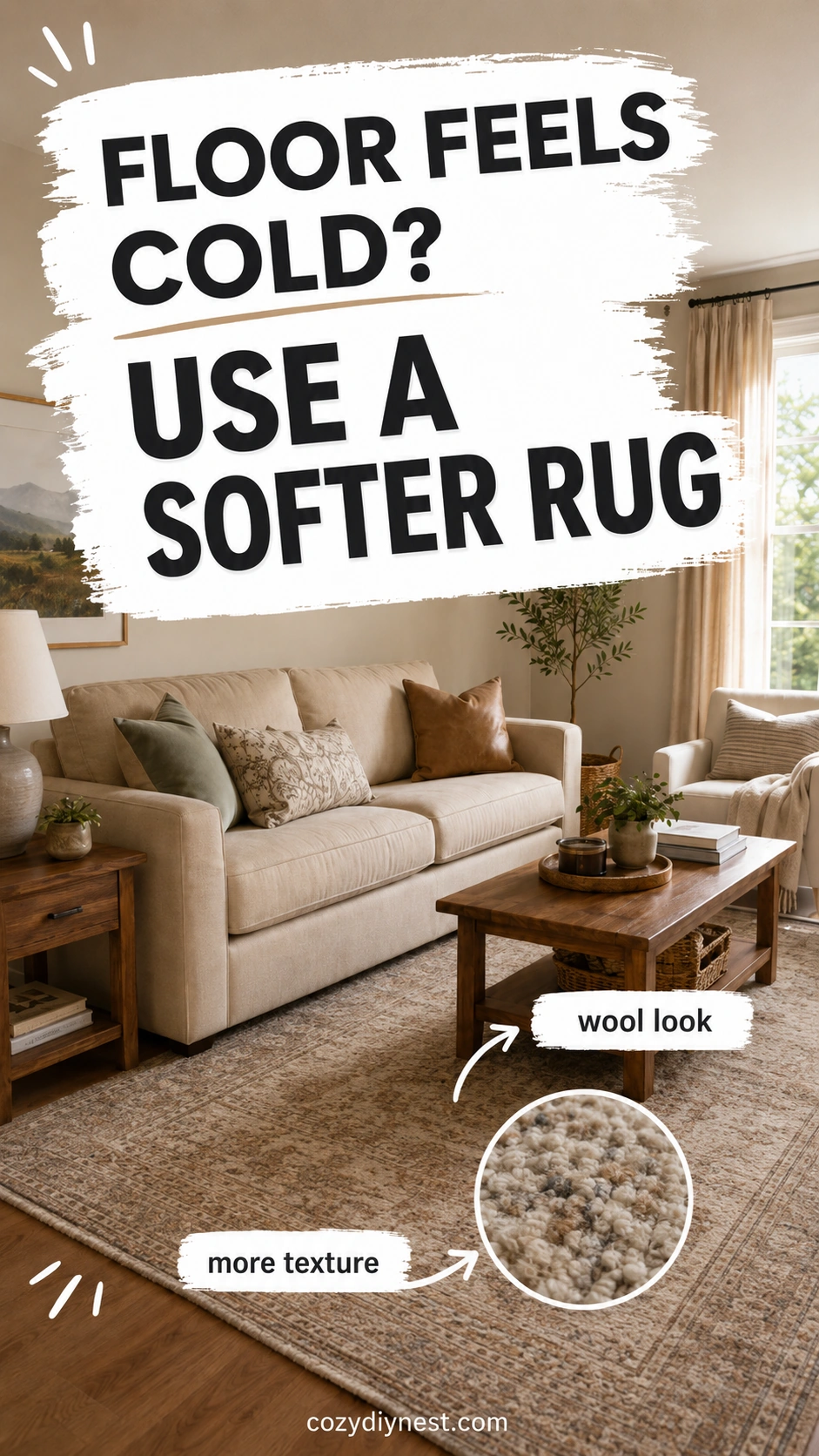
This also works especially well with warm lighting, because richer rug texture reads more beautifully under lamp glow than under harsh overhead light.
6. Use a Washable Rug That Still Looks Designer
A lot of families need practicality first, which is why washable rugs have become so important. But one mistake people make is assuming washable must also look cold, flat, or generic.
This is where the current market gets helpful. Warm-toned washable vintage rugs are now easy to find in living room-friendly sizes, and many of them use brick, rust, brown, and distressed medallion patterns that feel much more collected than older washable styles did.
If you need a family-friendly rug but still want warmth, this is one of the strongest practical answers to best rug color for living room.
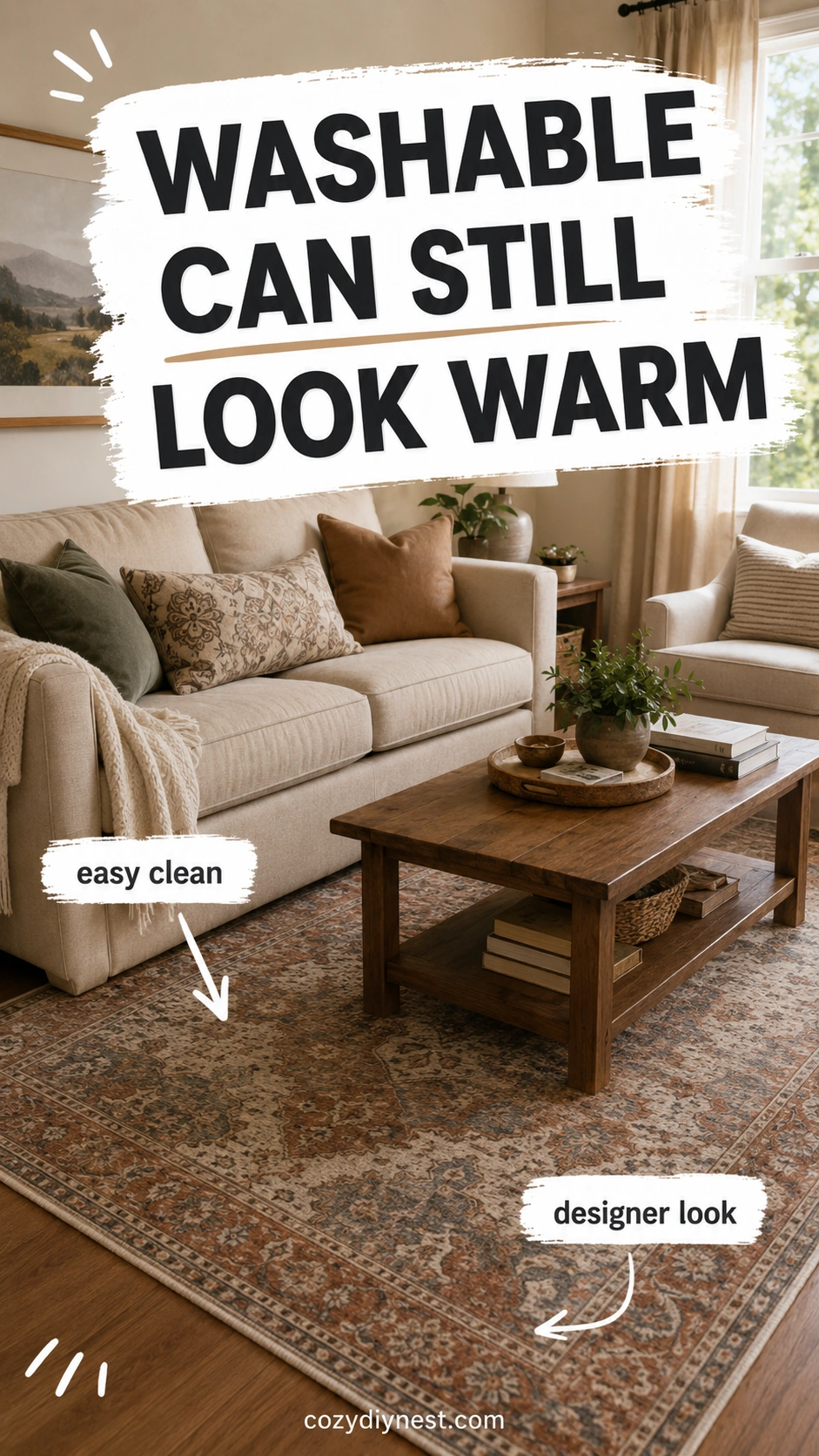
This is especially useful in homes with kids, pets, or heavy everyday traffic where a delicate rug is not realistic.
7. Shop Warmer Oushak or Custom-Feel Rugs if You Want the Whole Room to Feel Less Mass-Market
Some living rooms still feel cold because the rug choice feels too generic for the rest of the space. Even when the sofa is right and the lighting is improving, the room can still feel mass-market if the rug has no richness or individuality.
This is where warmer Oushak-style and Etsy-style vintage rugs become especially powerful. They often bring muted caramel, beige, soft rust, warm brown, and gentle sage accents that feel collected instead of generic. One stronger rug choice can make the whole room feel more personal and more finished.
If your living room still feels cold even after other upgrades, the real answer may be one better rug instead of five more accessories.
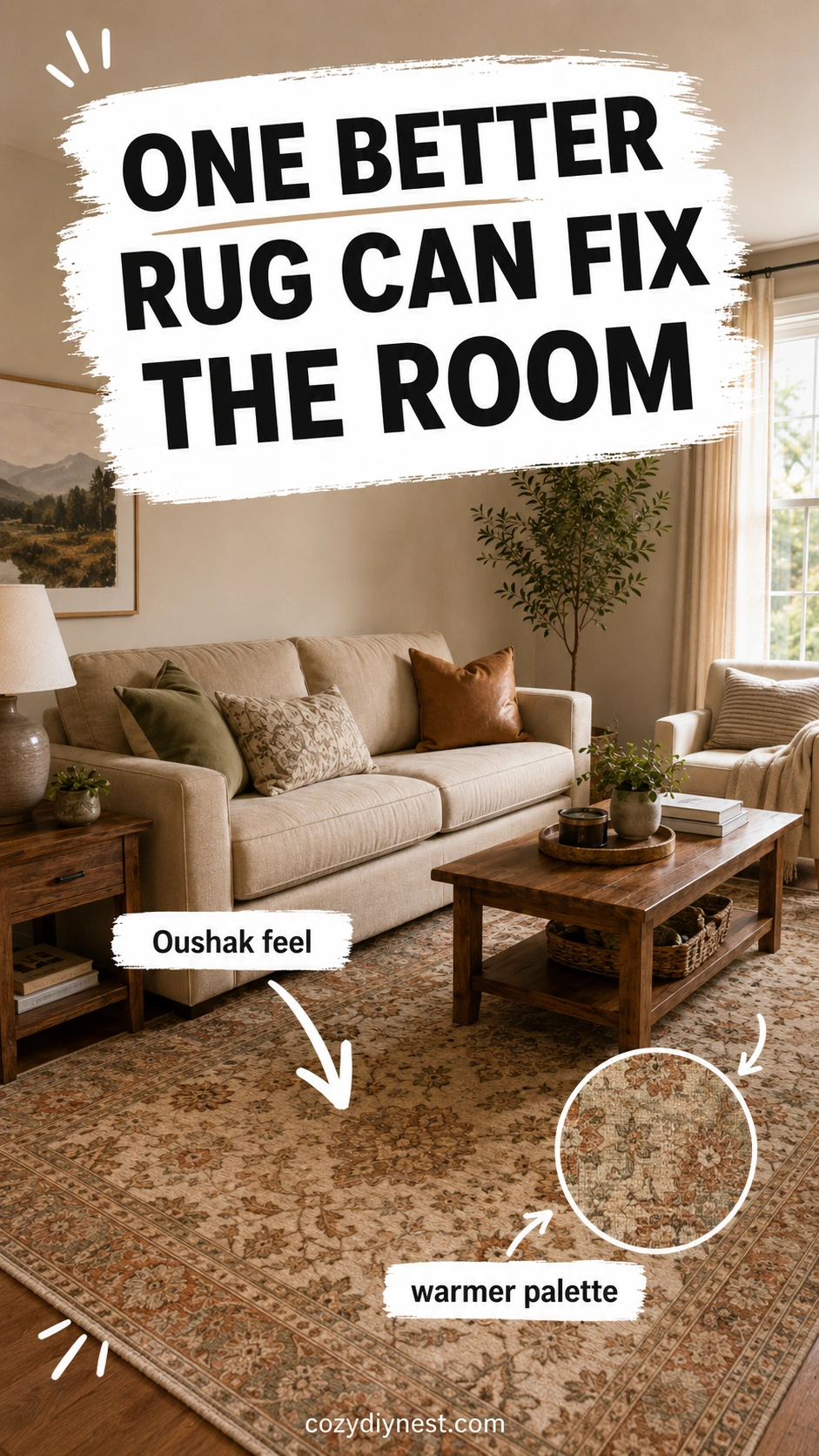
This also pairs beautifully with warmer wood accents, better lighting, and softer curtains if you are trying to move the whole room toward a calmer designer look.
Quick Recap
- Stop choosing cool gray rugs if the room already feels cold.
- Use a warm vintage-style rug instead of a flat cool neutral.
- Add brick red or rust under beige seating for more depth.
- Choose a rug with character instead of an invisible neutral.
- Pick a softer, more tactile rug surface.
- Use a washable rug that still looks warm and collected.
- Shop warmer Oushak or custom-feel rugs if the room still feels mass-market.
Final Thoughts
If your living room still feels cold, the problem may not be the sofa, the curtains, or the wall color. In many homes, the real issue is that the rug is too gray, too flat, or too emotionally cool for the room.
That is why best rug color for living room matters so much. A warmer palette, a richer pattern, and a more character-filled rug can make the room feel softer, cozier, and more welcoming without forcing a full redesign.
If you want a practical American-market upgrade with strong visual payoff, this is one of the smartest places to start.
FAQ
What is the best rug color for a living room?
Best rug color for living room often depends on the room’s overall palette, but warmer tones like rust, caramel, warm brown, muted terracotta, and vintage-inspired blends usually make neutral rooms feel cozier than cool gray rugs.
Do gray rugs make a room feel colder?
They can. In many warm-neutral rooms, a cool gray rug can flatten the palette and make the space feel less inviting.
Are washable rugs good for living rooms?
Yes. Warm-toned washable vintage rugs can be a great option for living rooms, especially in homes with kids, pets, or heavy daily use.
What rug style makes a room feel warmer?
Warm vintage-style rugs, Oushak-inspired rugs, and rugs with earthy colors and visible character usually make a room feel warmer than flat cool-toned neutrals.