
How to make a living room feel cozy is not really about stuffing the room with more decor. In many American homes, the living room already looks tidy, neutral, and well furnished, but it still feels cold. The problem is usually not that the room is ugly. The problem is that it is missing warmth, glow, softness, and the kind of layered details that make a space feel emotionally inviting instead of visually flat.
If you are trying to figure out how to make a living room feel cozy, the strongest fixes are usually practical ones you can actually buy and use right away: warmer lighting, a better rug, softer sofa texture, more wood tone, fuller curtains, a styled coffee table, and one lit corner that gives the room a cozy destination. These are not fantasy magazine moves. They are realistic upgrades that work because they change how the room feels at eye level and at night.
Current design guidance also supports this exact direction. House Beautiful recommends layered living room lighting instead of relying on one overhead source, their newer lighting coverage points to small lamps as powerful atmosphere builders, The Spruce keeps emphasizing proper rug size, and Real Simple highlights curtains as one of the easiest ways to soften and polish a living room.
1. Layer Warm Light Instead of Letting One Ceiling Light Do Everything
One of the biggest reasons a living room still feels cold is that it depends too much on one overhead light. A single bright ceiling fixture can make the room look visible, but it rarely makes it feel calm, flattering, or cozy.
If you want a real answer to how to make a living room feel cozy, start here first. Add one table lamp, one floor lamp, and one small warm ambient source such as a rechargeable accent lamp or candle warmer. This gives the room height variation, softer light falloff, and that layered glow people associate with comfortable evening spaces.
This is also one of the easiest market-backed upgrades because lamps, 2700K bulbs, and small accent lights are widely available in the U.S. without needing a full room makeover.
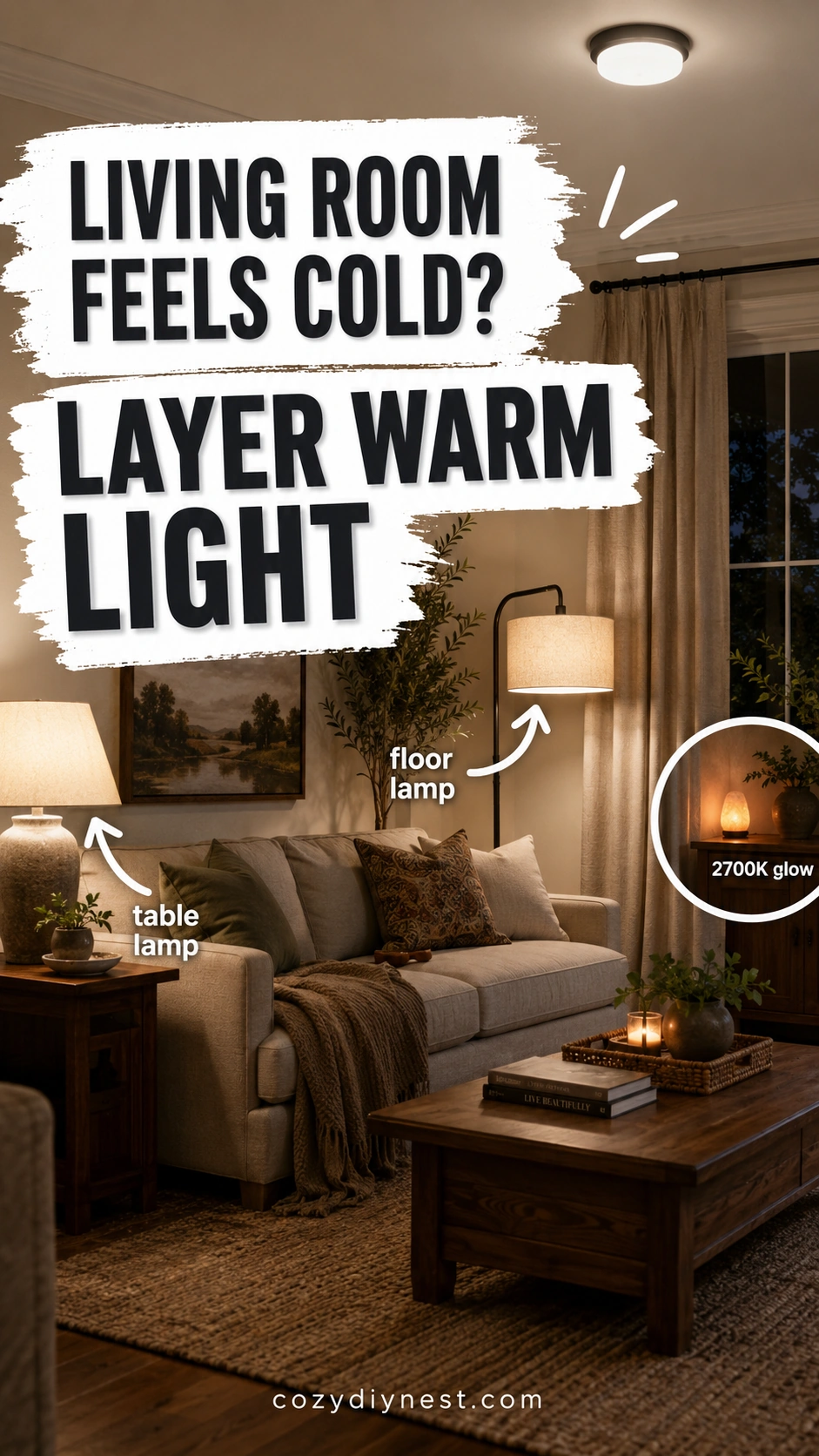
If your room looks fine during the day but feels cold at night, lighting is probably the first thing to fix.
For even more lamp and mood-light ideas, browse our Lighting Mood & Warm Ambience category.
2. Replace Thin or Cool Rugs With a Warmer Rug That Actually Grounds the Room
A living room often feels colder than it should when the rug is too small, too flat, or too gray for the rest of the space. This is one of those details people feel immediately even when they do not know how to name it.
How to make a living room feel cozy gets much easier when the rug adds warmth under the seating zone instead of acting like a weak placeholder. A larger rug in warmer earthy tones, muted vintage patterns, or softer underfoot texture helps the room feel more anchored and less stark.
The Spruce says 8×10 and 9×12 are the most popular living room rug sizes, and their sizing guidance repeatedly warns against rugs that are too small for the furniture layout.

If the room still feels cold from the ground up, the rug is often doing less work than you think.
This pairs naturally with any future floor-focused article you build, because cozy rooms usually start from the floor and move upward.
3. Add Soft Texture to the Sofa So the Seating Stops Feeling Flat
A sofa can be expensive, neutral, and still emotionally cold if everything on it is too smooth, too matchy, or too flat. Many living rooms feel colder simply because the largest upholstered surface is not giving the eye any softness back.
This is why how to make a living room feel cozy often comes down to textile layering. Add one chunky knit throw, one softer woven throw, and two or three textured pillows in warm neutrals, olive, taupe, or rust. The goal is not more clutter. The goal is more tactile softness.
When a room feels visually fine but emotionally flat, texture is often the fastest fix you can add without changing furniture.

If the sofa still feels too plain after styling the rest of the room, this is where I would intervene next.
This also works especially well alongside warmer lighting because texture reads much better under softer lamp glow than under harsh overhead light.
4. Bring In Warm Wood Accents if the Room Still Feels Too Pale or Sterile
Neutral living rooms can drift into sterile territory when too many surfaces stay pale, matte, and tonally similar. That is often when people say the room feels cold even though the palette is technically “cozy neutral.”
One of the smartest answers to how to make a living room feel cozy is adding medium warm wood tones in small but visible places: a wood tray, wood bowl, framed art with wood tone, or a coffee table with richer grain. This gives the room natural contrast and organic warmth without forcing color.
Better Homes & Gardens has also been leaning into chunkier and warmer wood coffee table styling lately, which fits this exact move very well.

If the room still feels stark after adding lamps and textiles, it may be missing natural material warmth more than it is missing decor.
This is also a good fix when you do not want to repaint or buy new furniture.
5. Use Softer Fuller Curtains if the Window Light Still Feels Harsh
Even a beautiful living room can feel colder when the window treatment is too thin, too bare, or too weak to soften daylight. Bare or underpowered windows often make the room feel more exposed and less settled.
If you are still working on how to make a living room feel cozy, fuller curtains in a creamy taupe linen tone can soften the light, add visual insulation, and make the room feel more complete. Real Simple’s current living room curtain ideas also reinforce how much drapes can affect polish and softness.
For a warmer result, use fuller panels, hang them high, and choose a soft matte fabric instead of something thin or shiny.
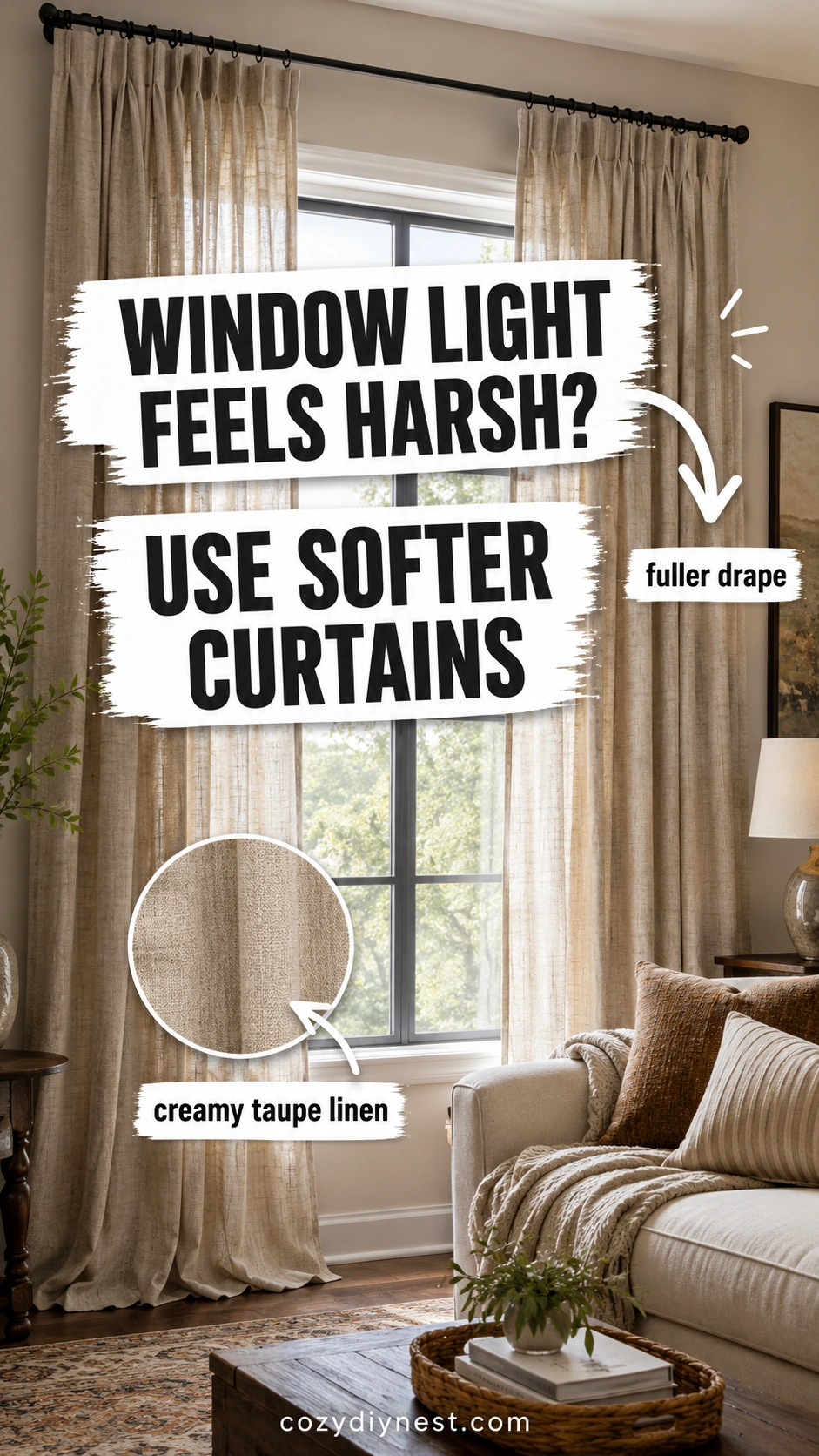
If the room still feels too bright in a harsh way, the window treatment may be missing softness more than privacy.
This connects naturally with our curtain cluster, including guides like how to make curtains look expensive and layered window treatments.
6. Style the Coffee Table in Threes So It Stops Feeling Empty or Random
An empty coffee table often makes a living room feel unfinished, but a random pile of decor is not better. Cold rooms often need one clear, warm visual grouping in the center of the seating area.
That is why how to make a living room feel cozy often includes one simple coffee table formula: tray, book stack, and greenery or glow. Better Homes & Gardens keeps recommending simple grouped styling moments like books and flowers, and they work because they make the room feel lived-in without clutter.
A tray also helps everything feel intentional instead of scattered. This is a small move, but it changes the center of the room fast.
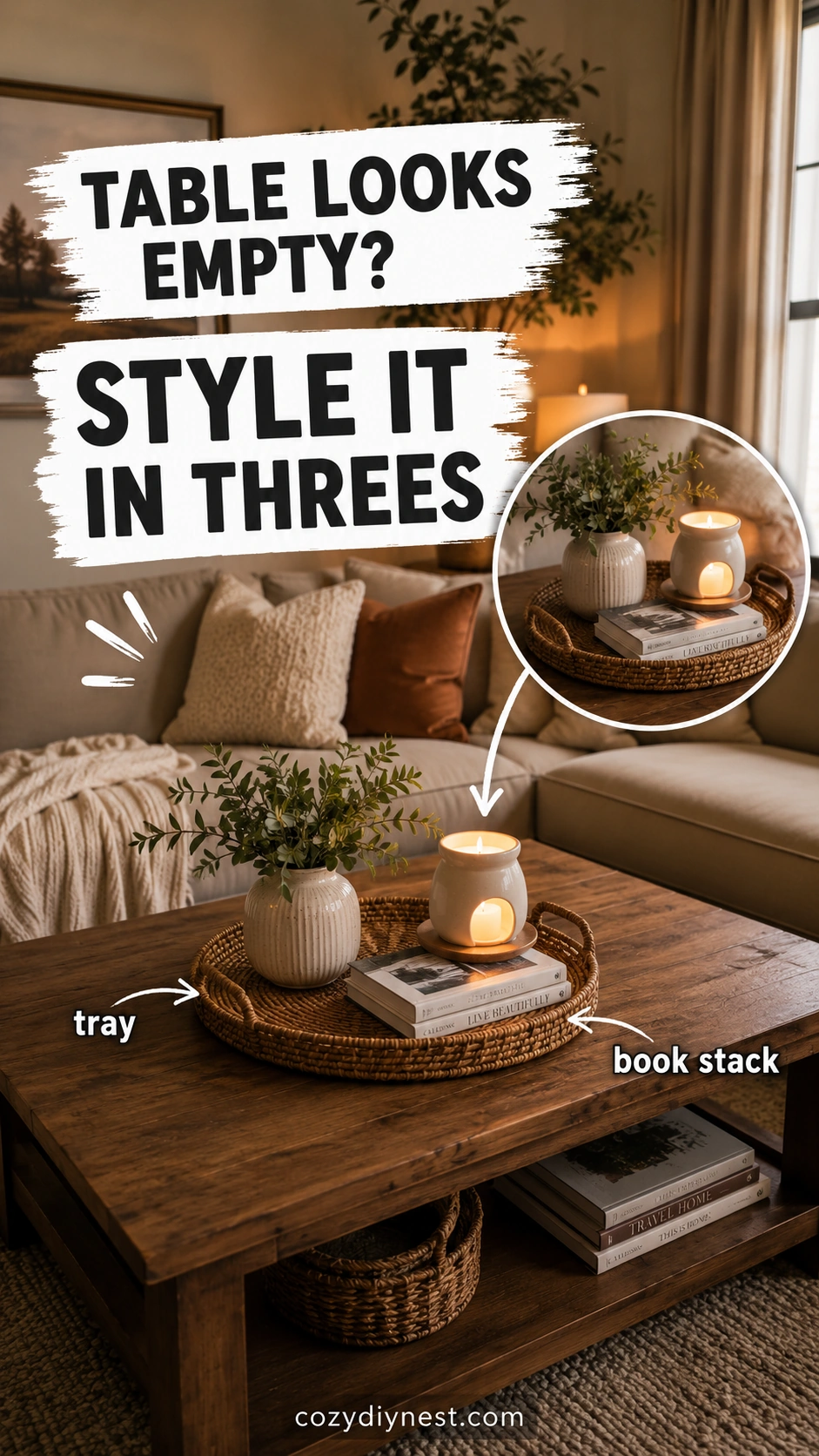
If your living room still feels like it has no focal warmth at eye level, start with the coffee table.
And if you already own the right pieces, this is one of the cheapest upgrades in the whole article.
7. Build a Cozy Glow Spot in One Dead Corner
Dead corners make living rooms feel colder than they really are because they read as empty visual silence. Even a nicely decorated room can feel emotionally unfinished if one corner is doing nothing.
This is one of my favorite answers to how to make a living room feel cozy because it feels bigger than the effort involved. Add one floor lamp, one soft accent chair, one small side table, and one folded throw. Suddenly the room has a destination, not just furniture placement.
House Beautiful’s recent “little lamps” coverage lines up with this perfectly: small and secondary light sources help a room feel more charming and more inviting, not just brighter.
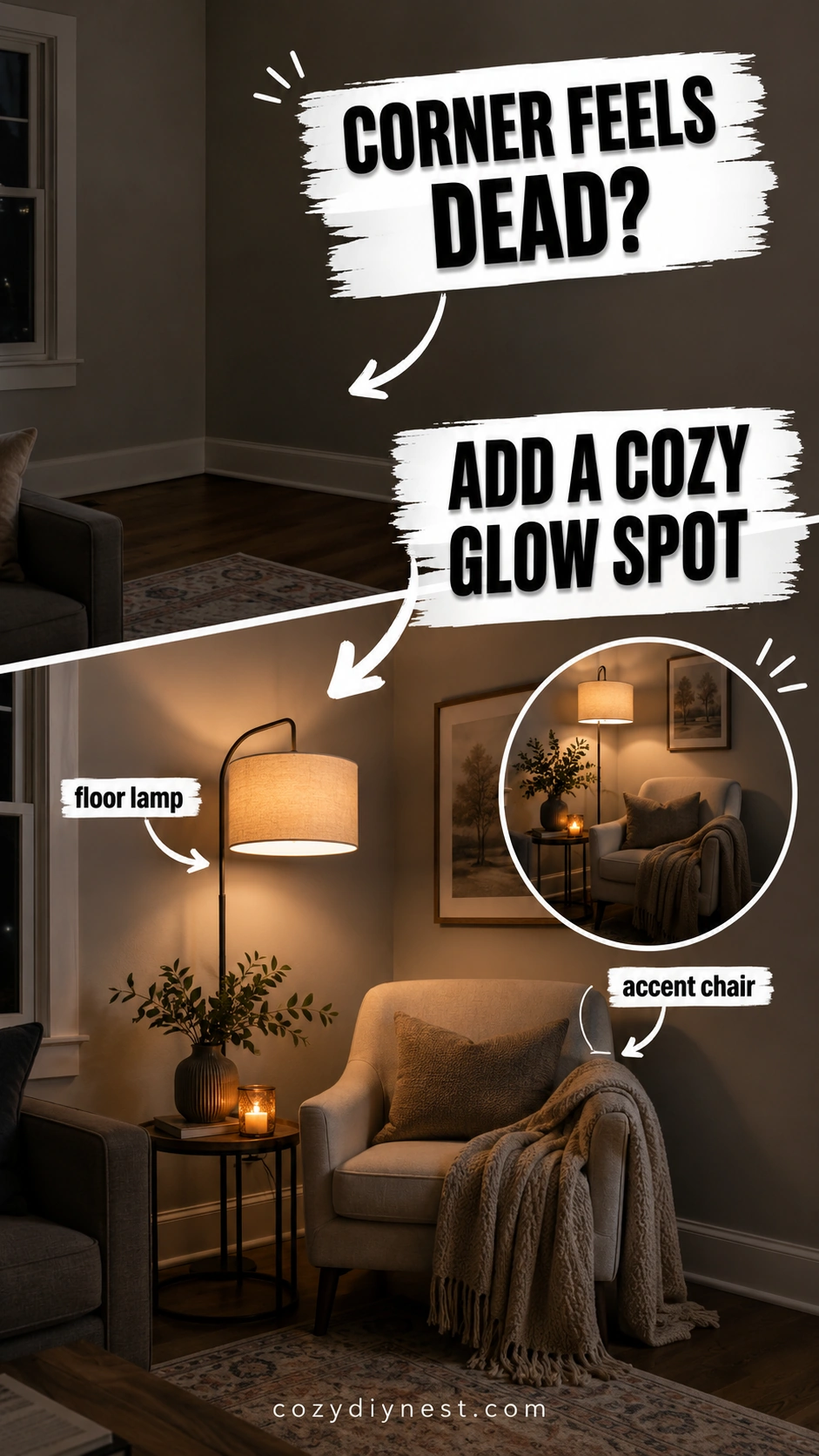
If one corner of the room still feels dead, this is usually the highest-payoff fix after lighting.
It also works beautifully in apartments, rentals, and living rooms that do not have room for a full redesign.
Quick Recap
- Layer warm light instead of using one overhead fixture.
- Choose a warmer, larger rug that grounds the room.
- Add softer sofa texture with throws and textured pillows.
- Use warm wood accents to reduce a stark or sterile feel.
- Soften harsh window light with fuller curtains.
- Style the coffee table in threes instead of leaving it empty.
- Turn one dead corner into a cozy glow spot.
Final Thoughts
If your living room looks fine but still feels cold, that does not mean you need a full makeover. In many homes, the room already has enough furniture. It is simply missing the warmth cues that make a space feel calm, soft, and welcoming.
That is why how to make a living room feel cozy usually comes down to a handful of realistic fixes: layered lighting, better rugs, softer texture, warm wood, fuller curtains, one styled surface, and one lit corner. Those moves change the feeling of the room much faster than buying more random decor.
If you want a practical American-market approach to making a room feel warmer, this is one of the strongest places to start.
FAQ
How do you make a living room feel cozy?
How to make a living room feel cozy usually starts with layered warm lighting, softer textures, a properly sized rug, and details that make the room feel more settled instead of flat.
Why does my living room feel cold even with neutral decor?
Neutral decor can still feel cold if the room is missing glow, texture, warmer tones, fuller curtains, or enough visual grounding from the rug and furniture styling.
What kind of lighting makes a living room feel warmer?
Layered lighting with table lamps, floor lamps, and warm 2700K bulbs usually feels softer and more inviting than one bright ceiling fixture.
Can a rug really make a room feel cozier?
Yes. A larger rug in warmer tones can visually ground the furniture, soften the room, and reduce that cold floating feeling many living rooms have.