
If your sunroom too hot problem is making the space harder to enjoy, you are not imagining it. A sunroom is designed to pull in light, but that same light can make the room feel stuffy, glaring, and overly warm at certain times of day. In many homes, the room looks beautiful but becomes less usable once the sun gets strong.
That is why solving a sunroom too hot issue is not just about comfort. It is also about making the room more practical and more livable. The best fixes keep the brightness people love while cutting down the heat and glare that make a sunroom harder to use. Better Homes & Gardens notes that orientation, materials, and cooling choices all affect how comfortable a sunroom feels, while House Beautiful points out that glass-heavy spaces can feel scorching without the right setup. Better Homes & Gardens explains these planning factors here, and House Beautiful explains the heat issue in glass-heavy rooms here.
These seven fixes are built around the real problems people face when a sunroom gets too hot: too much direct light, poor airflow, heavy materials, and not enough control over the temperature of the space. Each fix gives the room a better chance to stay bright and comfortable at the same time.
1) Start With Sheer Curtains If the Sun Feels Aggressive
One of the easiest reasons a sunroom gets too hot is that the sunlight is arriving completely unfiltered. When direct rays hit the room for hours, the light can feel visually harsh and the temperature can rise quickly.
Airy sheers help reduce the force of the light without shutting the room down. Better Homes & Gardens specifically connects sheer drapery with the cozy sunroom trend because it softens the room while still keeping it bright. That makes it one of the smartest first steps when a sunroom too hot issue starts with exposed windows. See BHG’s cozy sunroom feature here.

This image works because the room still feels bright, but the light no longer feels punishing.
This solves the pain point of a sunroom that looks pretty but becomes uncomfortable once the sun gets strong.
Sheers work because they soften the heat and glare without stealing the room’s best feature.
2) Use Woven Shades If You Need Stronger Shade Without Heavy Blackout Curtains
Sometimes sheers are not enough. If the room still gets blasted with direct sun, you may need more control than a single light panel can provide.
Natural woven shades give you a stronger layer of protection while keeping the room warmer in style, not darker in mood. They are especially useful when a sunroom too hot problem happens every afternoon and you need a practical treatment that still looks soft and organic.

This image works because the room feels more protected without losing its relaxed sunroom identity.
This fixes the problem of wanting less heat but not wanting thick dark drapes.
Woven shades work because they create a stronger filter while still keeping the room airy and natural.
3) Add a Ceiling Fan if the Air Feels Stuck
Heat feels worse when the air does not move. Even a bright room that is only moderately warm can start to feel stuffy and unpleasant if the airflow is poor.
Better Homes & Gardens includes cooling choices as a key part of sunroom comfort planning, and ceiling fans are one of the simplest ways to improve the day-to-day feel of the room. If your sunroom too hot issue includes stagnant air, a fan can make a bigger difference than people expect. See BHG’s sunroom planning guide here.

This image works because the room feels fresher, not just brighter.
This solves the pain point of a sunroom that feels stuffy even when the decor is right.
Air movement works because comfort is about temperature and circulation together, not sunlight alone.
If you like comfort-driven upgrades, this article can later connect naturally to your sunroom curtain ideas article.
4) Keep the Furniture Light If the Room Already Feels Heavy
Heat is not only physical. Some sunrooms also feel hotter because the furniture is visually dense. Dark upholstery, bulky silhouettes, and heavy-looking materials can make a warm room feel even more oppressive.
Choose lighter upholstery, open-leg furniture, and more breathable textures when possible. A sunroom too hot problem often feels more manageable when the room stops looking dense and starts looking breathable.

This image works because the room feels more open the moment the visual weight comes down.
This fixes the problem of a sunroom that feels hotter than it looks like it should.
Lighter furniture works because it reduces both visual and emotional heaviness in the room.
5) Clear the Window Area So Air and Light Can Move Better
When large planters, bulky chairs, or too many pieces sit right against the windows, the sunroom can start to feel blocked and hotter than it needs to be.
Creating more breathing room near the windows helps the space feel easier and less trapped. This matters especially when a sunroom too hot issue is made worse by layout choices rather than the windows alone.

This image works because the room feels breezier and less crowded right away.
This solves the pain point of a sunroom that feels trapped instead of airy.
Better window clearance works because it supports airflow and keeps the room from feeling congested.
For more layout guidance, this can later connect naturally to your small sunroom ideas article.
6) Swap Heavy Textiles for Lighter Layers
Thick rugs, dark throws, and heavy fabrics can make a warm room feel even warmer. In a sunroom, texture matters, but the wrong kind of texture can work against comfort.
Try lower-pile rugs, lighter curtains, breathable upholstery, and fewer dense layers. If your sunroom too hot issue feels worse once the room is fully styled, the textiles may be part of the reason.

This image works because the room still feels soft, but no longer feels weighed down.
This fixes the problem of a sunroom that looks cozy but feels too warm to enjoy.
Lighter layers work because they support comfort without trapping too much visual or emotional heat.
For more floor-focused help, this article can later connect naturally to your sunroom rug ideas article.
7) Add Exterior Shade if the Sun Hits the Glass Too Hard
Sometimes the real problem is not inside the room at all. If the sun is hitting the glass directly for long hours, interior fixes may help, but exterior shading can make the biggest difference.
Better Homes & Gardens points to orientation and shading choices as real comfort factors in sunrooms. An awning, shade sail, exterior screen, or strategic planted shade can help cut down direct exposure before the heat builds inside. This is especially useful when your sunroom too hot issue is strongest in summer afternoons. See BHG’s sunroom addition ideas here.
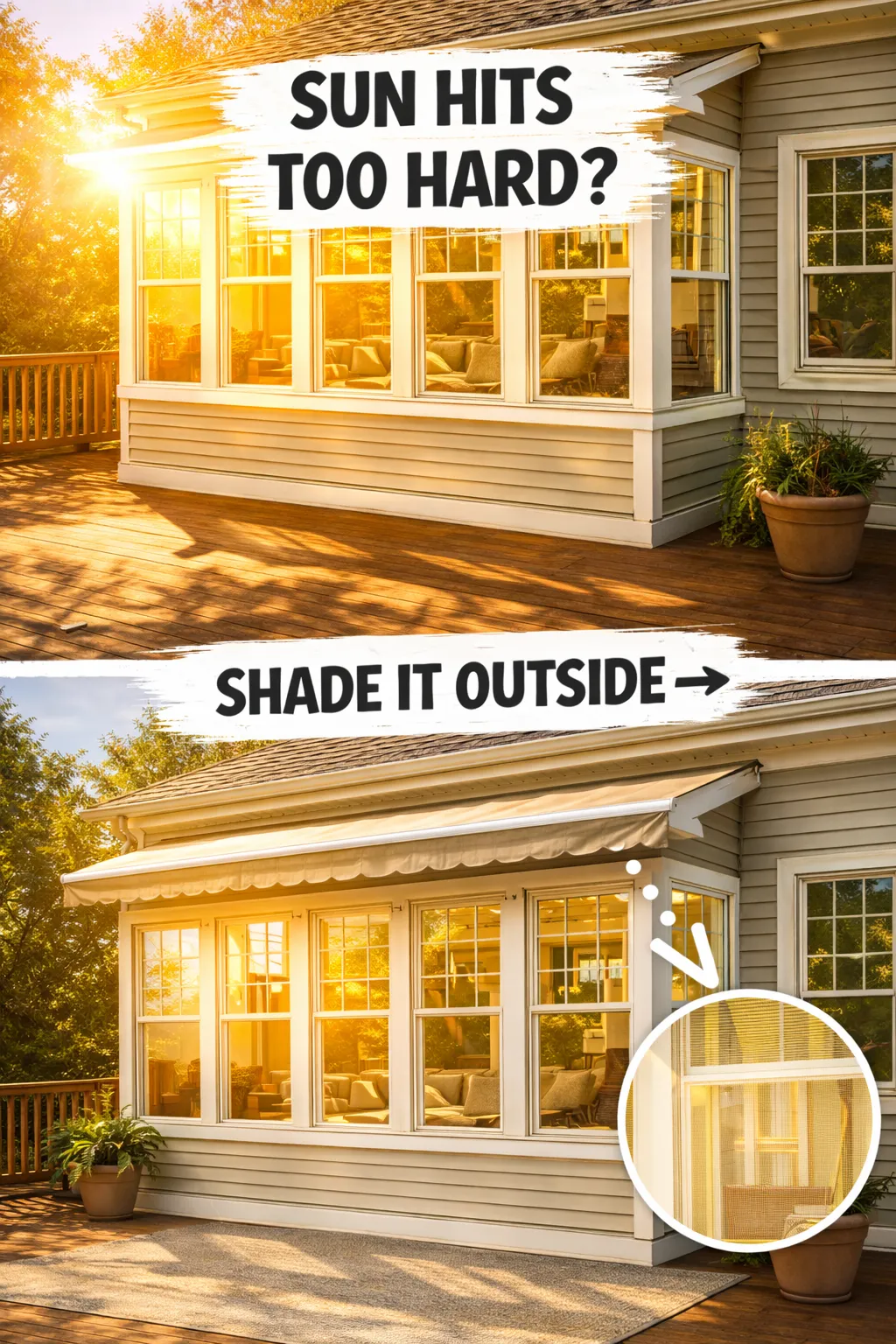
This image works because the protection starts before the heat fully enters the room.
This solves the pain point of a sunroom that still overheats even after interior styling changes.
Exterior shade works because it interrupts the problem earlier and can make the whole room easier to manage.
Quick Hot Sunroom Checklist
- Filter direct sun with sheers
- Use woven shades for stronger light control
- Add a ceiling fan for airflow
- Keep furniture visually lighter
- Clear the area around the windows
- Swap heavy textiles for lighter layers
- Add exterior shade if direct sun is the main problem
If your sunroom too hot problem is making the room harder to enjoy, the solution is rarely one giant makeover. In most homes, a few smart changes in shade, airflow, and materials can make the space much more comfortable while keeping all the light people love.
In other words, the best fixes do not turn the room dark. They help a hot sunroom stay bright, softer, and more usable through the hottest parts of the day.
FAQ: Sunroom Too Hot
Why does my sunroom get so hot?
Sunrooms are designed to bring in lots of light, and that can raise the temperature quickly, especially if the room has strong exposure, little shade, or weak airflow.
How can I cool down a hot sunroom without making it dark?
Use light-filtering treatments like sheers or woven shades, improve airflow with a fan, and reduce direct exposure where possible instead of relying only on dark heavy curtains.
Do ceiling fans help in a sunroom?
Yes. Ceiling fans can improve airflow and make the room feel much more comfortable, especially when the air otherwise feels stagnant.
What window treatments are best for a hot sunroom?
Sheers, woven shades, layered treatments, and other light-filtering options usually work well because they soften the light without completely removing the brightness.