
Why Layered Lighting Is the Real Secret to Making Small Rooms Feel Bigger
Layered lighting is the one design strategy American interior magazines consistently recommend for small living rooms and apartments. If your space feels flat, cramped, or visually compressed, the issue usually isn’t square footage — it’s how light is distributed.
Designers rarely rely on one ceiling light. Instead, they build depth using three lighting layers: ambient, task, and accent. This simple but powerful system reshapes how your room feels at night and even during the day.
According to Real Simple, layered lighting is what transforms compact homes into warm, dimensional spaces that feel curated rather than crowded.
The Biggest Small-Space Lighting Mistake
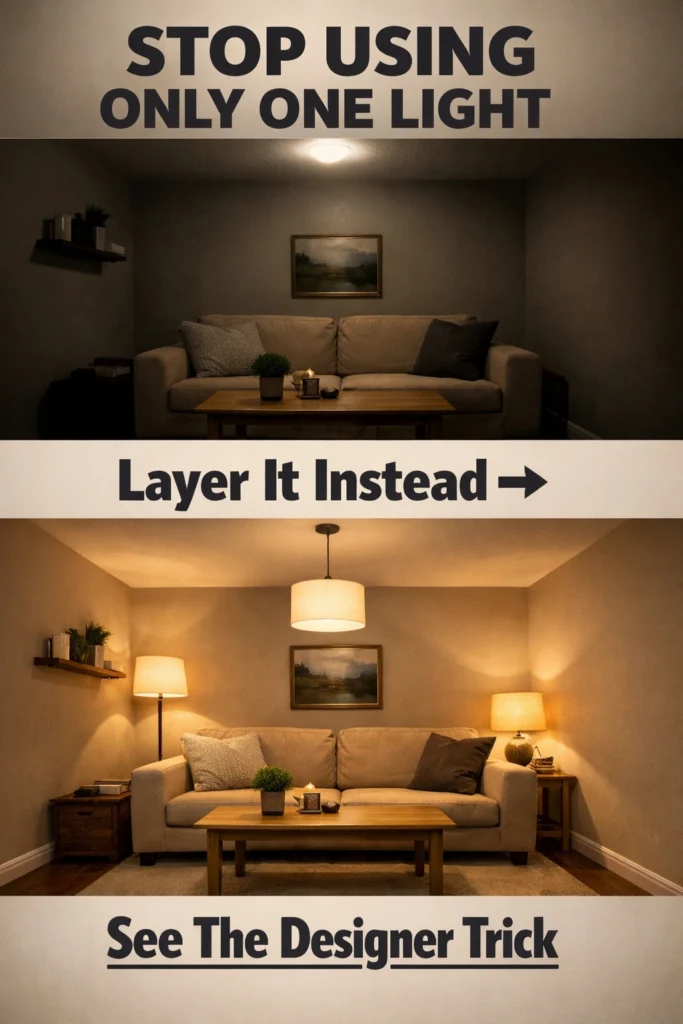
Using only one overhead light flattens a room. It creates shadow pockets in corners and harsh glare near the ceiling. The result? Walls feel closer, furniture feels heavier, and the entire space looks smaller than it actually is.
The fix isn’t brighter bulbs. It’s smarter layering.
What Is Layered Lighting?
Layered lighting combines three types of light sources placed at different heights and positions in a room. Together, they create visual balance, remove shadows, and add depth.
- Ambient lighting – general glow that fills the space
- Task lighting – focused light for reading or work
- Accent lighting – decorative light that highlights walls or features
When these three layers work together, small spaces feel taller, wider, and more intentional.
1) Ambient Lighting: The Foundation of Spacious Rooms
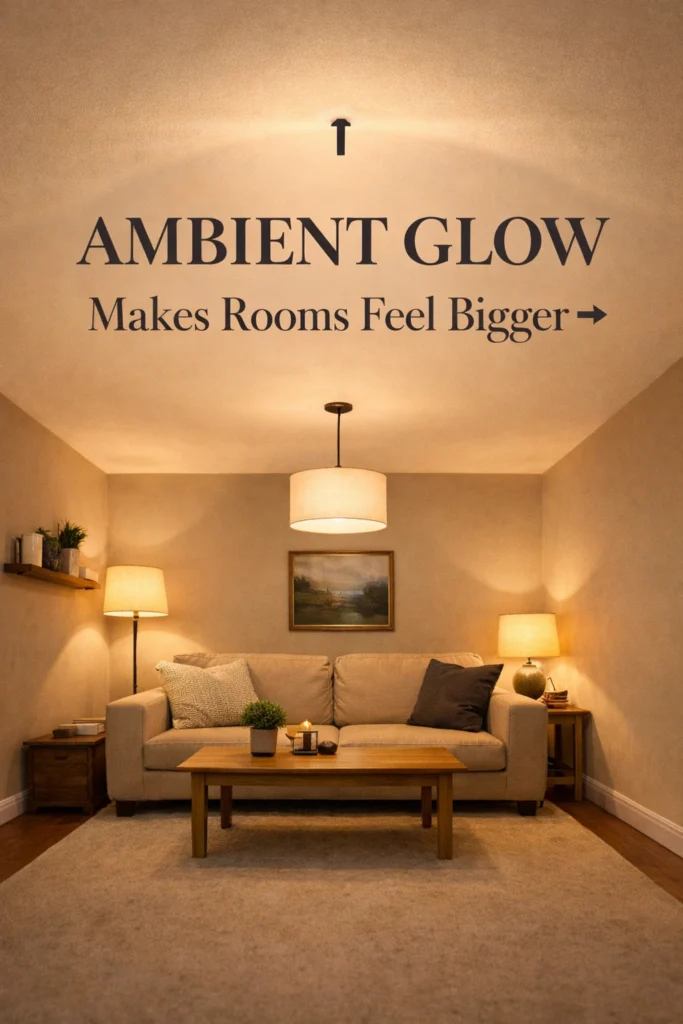
Ambient light should softly wash the ceiling and upper walls. Linen pendants, diffused flush mounts, and indirect ceiling glow are preferred by designers because they eliminate harsh glare.
Soft ambient light lifts the room visually upward, creating the illusion of height. In small apartments, this alone can make ceilings feel several inches taller.
2) Task Lighting: Adding Depth Where You Sit
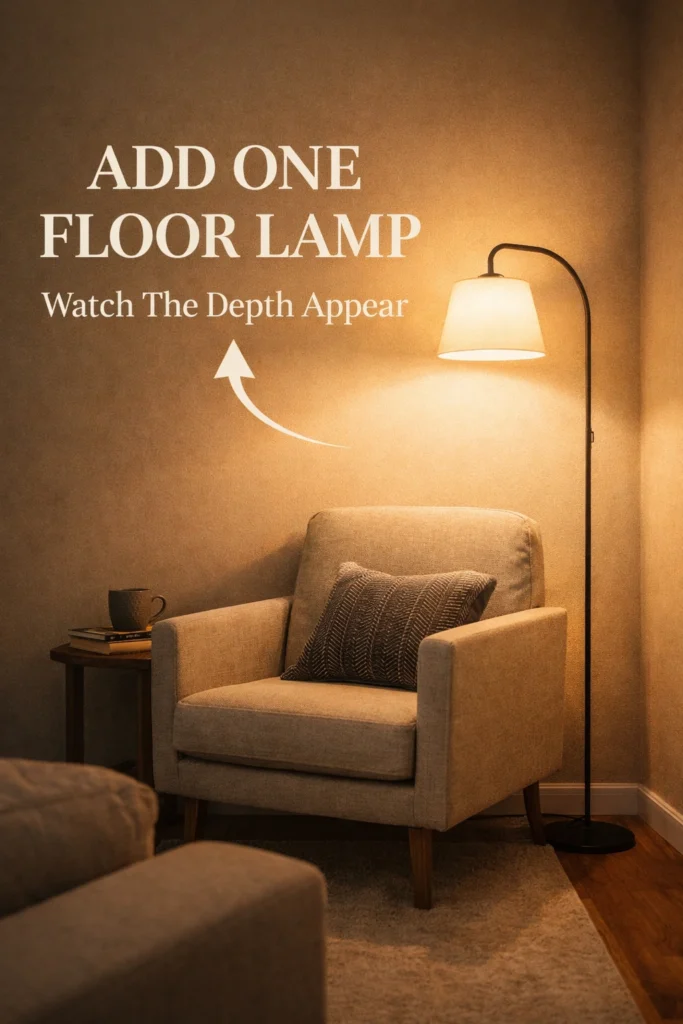
A single floor lamp placed behind a chair creates depth. Why? Because light hitting the wall behind furniture extends the eye backward.
This technique is commonly featured in House Beautiful small-space makeovers. Instead of brightening the whole room, designers brighten zones.
3) Accent Lighting: Expanding the Walls
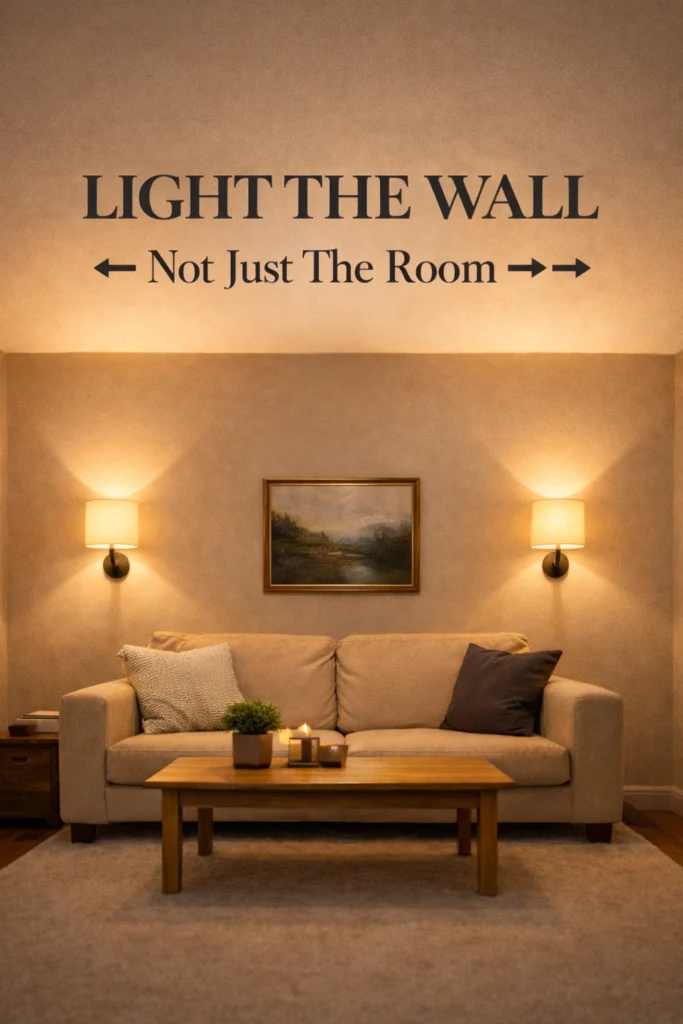
Wall sconces, shelf lighting, and backlit mirrors illuminate vertical surfaces. When walls glow, they feel farther away.
Accent lighting doesn’t need to be bright — it needs to be intentional.
4) Fill the Corners to Remove Shadow Pockets
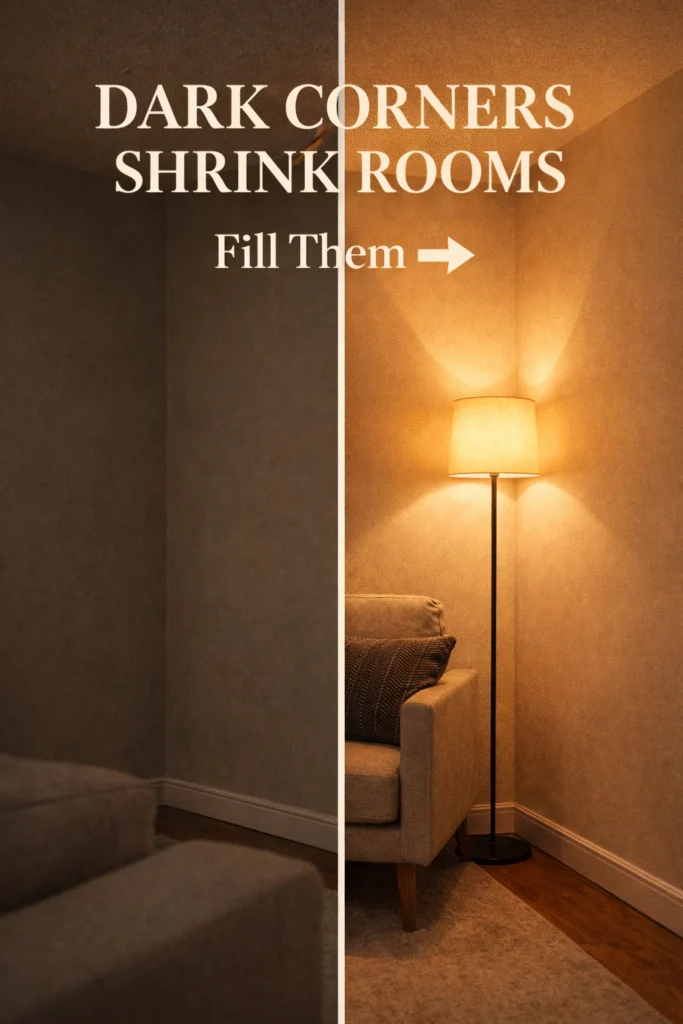
Dark corners visually shrink a room. A tall slim lamp in one empty corner prevents the eye from stopping abruptly at shadow edges.
5) Evening Layered Glow for Cozy Luxury
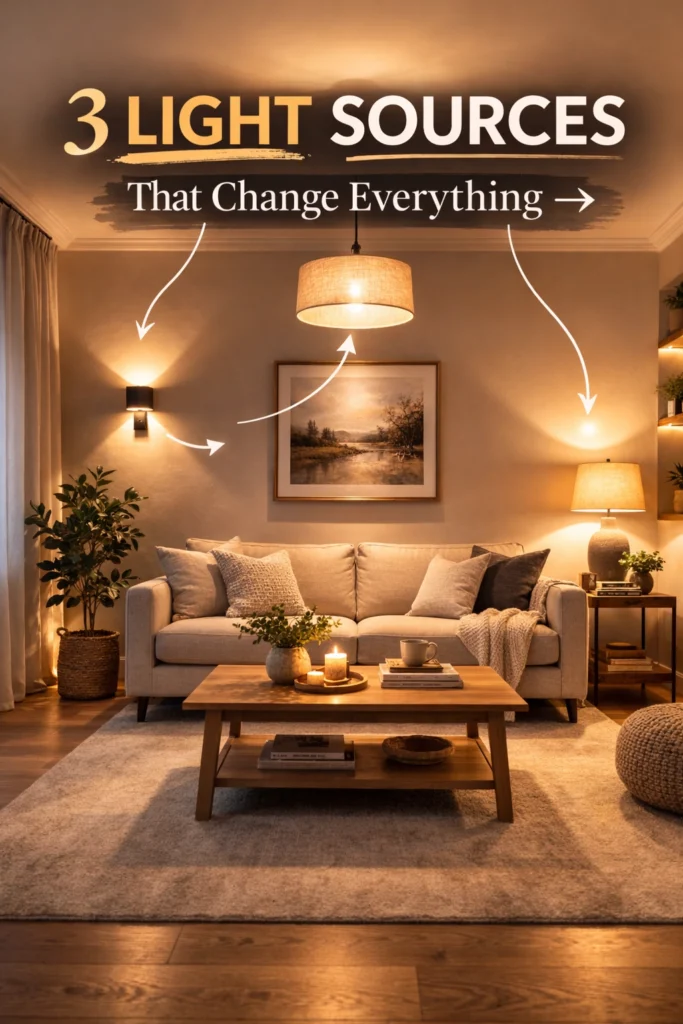
Layered lighting at night creates softness instead of brightness. Warm 2700K bulbs are ideal for cozy small living rooms.
6) The Designer Rule of Three
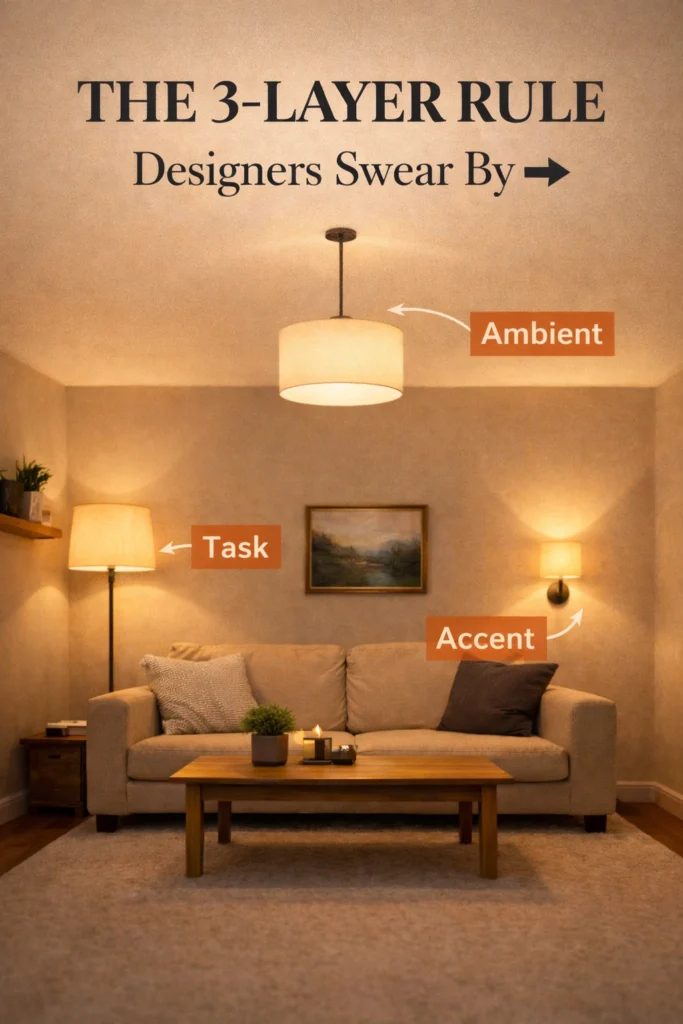
Use this formula:
- 1 Ambient source
- 1 Task source
- 1 Accent source
Three layers are enough to transform a small space without overcrowding it.
How Layered Lighting Connects to Visual Calm
If your home still feels heavy after improving lighting, explore our spring light test guide for additional balance tips.
For a full seasonal refresh, browse our Seasonal Home Refresh Ideas.
Layered lighting isn’t about adding more lamps. It’s about creating dimension. And dimension is what makes small spaces feel beautifully expansive.
The Psychology of Light: Why Layered Lighting Changes How Big a Room Feels
Layered lighting doesn’t just brighten a room — it changes how your brain interprets space.
Interior designers often talk about “visual depth,” but the science behind it is surprisingly simple. Our brains read contrast, shadow, and gradients to determine distance. When a room has only one light source, shadows gather in corners and along walls. The brain interprets those dark areas as boundaries — which makes the room feel smaller.
When you introduce ambient, task, and accent lighting together, you soften those boundaries. Walls glow. Corners brighten. Depth increases. The space feels expanded — even though nothing physically moved.
This is why layered lighting is repeatedly recommended in small-space features across American design magazines. It creates the illusion of dimension without adding clutter.
How Designers Create Visual Depth With Light
Here are the exact visual techniques designers use when applying layered lighting in compact homes:
- Ceiling wash: Soft light bouncing upward makes ceilings appear taller.
- Wall glow: Accent lighting on walls pushes them visually outward.
- Corner fill: Removing dark pockets prevents visual “stop points.”
- Layered heights: Light at multiple levels creates three-dimensional balance.
Notice that none of these techniques require major renovation. They simply require thoughtful placement.
The Layered Lighting Designer Checklist
Use this quick checklist to see if your space is fully layered:
- ✔ Do I have at least one soft ambient light?
- ✔ Is there a task light near seating areas?
- ✔ Is at least one wall illuminated?
- ✔ Are corners free of heavy shadows?
- ✔ Are my bulbs warm (2700K–3000K)?
- ✔ Do I turn on more than one light source at night?
If you answered “no” to two or more, your layered lighting system isn’t complete yet.
Common Layered Lighting Mistakes to Avoid
- ❌ Using three lights at the same height
- ❌ Mixing cool and warm bulbs randomly
- ❌ Ignoring vertical surfaces
- ❌ Leaving one dark corner untreated
- ❌ Over-lighting with high wattage instead of layering
Layered lighting should feel balanced, not overwhelming. More light isn’t the answer — smarter light is.
FAQ: Layered Lighting for Small Spaces
What is layered lighting?
Layered lighting combines ambient, task, and accent lighting to create depth and balance in a room. It prevents harsh shadows and makes small spaces feel larger.
How many lights should a small living room have?
At minimum, three sources: one ambient, one task, and one accent. This creates visual layering without overcrowding the room.
Does layered lighting really make a room look bigger?
Yes. By eliminating shadow boundaries and illuminating vertical surfaces, layered lighting increases perceived depth and openness.
What bulb temperature works best for layered lighting?
Warm white bulbs between 2700K and 3000K create a cohesive glow and prevent visual harshness.
Can renters use layered lighting?
Absolutely. Floor lamps, table lamps, and plug-in sconces allow renters to create layered lighting without permanent installation.
Layered lighting is more than a trend. It’s a design principle rooted in how humans perceive depth, balance, and comfort. When applied correctly, even the smallest living room can feel intentional, warm, and surprisingly expansive.