
Kitchen runner ideas can completely change how a kitchen feels when the floor is cold, hard, and uncomfortable to stand on. If your kitchen still feels stark even after you improve the cabinets, lighting, or backsplash, the problem may be underfoot. Hard floors can make a kitchen feel visually flat, physically tiring, and less welcoming than it should.
That is exactly why runners and kitchen rugs keep coming up in current design coverage. Real Simple says a runner or woven rug can instantly ground the kitchen and add warmth underfoot, especially in spaces with hard surfaces everywhere. Better Homes & Gardens tested over 100 kitchen rugs and recommends low-pile, easy-clean, stain-forgiving styles for real kitchens. If you want more warm-up logic throughout the room, our Seasonal Home Decor & Refresh Ideas category and 7-Point Spring Light Test are both helpful starting points.
The best kitchen runner ideas do more than add pattern. They solve real daily pain points: tired feet, cold floors, slippery walkways, visible crumbs, and kitchens that still feel unfinished. These kitchen runner ideas are built around practical, buyable solutions that work in real American kitchens.
1. Put the Runner Where You Stand the Longest, Not Just Where It Looks Cute
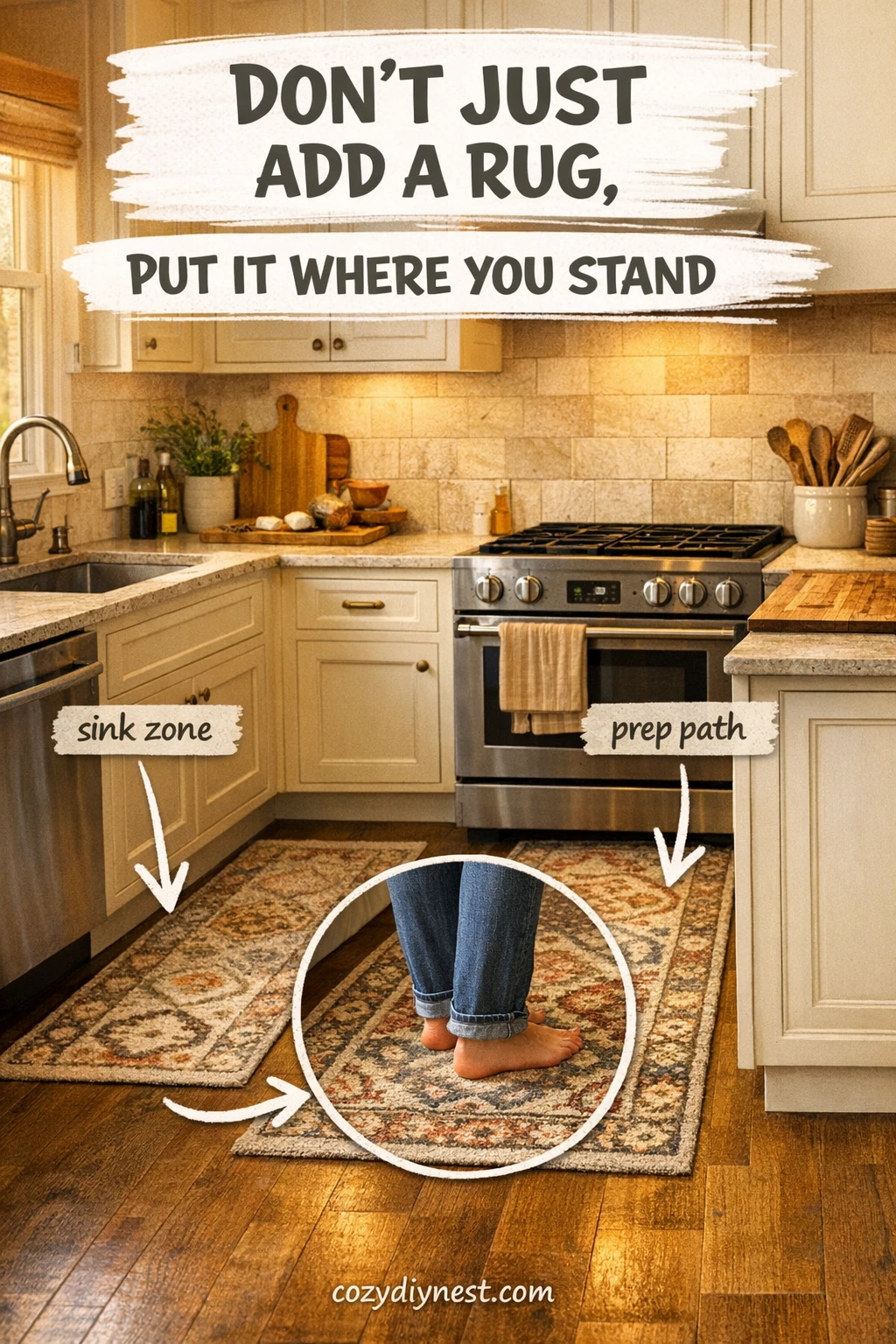
One reason runners fail in kitchens is simple: they are placed for looks instead of use. A rug can be beautiful and still do almost nothing if it misses the exact place where your body feels the kitchen most.
That is why one of the smartest kitchen runner ideas is to start with the pain zone. In most kitchens, that means the sink, the prep counter, or the stove path. Real Simple makes the case for runners because they add warmth underfoot where hard surfaces dominate, which is exactly why placement matters more than decoration first.
If you wash dishes every day in one spot or do all your prep in one narrow stretch, that is the zone the runner should serve first. The prettiest rug in the wrong location will still leave the kitchen uncomfortable.
If your feet hurt by the time dinner is done, placement is the first fix—not color.
2. Choose a Washable Patterned Runner if You Want Warmth Without Constant Stress
A lot of people avoid kitchen rugs because they imagine stains, crumbs, and spills ruining them immediately. That fear makes sense, but newer washable designs have changed the equation.
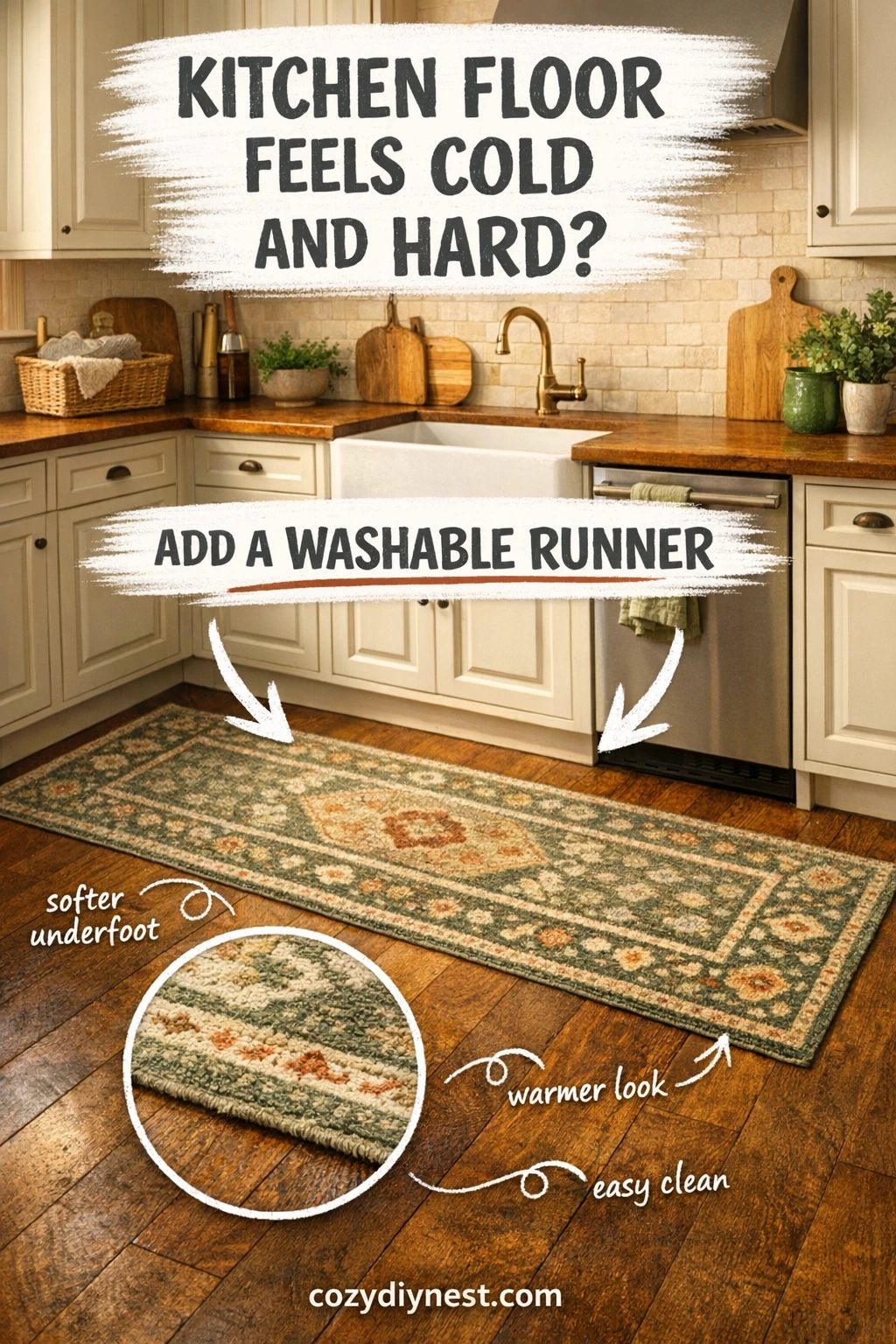
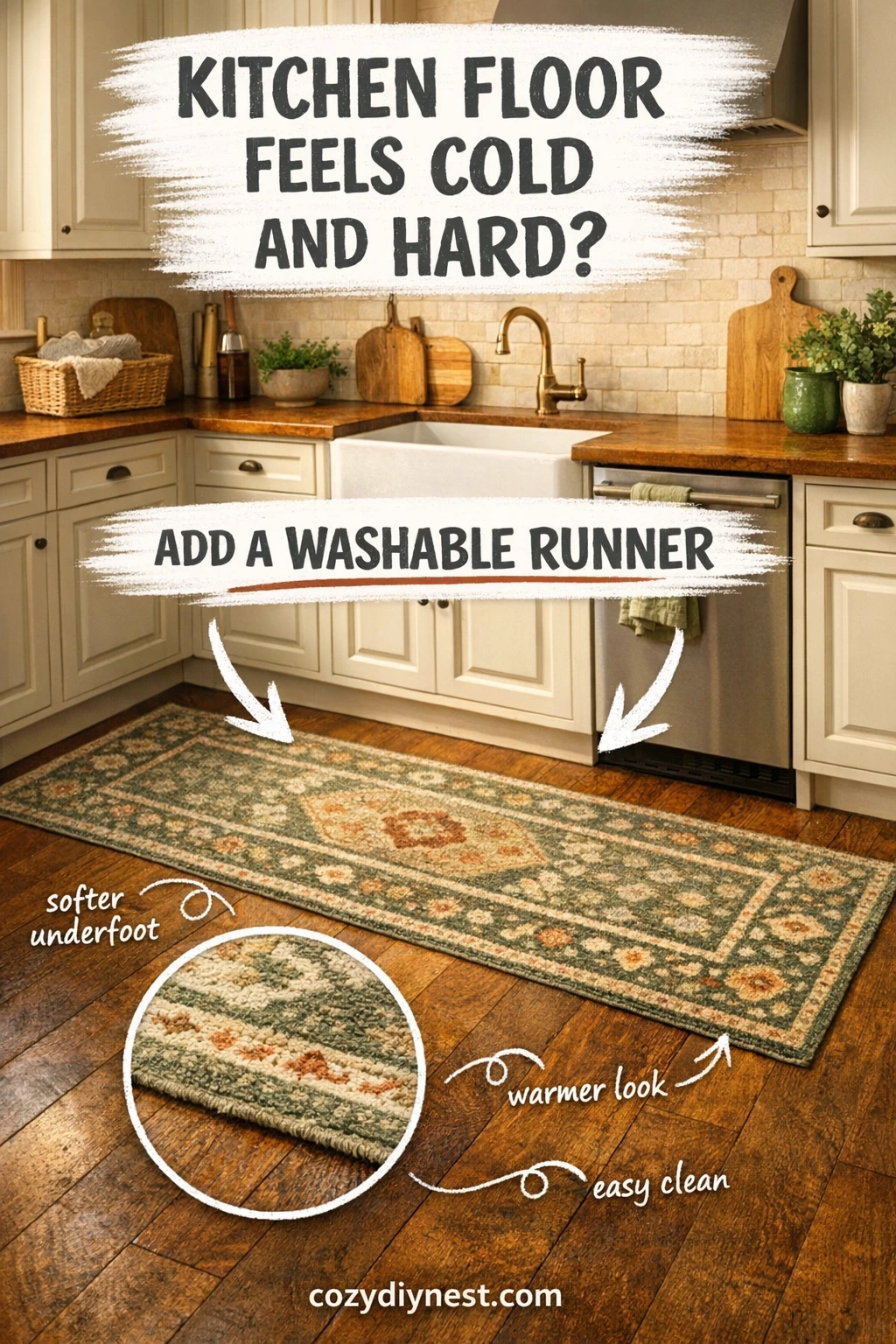
One of the most useful kitchen runner ideas is picking a washable, low-pile pattern that hides real life better. Better Homes & Gardens recommends darker or patterned options because they hide dirt and stains better than lighter rugs, and House Beautiful points to washable rugs as a major practical trend for lived-in homes.
A warm vintage-style print, muted stripe, or earthy pattern can soften a kitchen visually while also forgiving the kinds of mess real kitchens produce. That is a much smarter choice than a flat solid color that shows every crumb.
If you want a kitchen that feels softer without becoming one more thing to worry about, washable pattern is usually the sweet spot.
3. Use a Cushioned or Anti-Fatigue Runner if Standing in the Kitchen Hurts
Some kitchens are not only visually cold. They are physically punishing. Long prep sessions, dishwashing, and cooking on hard flooring can leave feet, knees, and backs more tired than they should be.
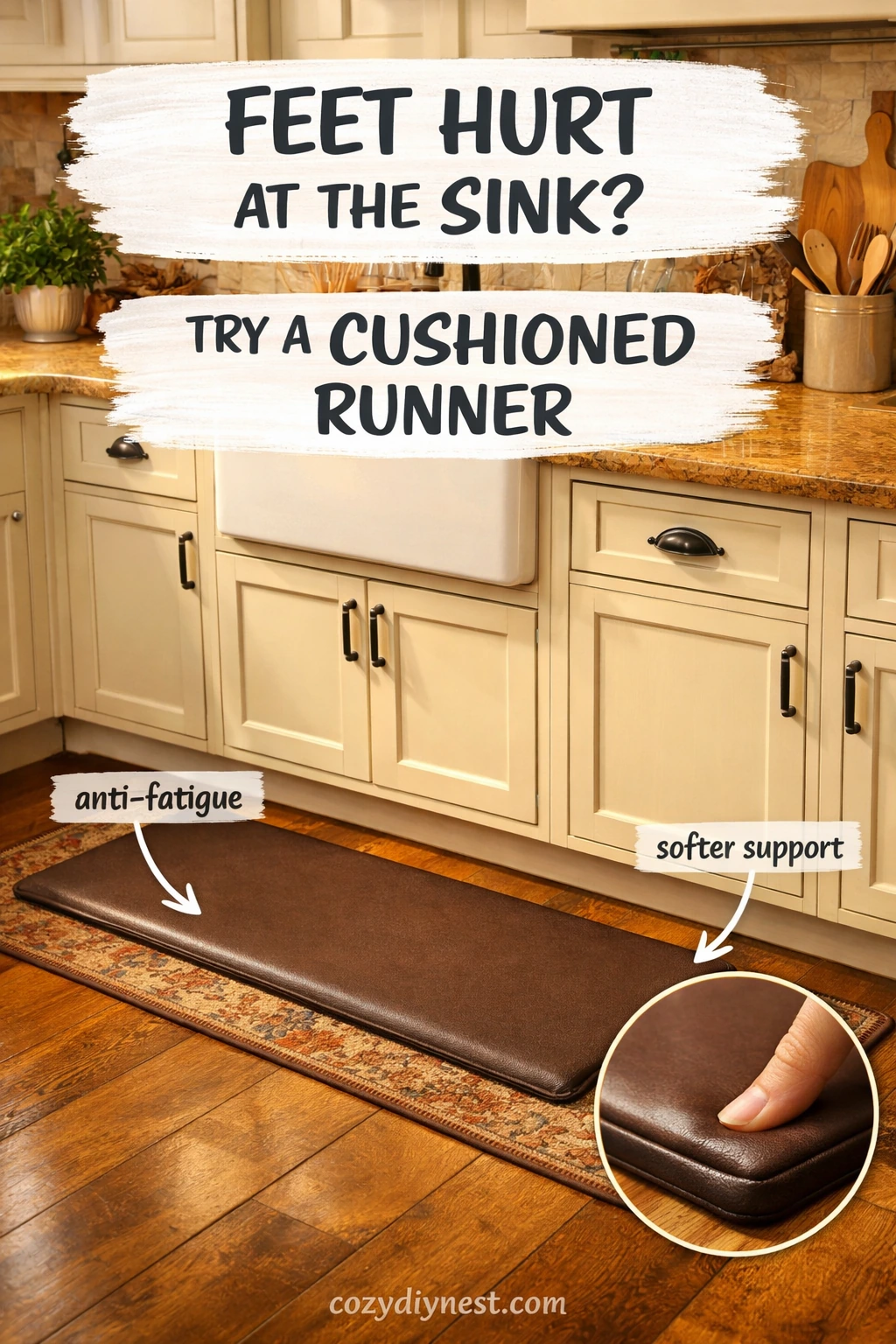
That is why one of the most practical kitchen runner ideas is choosing a cushioned runner or anti-fatigue mat that still looks good. Better Homes & Gardens tested anti-fatigue mats and notes that thicker supportive materials and non-slip backing can help reduce discomfort during long periods of standing.
This is where I like to bring in the AI-style thinking: choose the runner based on how the kitchen is used, not just how the photo looks. If the main pain is tired feet, support comes before pattern.
If the kitchen drains you physically by the end of the day, comfort underfoot is not extra. It is part of the design solution.
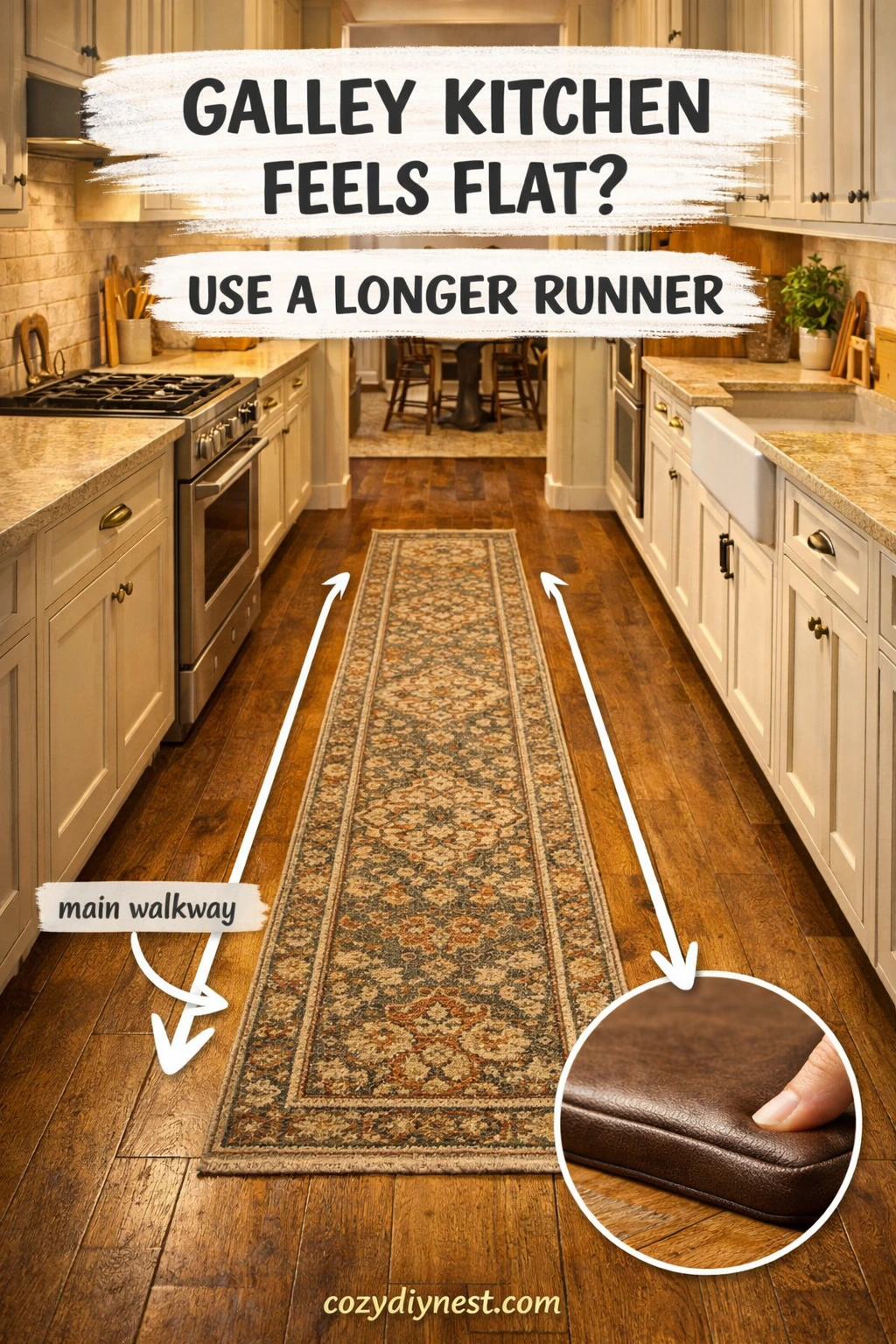
4. Use a Longer Runner in a Galley or Narrow Kitchen So the Space Feels More Finished
Narrow kitchens often feel visually chopped up because the walkway reads as one long strip of hard floor with nothing anchoring it. That can make even a nice kitchen feel flatter and less inviting than it should.
One of the strongest kitchen runner ideas for narrow layouts is using a longer runner that follows the main path. The Spruce specifically highlights runners in galley kitchens as a way to create warmth and a focal path, while Better Homes & Gardens notes that runners add color and pattern in small kitchens without taking up counter or wall space.
This works because the runner gives the eye one clear line to follow. The kitchen feels more intentional and less like a corridor of hard surfaces.
If your kitchen feels narrow, flat, or unfinished, length and scale may matter more than the rug pattern itself.
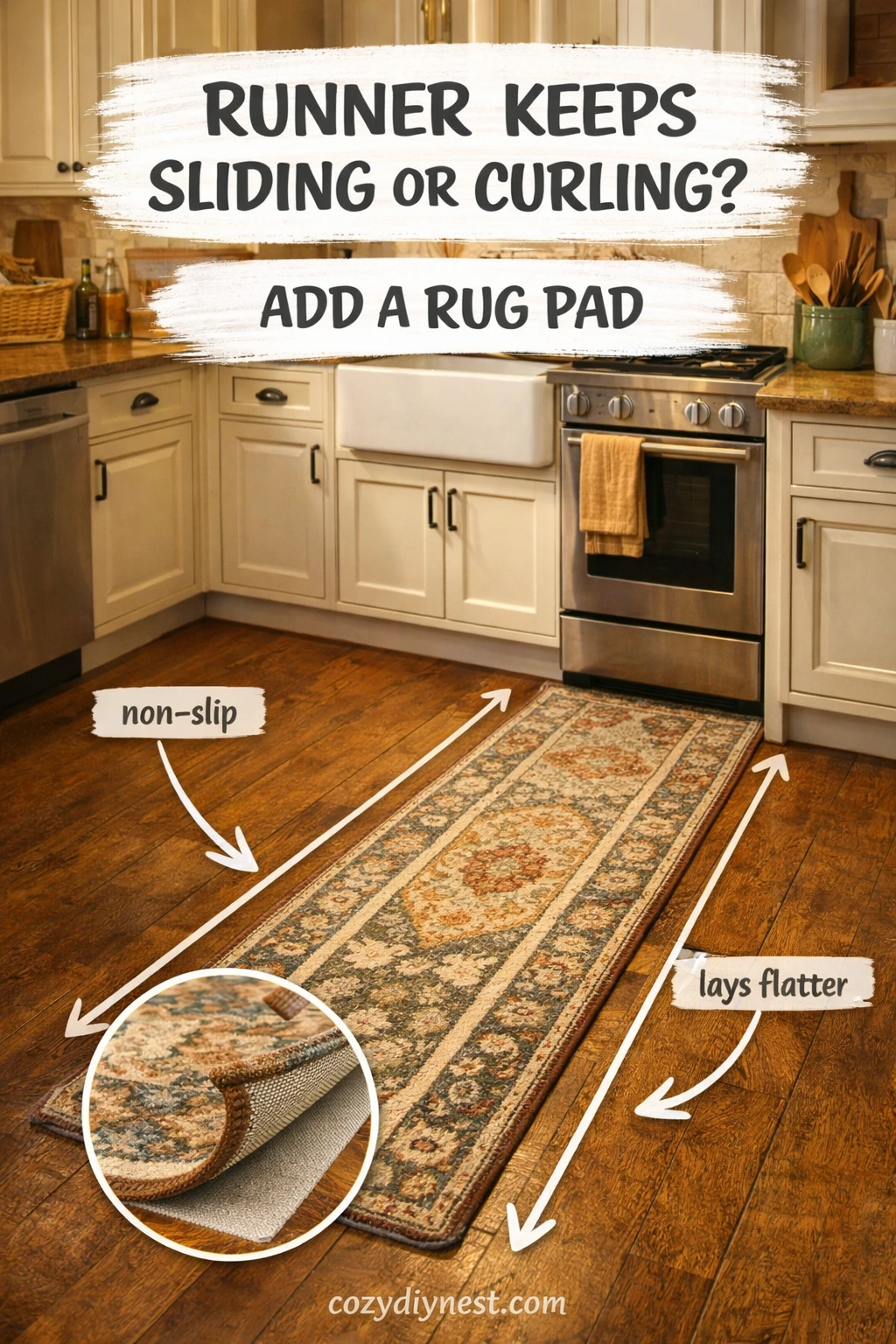
5. Add a Rug Pad if the Runner Slides, Curls, or Feels Too Thin
A kitchen runner only helps if it stays put. If it slides underfoot, curls at the corners, or feels too thin to matter, it quickly turns from a warm-up layer into an annoyance.
That is why one of the most overlooked kitchen runner ideas is using the right rug pad. The Spruce recommends grippy rug pads to reduce slipping and improve stability, and notes that pad thickness should match the rug type and traffic needs.
This is a very strong affiliate move because the rug pad often makes the difference between a runner that feels flimsy and a runner that actually improves the kitchen. It also helps with door clearance, flattening, and day-to-day safety.
If your current runner frustrates you more than it helps, the issue may not be the rug at all. It may be what is missing underneath it.
6. Use a Warm Vintage or Textured Runner if the Kitchen Still Feels Too White or Too Flat
Some kitchens technically work fine, but they still feel emotionally cold because every surface reads hard, smooth, and slightly stark. White cabinets, pale counters, and light flooring can create a space that feels clean but not grounded.
That is why one of the most effective kitchen runner ideas is using a warm vintage-style or textural runner. Better Homes & Gardens highlights vintage runners as a way to add color, personality, and comfort underfoot in white kitchens, and Real Simple notes that rugs help ground spaces that otherwise feel too hard.
If the room still feels too white, too flat, or too builder-basic, the floor may need warmth and pattern more than the upper half of the room does.
This is often the easiest way to make a plain kitchen feel more collected without repainting a single cabinet.
7. Tie the Runner Into the Room With One or Two Supporting Warm Details
A runner can look beautiful and still feel random if nothing else in the kitchen speaks the same language. That is what makes some rug updates feel pasted on instead of integrated.
That is why the last of these kitchen runner ideas is about supporting the rug with one or two warmer details. House Beautiful recommends understanding rug feel and construction so the textile fits the rest of the room, and that same logic applies here. A little wood, one soft green accent, or a coordinated warm metal detail helps the floor treatment feel intentional.
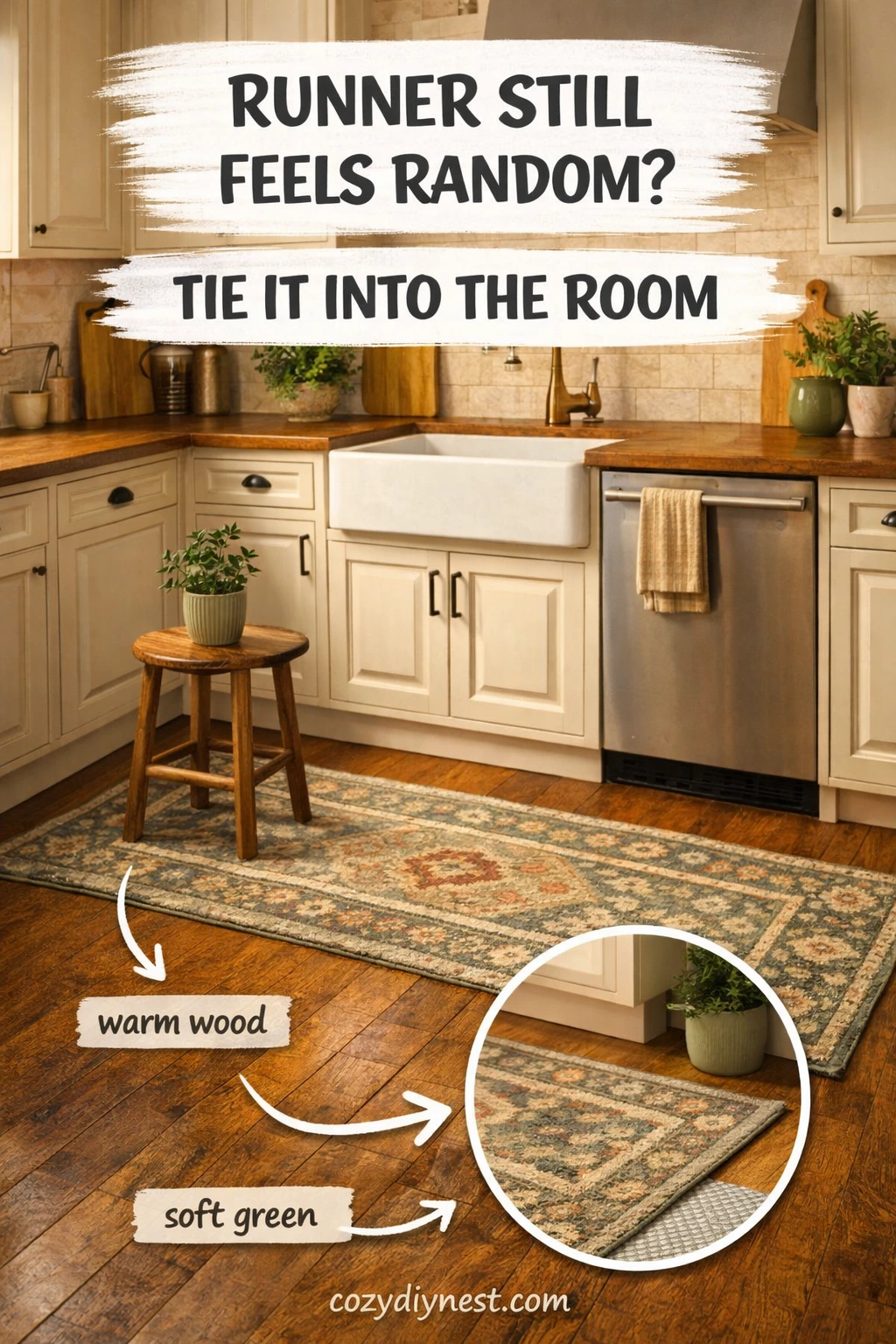
This is where the rug stops being “just a rug” and starts becoming part of a warmer kitchen story. The room feels more cohesive, not more decorated.
If your runner still feels a little random, the missing fix may be one supporting layer nearby, not a different rug.
Quick Recap
- Put the runner where you stand the longest.
- Choose a washable patterned style that hides real-life mess better.
- Use a cushioned or anti-fatigue runner if standing hurts.
- Go longer in a galley or narrow kitchen.
- Add a rug pad so the runner stays flat and secure.
- Use a warm vintage or textured style if the kitchen still feels cold.
- Tie the runner into the room with one or two warmer supporting details.
Final Thoughts
The best kitchen runner ideas do more than decorate a floor. They solve the real reason the kitchen feels too cold, too hard, too slippery, or too unfinished every day.
If your kitchen still feels uncomfortable after other updates, the missing layer may be underfoot. A washable runner, the right support, and a better pain-zone placement can make the room feel warmer and much easier to live in.
If you want your kitchen to feel softer, calmer, and more complete without a remodel, these kitchen runner ideas can do that surprisingly fast.
FAQ
What are the best kitchen runner ideas for hard floors?
The best kitchen runner ideas for hard floors usually involve washable low-pile runners, cushioned anti-fatigue styles, and rug pads that prevent slipping and improve comfort.
Do kitchen runners actually make a kitchen feel warmer?
Yes. Kitchen runners can add visual warmth, texture, and softness underfoot, especially in kitchens with lots of hard flooring and pale finishes.
What kind of kitchen runner hides crumbs and spills best?
Patterned washable runners in darker or mixed tones usually hide crumbs, splashes, and daily wear better than very light solid rugs.
Should I use a rug pad under a kitchen runner?
In most cases, yes. A rug pad helps reduce slipping, curling, and bunching while making the runner feel more stable and comfortable.