
Curtain rod width is one of the biggest reasons a window can look smaller, weaker, or more boxed in than it should. If your curtains still feel disappointing even after you upgraded the fabric, the real problem may not be the panels at all. In many American homes, the issue is the hardware: a rod that is too narrow, too cramped, or not giving the curtains enough room to work properly.
That is why the right curtain rod width matters more than most people realize. Better Homes & Gardens explains that rods should extend beyond the window frame so the curtains can move aside and help the window feel larger. The Spruce also recommends extending rods past the frame so curtains do not stay cramped over the glass. House Beautiful notes that wider rods give panels space to bank at the sides and let in more natural light.
The good news is that this fix is practical and buyable. In many real homes, the answer is not custom drapery. It is a smarter rod span, better stack-back, deeper brackets, fuller curtain panels, and more intentional placement. If you are also fixing skimpy-looking panels, read our how wide should curtains be guide. If the room also feels visually short, our how to make a room look taller article pairs naturally with this one.
1. Extend the Rod Past the Frame So the Window Stops Feeling Cramped
One of the fastest ways a window starts to feel smaller than it really is is when the rod only barely matches the frame width. That keeps the curtains crowded over the glass and makes the whole opening feel boxed in instead of generous.
This is where better curtain rod width changes the whole read of the wall. Better Homes & Gardens says the rod itself should usually be 8 to 12 inches longer than the window width, which often gives about 4 to 6 inches on each side. The Spruce gives a broader range of about 4 to 10 inches per side depending on the look you want.
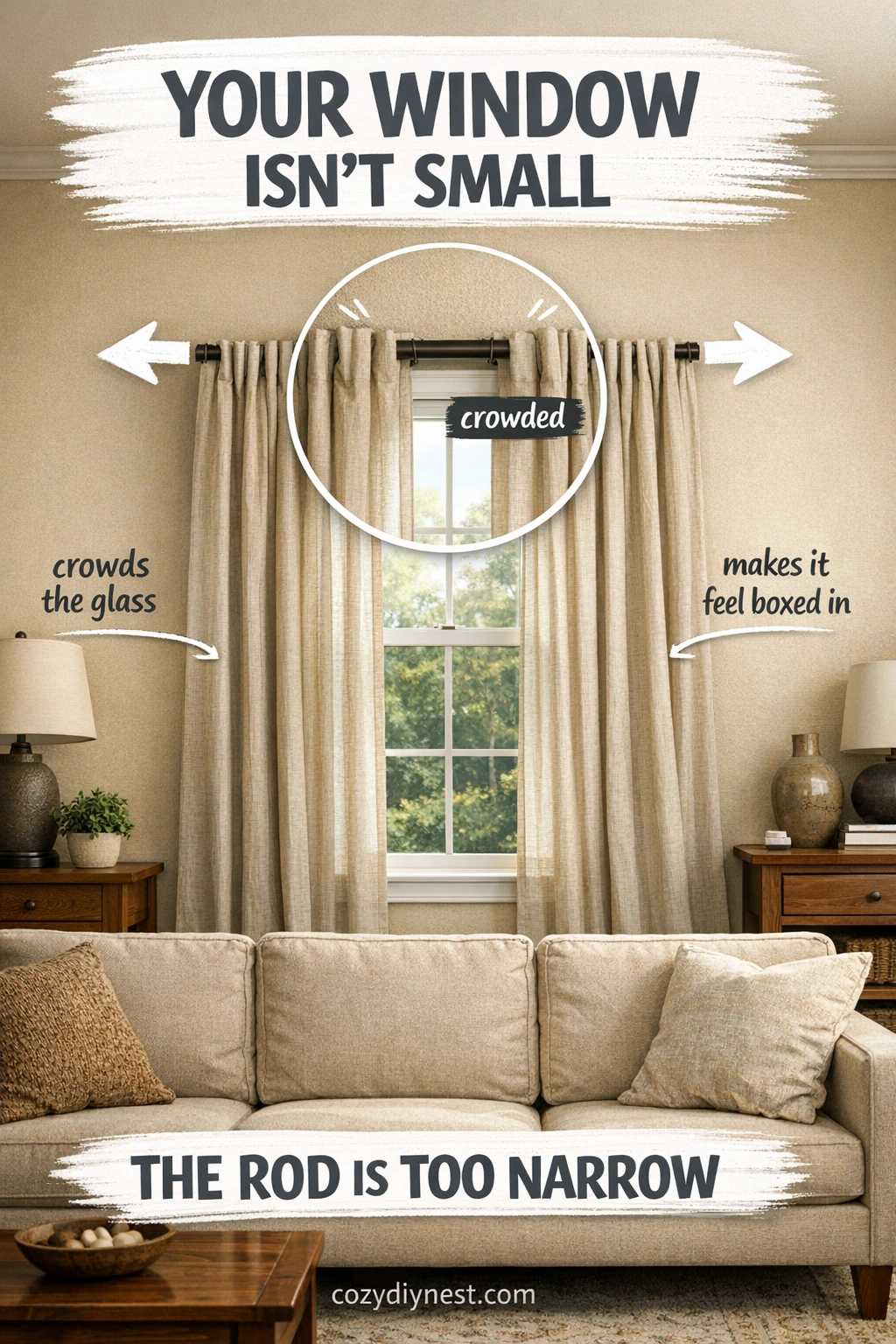
If the window still feels smaller than the wall around it, this is the first thing I would fix.
2. Let the Curtains Stack Back on the Wall Instead of Over the Glass
A wider rod matters because of what happens when the curtains are open. If the panels still sit over too much of the glass, the window keeps looking darker and tighter than it should.
What really matters here is giving the curtains enough wall space for proper stack-back. House Beautiful points out that rods should be wide enough for curtains to bank on the sides rather than keep stealing light from the glass. This one move makes the opening feel wider and more finished immediately.
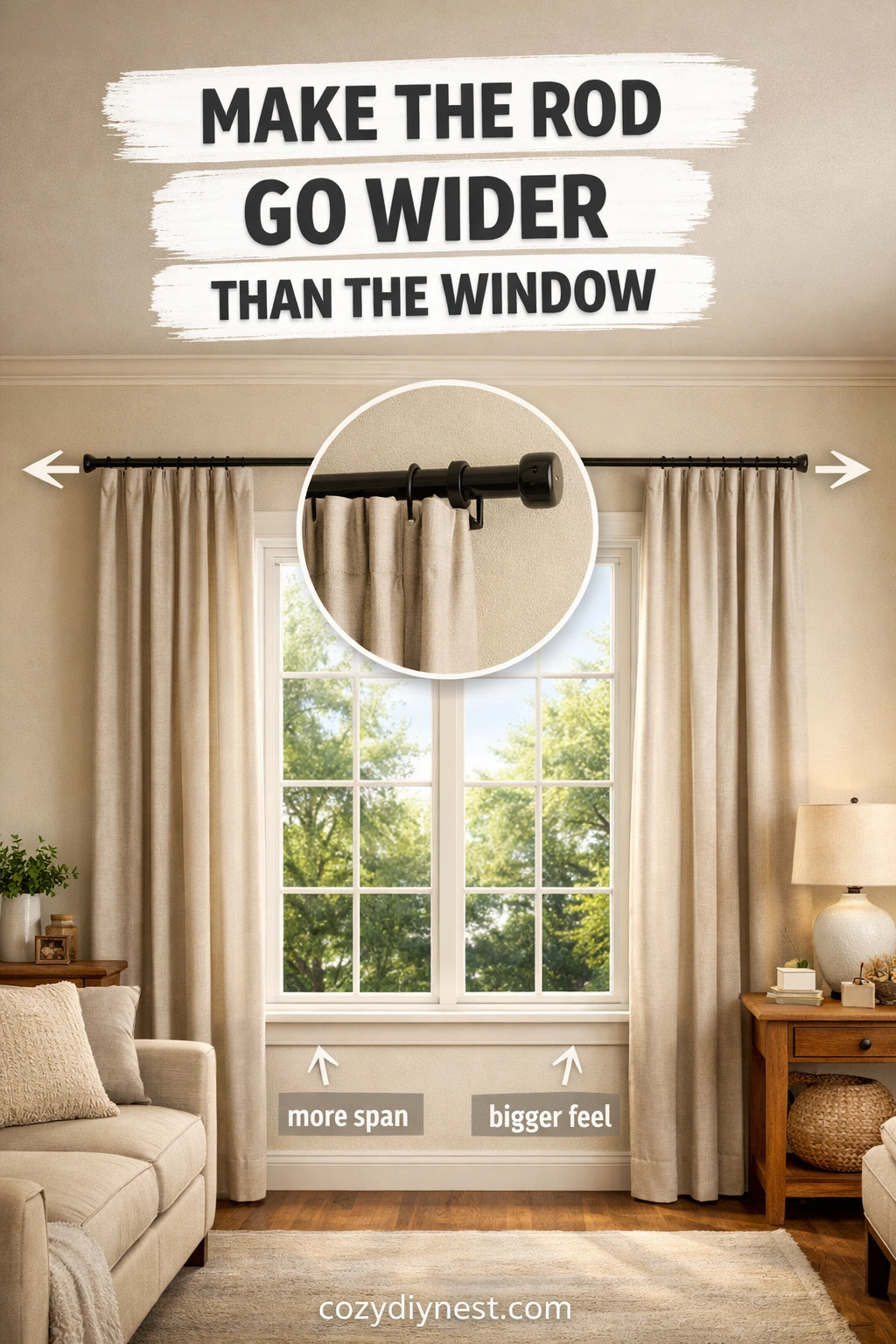
If your curtains still eat into the window when open, the treatment will keep feeling cramped no matter how nice the fabric is.
For more ideas that make a room feel brighter and less boxed in, browse our Home Lighting Ideas for a Cozy Atmosphere category.
3. Use Enough Curtain Width So the Wider Rod Actually Works
A better rod will not fully fix the window if the curtain panels are still too skinny. This is where many people improve the hardware but leave the fabric under-scaled, so the whole treatment still feels weak.
The wider setup only works well when the curtains themselves have enough total fullness to support it. The Spruce says the combined panel width should usually be at least double the window width for a full look. Real Simple reinforces that wider, fuller curtains help the bigger-window trick work much better.
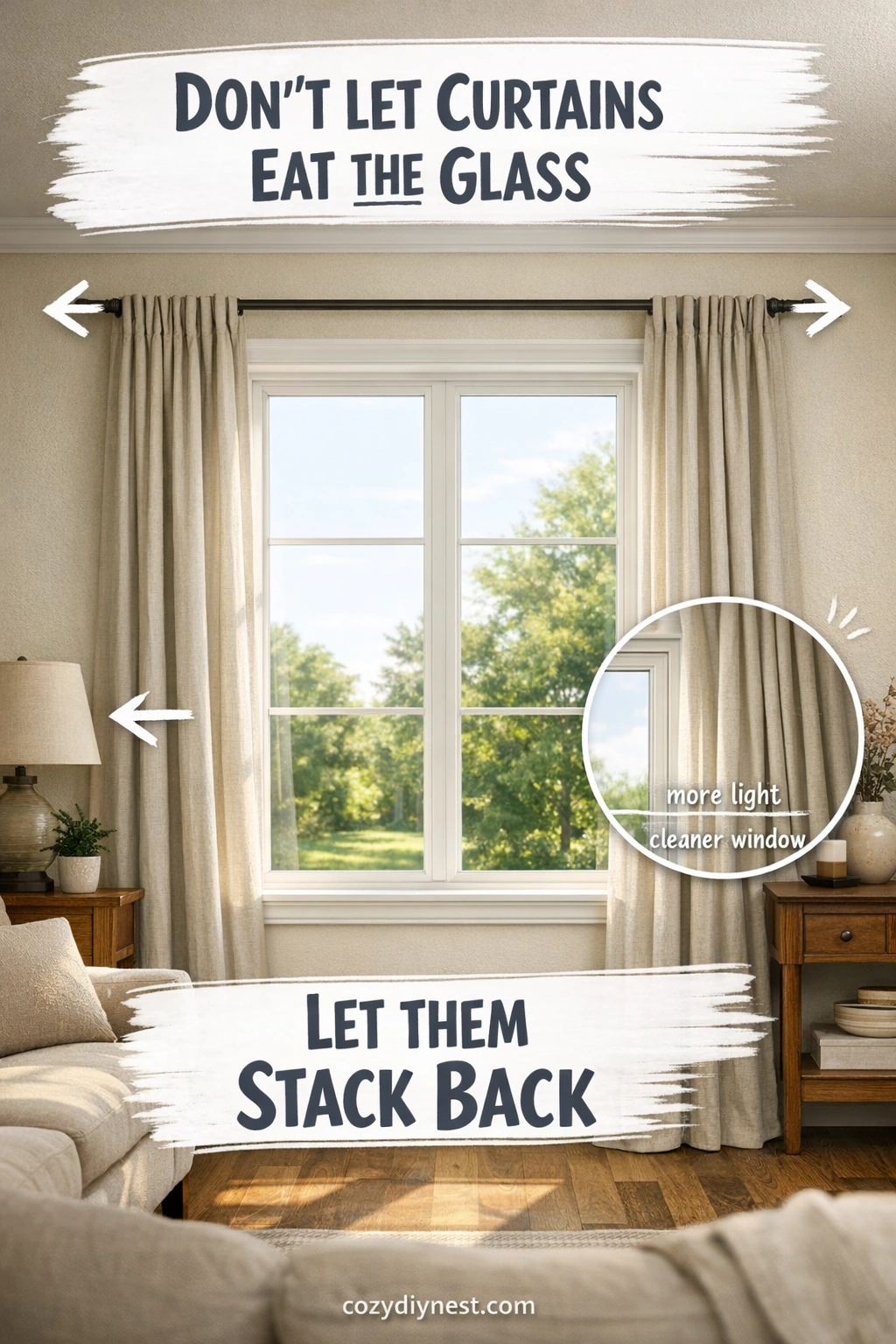
If the rod is wider but the curtains still look weak, the next fix is almost always more fabric width.
This article pairs especially well with our how wide should curtains be guide because the two fixes work together in real rooms.
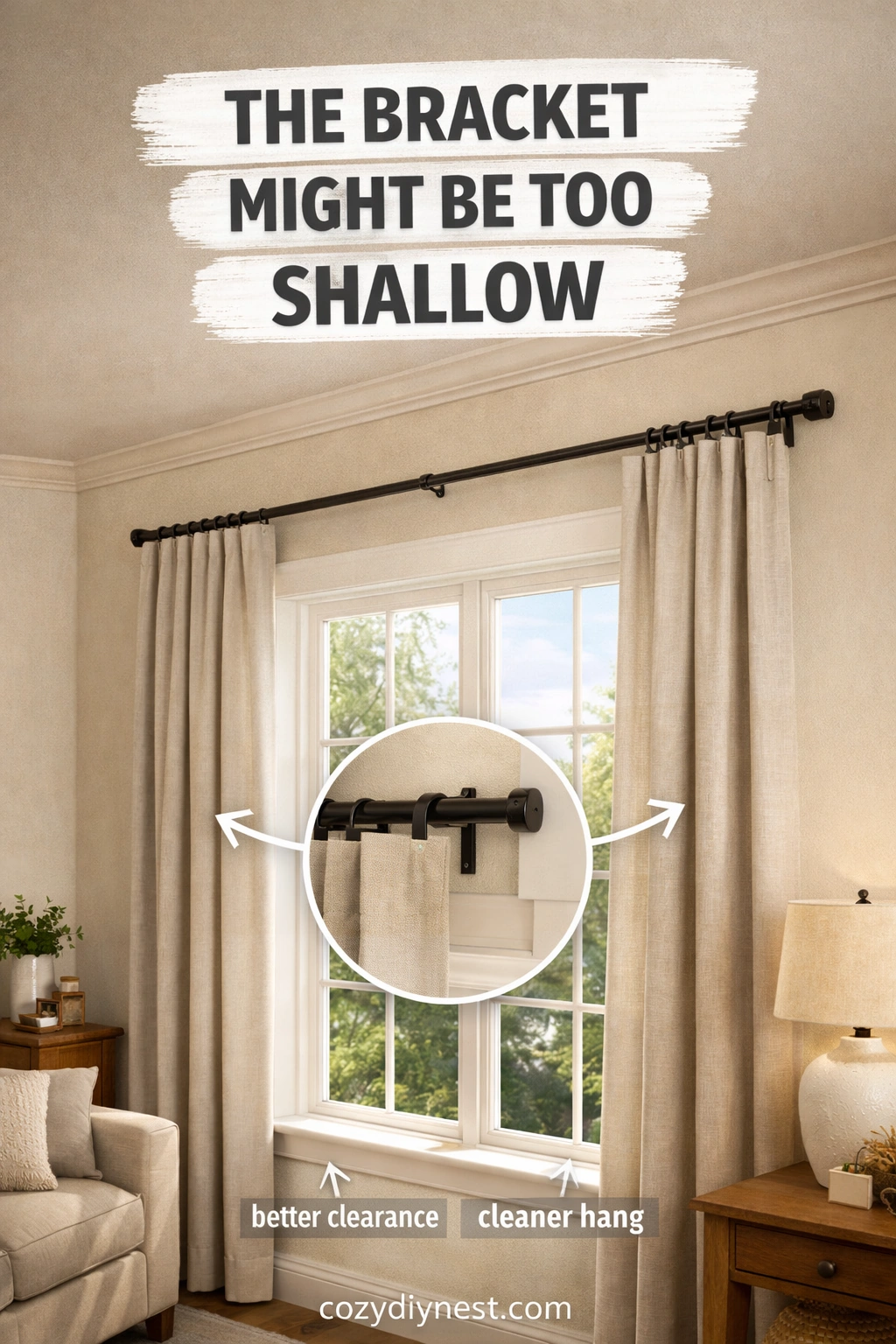
4. Use Deeper Brackets if the Curtains Are Fighting the Trim or Blinds
Sometimes the rod span is technically better, but the curtains still hang awkwardly because the brackets are too shallow. The fabric then gets pushed into deep trim, blinds, or molding instead of hanging forward cleanly.
Better Homes & Gardens notes that bracket depth matters because shallow brackets can keep curtains from hanging properly when trim projects outward. This is an under-discussed hardware problem that can make the whole treatment look cheaper and more awkward.
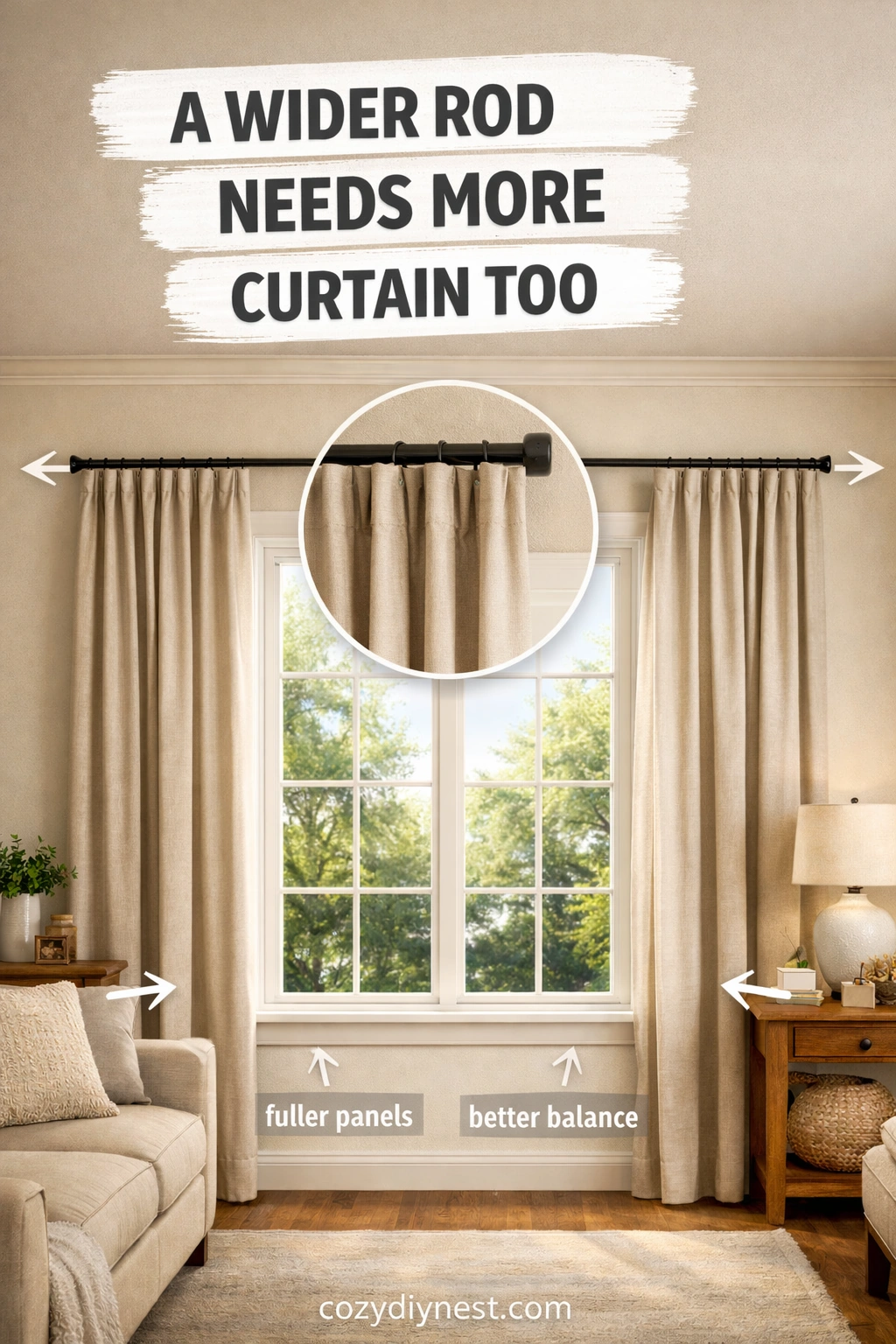
If the curtains feel trapped against the window, the issue may be bracket depth rather than rod span.
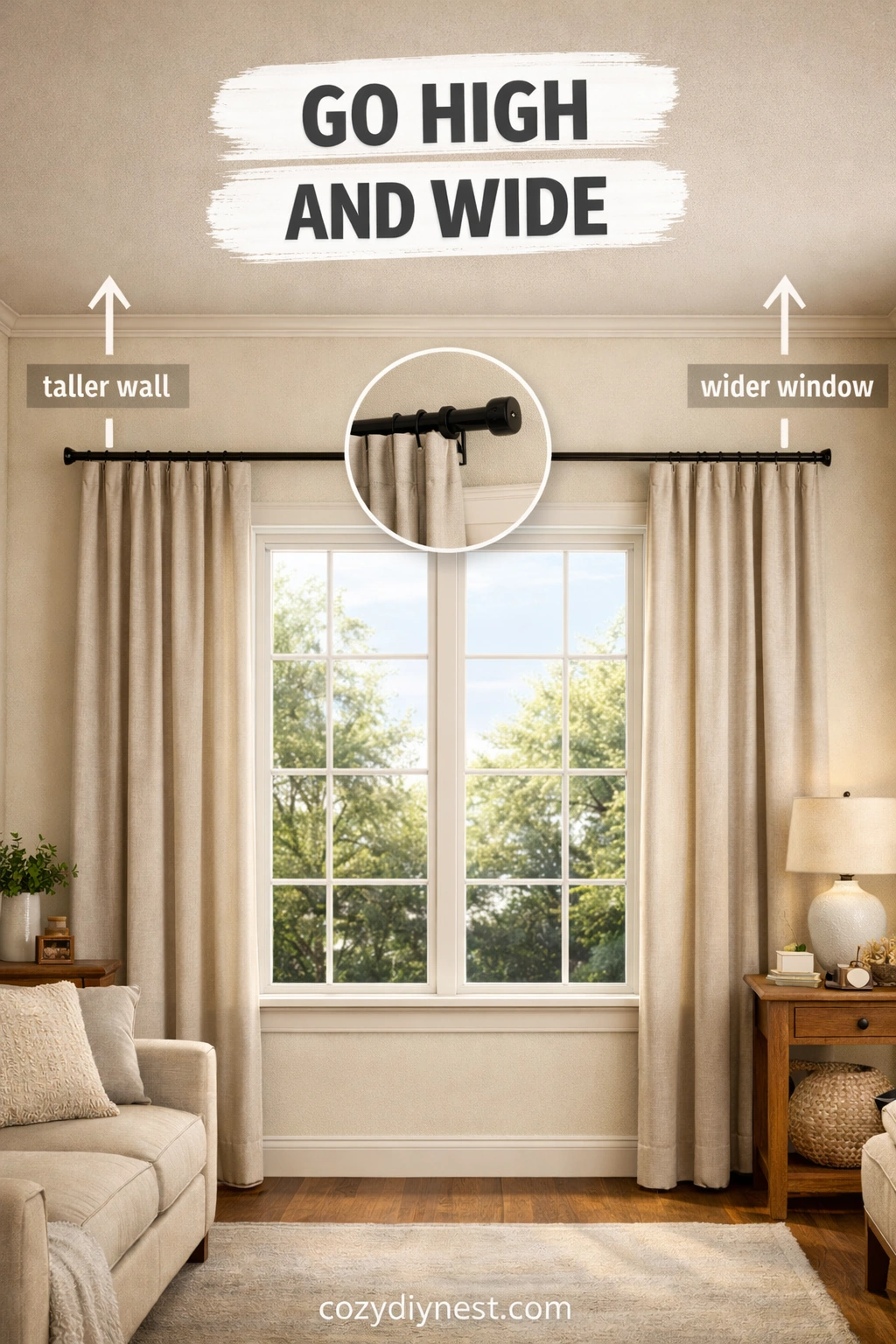
5. Go High and Wide Together for a Bigger Visual Shift
Going wider helps the window look larger, but going high and wide together usually changes the whole wall. A wider rod improves the opening, while higher placement helps the wall feel taller and more architectural.
If you are already improving the hardware, it makes sense to look at height too. Real Simple says higher rod placement helps ceilings feel taller, while wider placement makes windows seem larger. Put together, the effect is much stronger than either fix on its own.
If the whole window still feels weak, the issue may not be one dimension. It may be both height and width together.
This also pairs naturally with our how to make a room look taller guide.
6. Use One Longer Rod Across Grouped Windows if the Wall Feels Choppy
When multiple windows are treated too literally, the wall can feel visually chopped up. Each opening may be fine on its own, but the full wall loses calm and scale.
Better Homes & Gardens notes that mounting one longer rod above a row of windows can visually stretch the treatment across them and create a more seamless look. This is especially helpful when the wall deserves more visual weight than individual narrow treatments are giving it.
If the wall still feels broken up and weak, one longer rod can be much stronger than treating each window too narrowly.
7. Use Better Ready-Made Rods and Extension Kits Instead of Settling for Cramped Hardware
Many people leave a bad rod in place because they assume fixing it requires expensive custom work. In reality, many of the best fixes are simple ready-made hardware upgrades.
If you want a practical fix, start with what is already available in the market: longer adjustable rods, extension kits, deeper brackets, better rings, and support brackets for wider spans. Better Homes & Gardens has tested popular curtain brands from mainstream retailers, which is a good reminder that practical U.S.-market solutions are already out there.
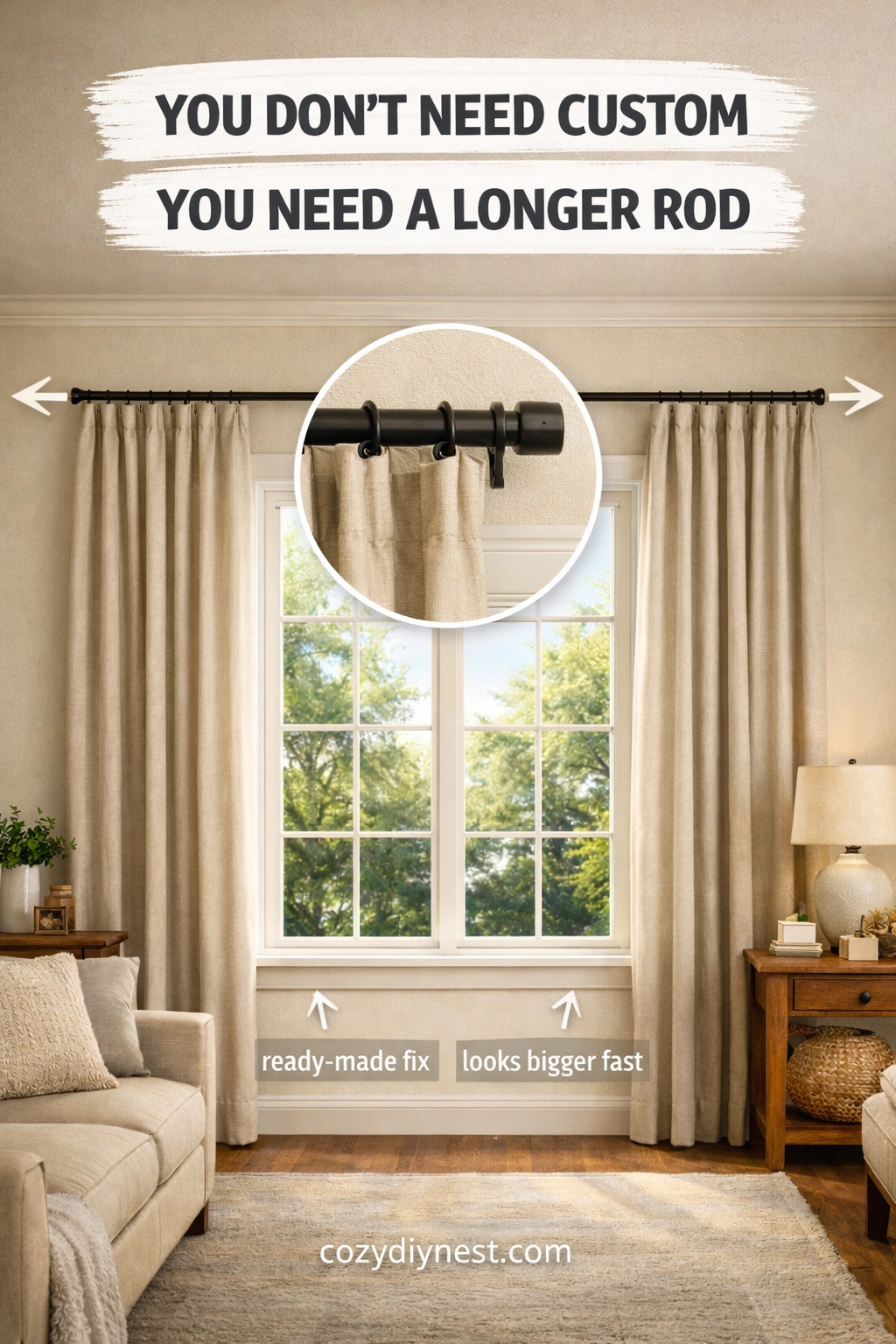
You do not need couture drapery to solve this. You need a rod that actually serves the window.
Quick Recap
- Extend the rod past the frame so the window stops feeling cramped.
- Let the curtains stack back on the wall instead of over the glass.
- Use enough curtain width so the wider rod actually works.
- Use deeper brackets if trim or blinds are fighting the curtains.
- Go high and wide together for a stronger effect.
- Use one longer rod across grouped windows if the wall feels chopped up.
- Choose better ready-made rods and extensions instead of settling for cramped hardware.
Final Thoughts
If your window still feels small, weak, or boxed in, the curtain fabric may not be the real problem. In many homes, the real issue is the hardware: how wide it spans, how the curtains sit when open, and whether the rod gives the treatment enough room to work.
That is why curtain rod width matters so much. A better rod span, better stack-back, better bracket depth, and fuller curtain panels can make the window feel larger and more finished without changing the actual glass.
If the window still feels disappointing after other upgrades, these rod fixes can change the whole read of the room much faster than you think.
FAQ
What curtain rod width works best for a window?
In many setups, the best curtain rod width means extending the rod several inches beyond each side of the frame so the curtains can sit off the glass instead of crowding it.
Why does my window still look small with curtains?
Often the issue is not the glass itself but a rod that is too narrow, curtains that cover too much of the window when open, or panels that do not have enough fullness.
Can a wider curtain rod really make a window look bigger?
Yes. A wider rod lets the curtains stack farther onto the wall, exposes more glass, and helps the whole window feel more expansive.
Do I need custom curtains to fix a narrow rod problem?
No. Many narrow-rod problems can be improved with longer ready-made rods, extension kits, deeper brackets, wider panels, and better placement.