
Layered window treatments are one of the smartest ways to fix a room that still feels bare, exposed, or unfinished even after you add curtains. If your window treatment looks weak, flat, or like it is not solving the light and privacy problem well enough, the issue may not be the fabric itself. In many American homes, the real problem is that one single curtain layer is trying to do too many jobs at once.
That is exactly why layering keeps showing up in current American design advice. Better Homes & Gardens says statement drapery and warm-toned hardware are making a comeback in 2026, House Beautiful highlights sheer accents and varied treatment combinations, Real Simple recommends pairing sheers with shades or blinds when a single window treatment is not doing enough, and The Spruce says drapery layered over sheers or woven shades continues to grow because it adds functionality and dimension.
The good news is that layered window treatments do not have to mean complicated custom work. Many of the strongest fixes are practical and buyable: double curtain rods, sheer panels, room-darkening shades, woven shades, and better hardware. Once the window has more than one job-specific layer, the room starts to feel softer, more complete, and much more intentional.
If you are building this cluster in order, this article pairs naturally with our how wide should curtains be guide and our how to make a room look taller article because all three solve the same “why does this window still feel wrong?” problem from different angles.
1. Add a Sheer Inner Layer if the Window Still Feels Bare During the Day
One of the biggest signs a window treatment is not finished is when the room still feels exposed and visually flat during the day. A single outer curtain layer often leaves too much empty glass and does not soften the light enough to make the room feel calm.
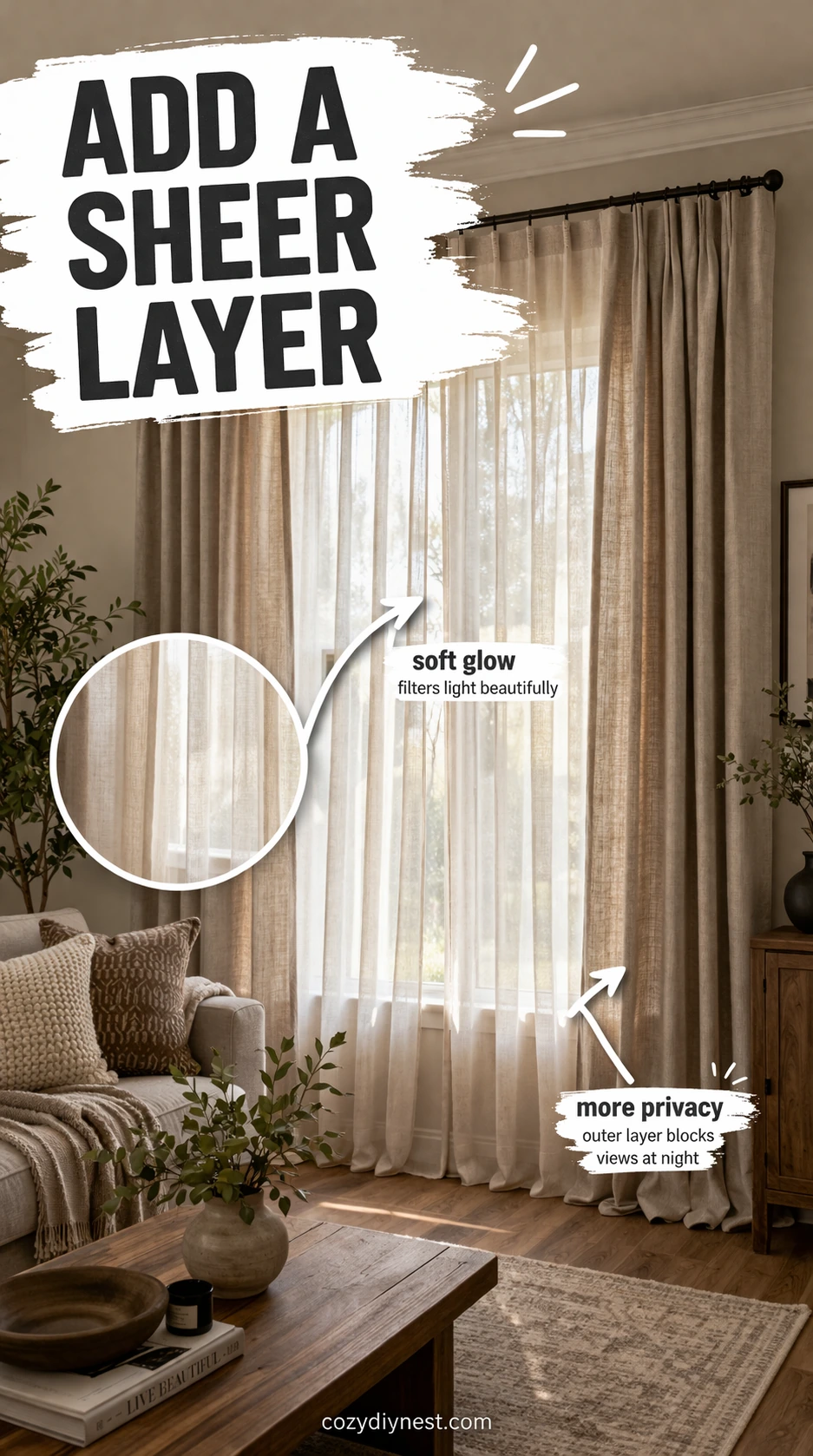
This is where layered window treatments become much more effective. A soft sheer inner layer filters daylight, adds a veil of privacy, and makes the whole window feel less stark. It also helps the outer drapes stop doing all the visual work alone.
Real Simple specifically recommends semi-sheer curtains layered with blackout shades or other treatments when you need both softness and privacy.
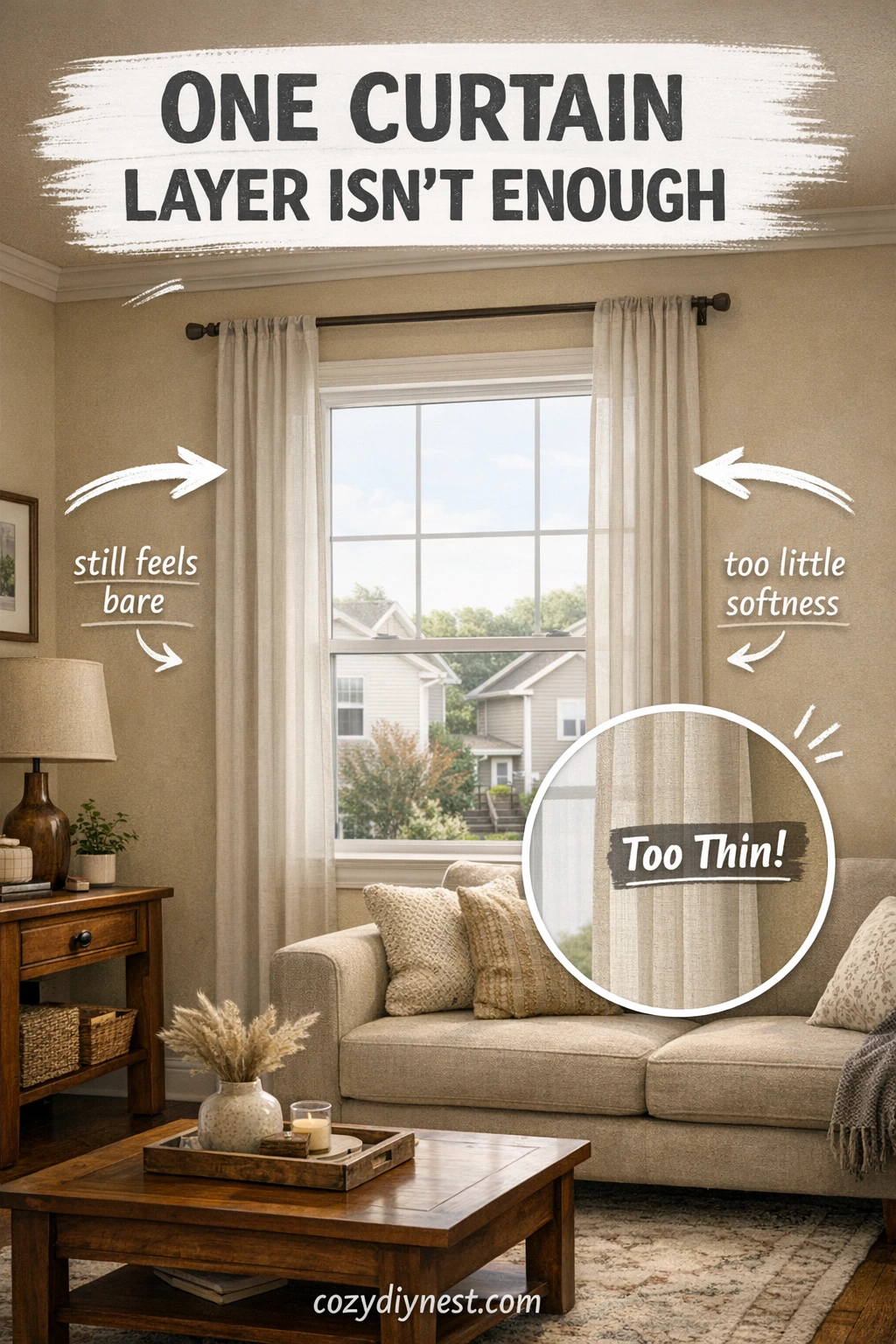
If your window looks uncovered even though curtains are technically there, a sheer inner layer is often the fastest fix.
2. Use a Double Curtain Rod So the Layers Actually Work Together
Layering can look messy or improvised if the hardware is wrong. That is one reason many people try to fake a layered look and end up with treatments that feel awkward instead of intentional.
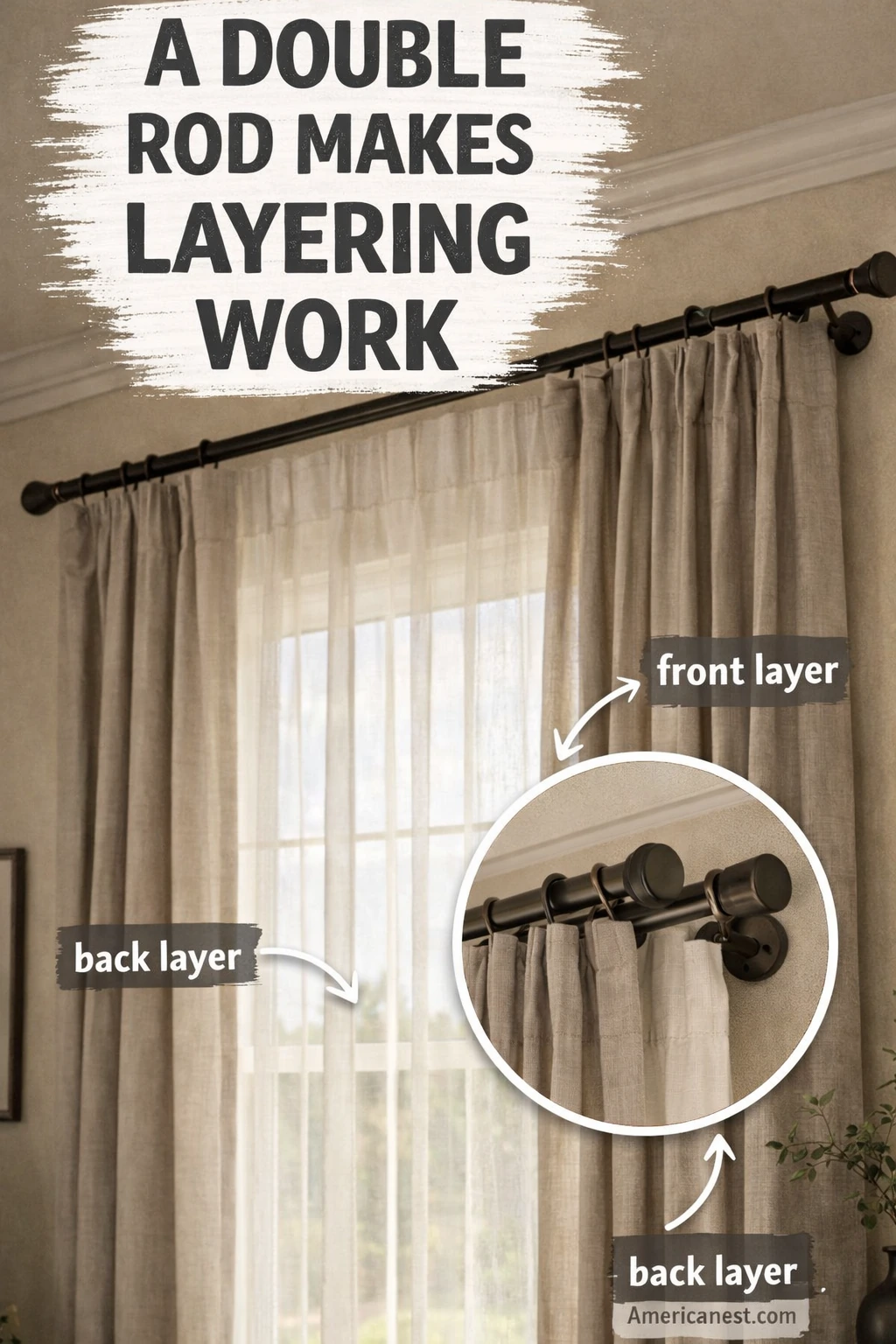
One of the smartest layered window treatments upgrades is using a double curtain rod. It separates the sheer layer from the outer drape, makes each layer easier to open and close, and gives the whole setup a cleaner, more professional structure.
Real Simple notes that a double rod is a practical solution when you want both lighter and heavier layers on the same window. This is also one of the easiest U.S.-market fixes because double rods are widely available across price points.
If you want the layered look to feel deliberate instead of improvised, the hardware matters as much as the fabric.
3. Pair Curtains With a Woven Shade if the Window Still Feels Flat
Some rooms do not need more fabric alone. They need more depth. If drapes by themselves still leave the window feeling flat, adding a second treatment close to the glass can solve the problem faster than replacing the curtains.
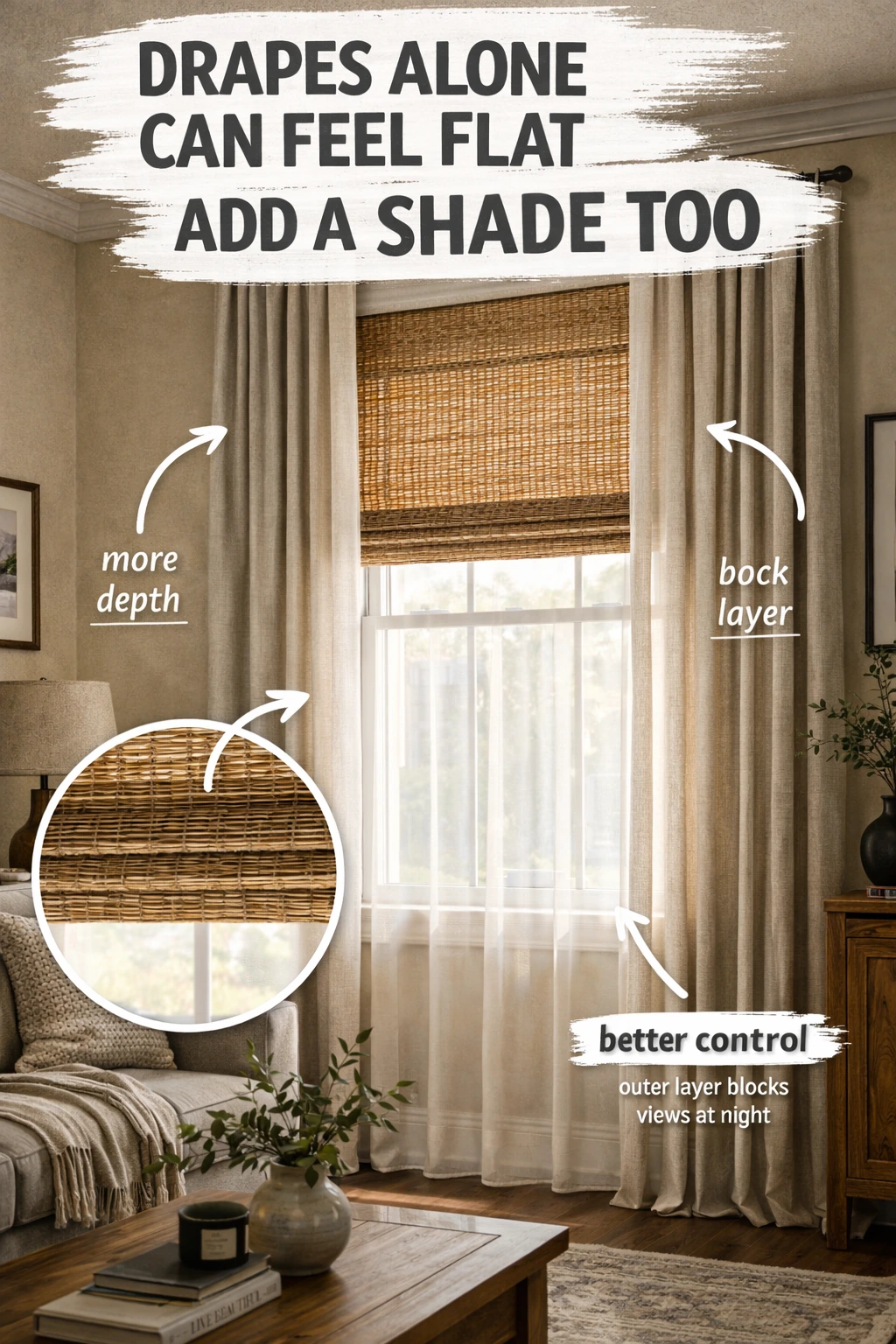
This is one of the strongest layered window treatments combinations because a woven shade or Roman shade adds texture, control, and a more finished visual base. The drapes then work as the outer softness, not the whole system by themselves.
The Spruce says pairing sheer panels with blackout curtains or adding woven shades underneath drapes adds texture and dimension to windows.
If your window still feels one-note after adding curtains, texture is often the missing layer.
This also works especially well in homes that need warmer natural materials. If the room still feels hard overall, visit our Seasonal Home Decor & Refresh Ideas category for more softening layers.
4. Layer for Privacy and Light at the Same Time Instead of Choosing One or the Other
A lot of windows feel wrong because the treatment forces a bad tradeoff. Either the room gets daylight but feels exposed, or it gets privacy but feels dark and boxed in. That is one of the most common reasons one curtain layer disappoints people.
One of the most practical uses of layered window treatments is solving privacy and light together. A semi-sheer inner layer can soften the view in daytime, while fuller outer drapes frame the window and add visual weight. That makes the window feel more useful all day, not just prettier in photos.
Real Simple notes that curtains, blinds, or shades help control natural light and privacy, and layered treatments are one of the cleanest ways to get both without sacrificing comfort.
If your window still feels too exposed by day or too closed-off at night, this is the system fix rather than a single-product fix.
5. Add a Room-Darkening or Blackout Layer if Pretty Curtains Stop Working After Sunset
Decorative curtains can look good and still fail functionally. That is a real pain point in American homes, especially in bedrooms, street-facing rooms, or spaces that need temperature help and more evening privacy.
This is why layered window treatments become especially useful after dark. A hidden blackout or room-darkening shade behind the decorative drapes gives you control without forcing the outer layer to become bulky or overly functional on its own.
The Spruce says the best blackout curtains use thick, substantial material and can provide perks like insulation and noise dimming. But a layered system often lets you keep a prettier outer look while adding function where you actually need it.
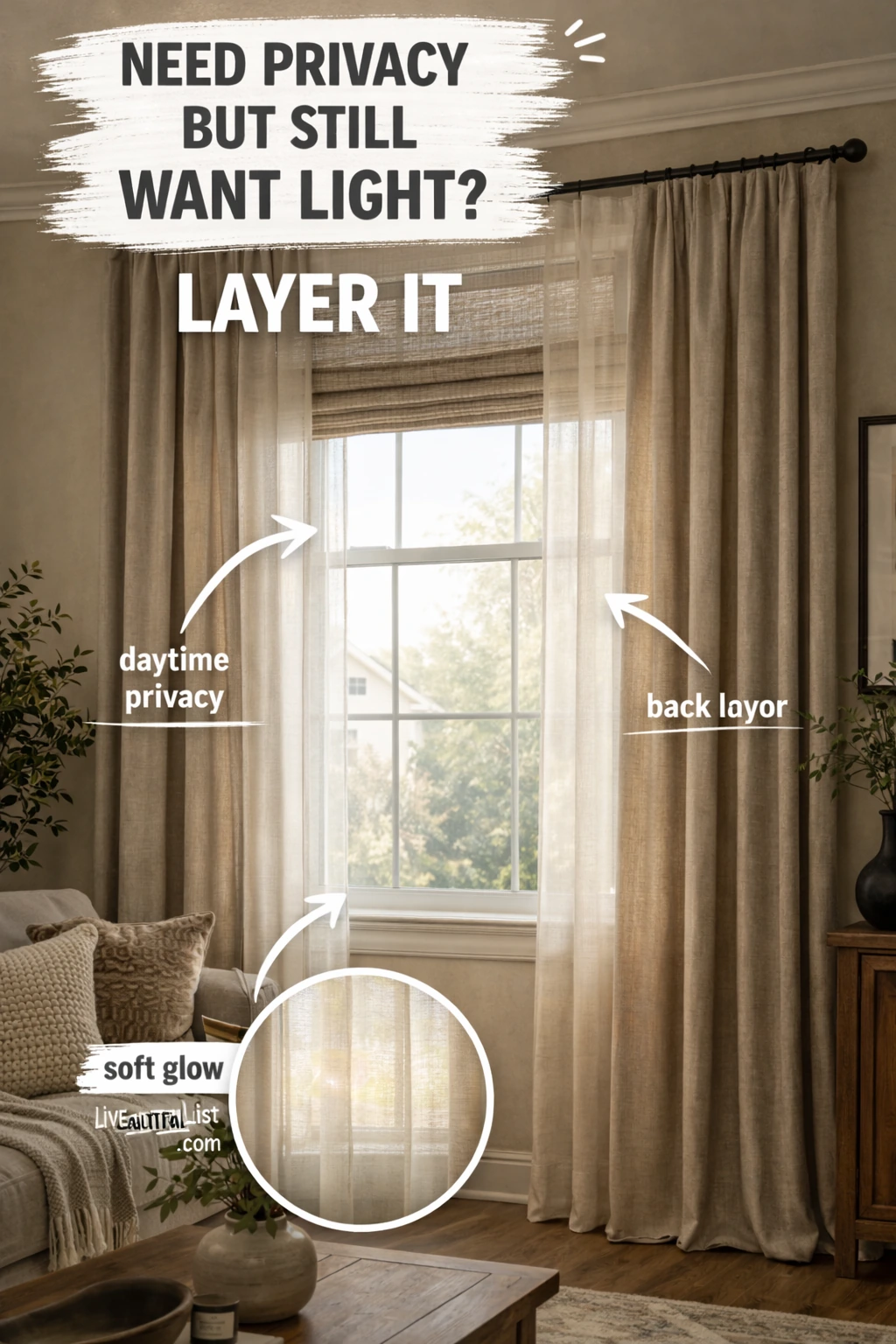
If your curtains stop being useful after sunset, it does not mean the whole window treatment is wrong. It may just be missing a functional second layer.
6. Use Better Hardware So the Layered Window Feels Custom, Not Crowded
Some layered windows still feel messy because the hardware makes everything look heavier or cheaper than it should. Good layering needs structure. Without it, even premium fabrics can lose clarity.
One of the most overlooked parts of layered window treatments is using better hardware: a double rod with correct spacing, warmer metal tones, clean finials, and brackets that keep the layers from fighting each other. Good hardware makes the layers read as intentional, not accidental.
Better Homes & Gardens says warm-toned hardware is back in 2026, which fits perfectly with layered treatments that need more polish and less visual friction.
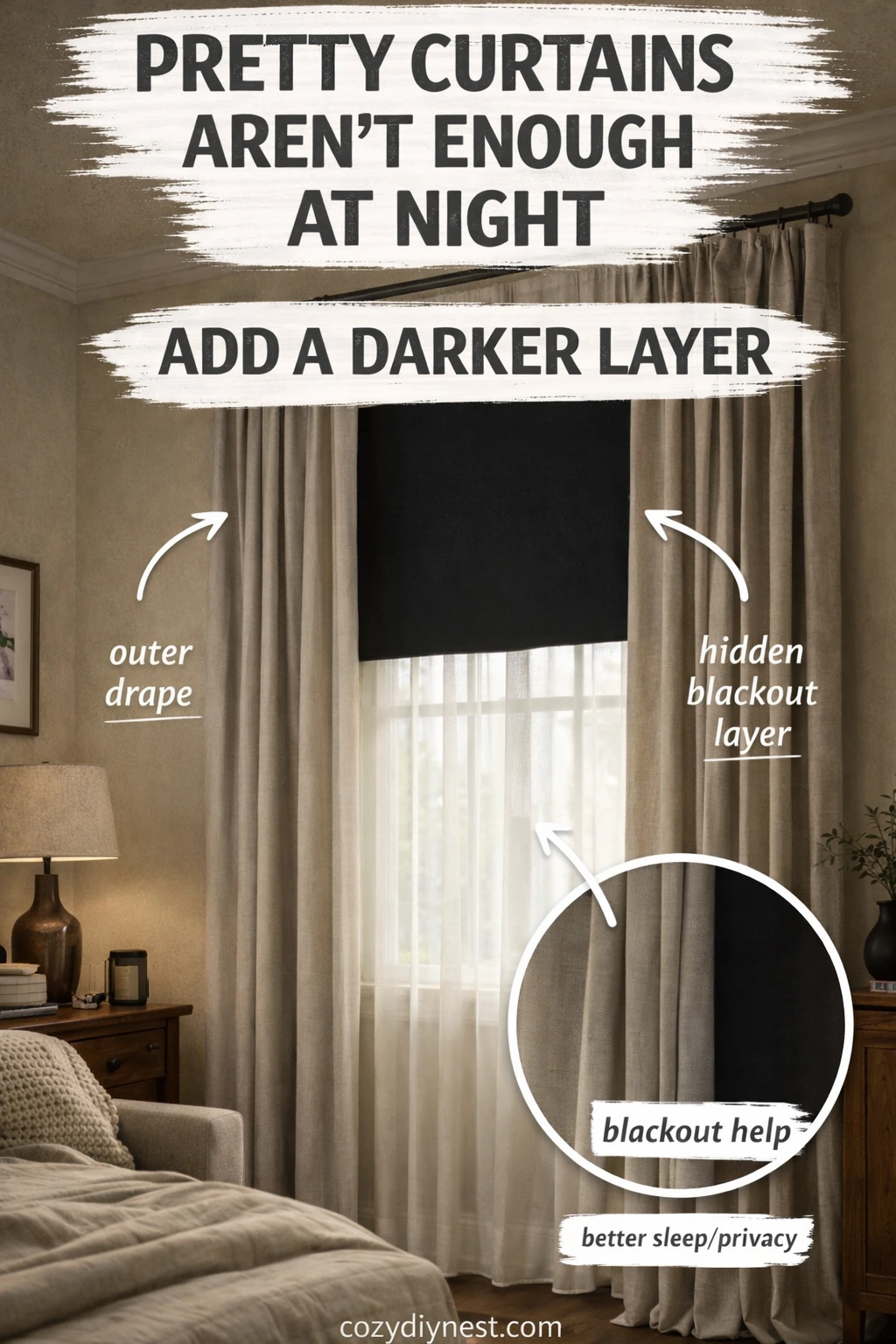
If your window treatment feels busy instead of elegant, the hardware may be the reason the layers are not reading correctly.
This is the same kind of quiet fix that also helps rooms feel less visually harsh, just like the ideas in our Home Lighting Ideas for a Cozy Atmosphere category.
7. Build the Window Like a System, Not One Pretty Product
The reason one curtain layer fails so often is that people buy one pretty product and expect it to solve everything. But real windows usually need multiple jobs done at once: privacy, softness, light control, warmth, visual finish, and sometimes darkness too.
That is why the smartest approach to layered window treatments is to think in layers by job. Let one layer filter light. Let another add softness. Let another provide darkness or privacy when needed. That is the AI-style move here: stop asking one layer to do three jobs badly, and build a system where each layer has a role.
House Beautiful shows a wide mix of curtains, sheers, shades, blinds, and combinations because different rooms need different treatment systems, not one universal formula.
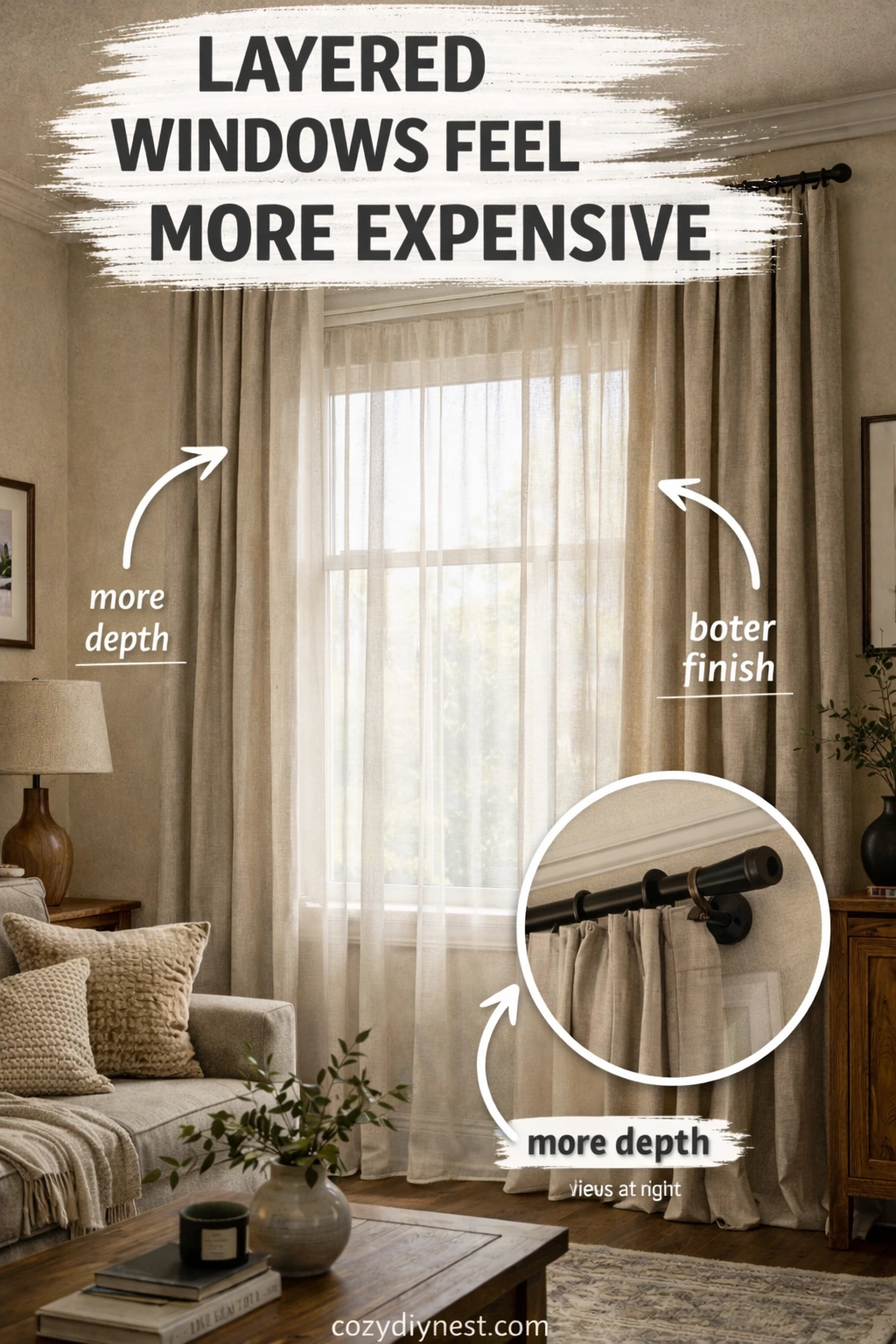
If your window still feels underdressed after a lot of trial and error, the issue may not be taste. It may be that the setup was never designed as a system in the first place.
Quick Recap
- Add a sheer inner layer if the window still feels bare.
- Use a double curtain rod so the layers work together properly.
- Pair curtains with a woven shade if the window still feels flat.
- Use layering to solve privacy and daylight at the same time.
- Add a room-darkening or blackout layer if needed after sunset.
- Use better hardware so the layered setup feels custom, not crowded.
- Build the window like a system instead of one pretty product.
Final Thoughts
If your window still feels bare, weak, or unfinished, the problem may not be the curtain fabric at all. In many homes, the real issue is that one single layer is being asked to solve too much.
That is why layered window treatments are such a strong fix. The right combination of sheers, drapes, shades, and hardware gives the room more softness, more function, and a much more complete visual finish.
If your curtains still feel like they are not doing enough, these layered window treatment fixes can change that much faster than replacing everything blindly.
FAQ
What are layered window treatments?
Layered window treatments combine more than one type of window covering—such as sheers, drapes, shades, or blackout layers—so the window can handle privacy, light control, and softness more effectively.
Why do my curtains still feel bare?
Many curtains still feel bare because one single layer is trying to do too much. Adding a second layer often solves the missing softness, privacy, or depth.
Do layered window treatments work in small rooms?
Yes. When done cleanly, layered window treatments can make small rooms feel softer and more complete without necessarily making them feel crowded.
What is the easiest way to layer curtains?
One of the easiest ways is using a double curtain rod with a sheer layer behind fuller outer drapes. It is practical, flexible, and widely available in the U.S. market.